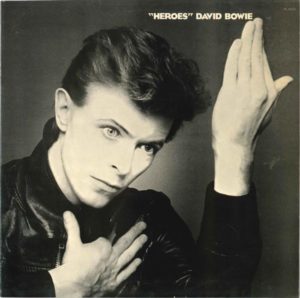
David Bowie – “Heroes”

"Heroes"

David Bowie“Heroes” RCA Victor PL 12522 (1977)


“Heroes” has remained one of David Bowie’s finest albums.  Part of his so-called “Berlin Trilogy”, it roughly follows the same format as the predecessor Low, with the first side devoted to art pop experiments and the second side (mostly) devoted to quasi-ambient instrumentals.  But where Low was a poppier version of German “krautrock”, with an emphasis on intensity of feeling, “Heroes” puts more emphasis on songs as such and adds just a bit more disco influence.  The music is strange in that it goes in the opposite direction of commercial trends of the day, drawing from left-field European rock and twisting carefree disco dance music with harsh industrial noise while still eschewing the sound of the burgeoning punk movement.  Bowie was continuing to chart his own path.  And, perhaps, that is part of what makes this elusive music so enduring.

The opening “Beauty and the Beast” is a great one.  While Bowie’s disaffected, contrarian and almost deadpan vocals are something of their own statement, the glimmering guitar and relentlessly bouncy beat fits comfortably in the disco era, even as the song’s icy, menacing edge is different from a typical disco dancefloor hit.  “Blackout” is another song with hints of disco rhythms.  Of course, the likes of “Golden Years” and “Stay” (from Station to Station) and “Fascination” (from Young Americans) had already ventured into disco territory in the prior two years.

“Joe the Lion” is kind of a tale of staggering, hazy, late-night club life, and the hangover.  Once again Bowie’s vocals are a kind of contrarian abstraction.  The song as a whole recalls Iggy Pop‘s minor hit album The Idiot (produced by Bowie), especially stuff like Iggy’s Stooges nostalgia song “Dum Dum Boys” and even the slower more minimalistic “Sister Midnight.”  Guitarist Robert Fripp of King Crimson is on the album on lead guitar, and adds distinctive character to songs like “Joe the Lion.”  The mostly instrumental “V-2 Schneider” (in reference to the Nazi V-2 Rocket, which inspired the plot of Thomas Pynchon‘s novel Gravity’s Rainbow), has similar textures to “Joe the Lion” with a more laid-back delivery.

The title track is a Bowie classic.  It is a romanticized mini-epic, complete with a kind of soaring and triumphant progression.  Producer Tony Visconti used a kind of latched gating effect, in which one microphone was inches from Bowie, another was 15-20 feet away, and a third was across the room.  As Bowie sang louder, the gates would trigger a more distant microphone and mute the others.  This allows Bowie to begin singing the song by quietly crooning, nearly at a whisper, then sing loudly, then practically shout, while the distance of the microphones scales back the intensity of his near-shouting to a slower crescendo.  The effect is something of an audio equivalent of the “dolly zoom” camera technique used in Alfred Hitchcock‘s film Vertigo.  Behind the vocals Robert Fripp  plays guitar with “tuned feedback” and Brian Eno contributed electronic effects.  The album was recorded in West Berlin, during the Cold War division of Germany.  The name of the song references the Neu! song “Heroes” (from Neu! ’75).  The song title is in ironic quotes, though the intended irony is somewhat difficult to detect in the music itself.  Yet the drumming is quite different from the “motorik” style of Neu!, more conventional, with the bass kick drum nearly inaudible in this instance.  The song’s lyrics, though, deserve some unpacking.  They describe a couple “standing by the wall”, alluding to the Berlin Wall that then divided the city.  While Western propaganda (still) repeats the fable of the wall going up to keep East Germans in, the reality was that the wall kept Western saboteurs out while also helping to limit a “brain drain” on educated Eastern workers to freeloading Western corporations.  Bowie performed the song in 1987 against the Wall as part of the “Concert for Berlin.”  That concert is often cited as prompting the wall be torn down (which it was in 1989).  Even the right-wing Federalist Society credited Bowie for his role.  Of course, the fall of the Berlin Wall allowed the Western Saboteurs (like Jeffrey Sachs) back into the East, with predictably catastrophic consequences.  Most former East Germans later said they preferred being behind the Soviet “Iron Curtain”, and, according to Der Spiegel, “20 years after the fall of the Berlin Wall, 57 percent, or an absolute majority, of eastern Germans defend the former East Germany.”  So Bowie’s song should be viewed skeptically.  But no doubt it is one hell of a catchy tune and this is a spectacular recording.

The second half of the album turns to mostly instrumental songs with ambient qualities — just like Low and Neu! ’75.  These are still songs, though, and are much more compact than anything on Low or Neu! ’75.  “Moss Garden,” complete with Zen-like washes of sound and Bowie playing koto, is arguably the finest instrumental track on the entire Berlin Trilogy.  “Sense of Doubt” and “Neuköln” are both solid tunes too.

The album concludes with “The Secret Life of Arabia,” which has vocals and goes back to disco influences, albeit now with vague middle-eastern references.  This scales back the experimentation of the album, and ensures that pop songs remain the focus.

This album was Bowie’s least popular since his Ziggy Stardust breakthrough.  The title track has become one of his best-known songs, though at the time — like most of Bowie’s late-1970s singles — it wasn’t a hit.  While it lacks the sense of wonder and daring of Low, the taut, punchy rock songs of “Heroes” are still pretty great.  What this lacks (if anything) in terms of eye-opening creativity it makes up in determined consistency.
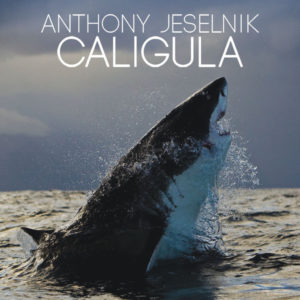
Anthony Jeselnik – Caligula

Caligula

Anthony JeselnikCaligula Comedy Central (2013)


I haven’t heard this album, per se, but I saw the TV special of the same name and presume it’s identical.  Jeselnik has a very well-defined schtick.  He delivers “conventional” jokes, rather than telling stories, etc.  His humor is based largely on misdirection, a bit like Rodney Dangerfield, etc.  But his version of misdirection takes on a new dimension.  He usually takes positions that are considered socially taboo or even undiscussable and feigns being a sociopath (as others note, just a step beyond Craig Kilborn et al.).  Often that means jokes premised on hilarious false/extremist dichotomies.  So, he implies he’s a rapist, that christianity is worse than pedophilia, and that others’ deaths and disabilities are an inconvenience to him.  Often he does this by simple grammatical errors, like substituting the present tense “has” for the past-tense “had” to send the audience a false message before the punchline of a joke.  What was kind of interesting in the TV special routine was that in the middle of the show he does this has/had joke involving his brother as a character, but then he finishes up the show with a very similar joke where he kind of “calls out” somebody else for doing essentially the same thing (using “is” instead of “was”).  Jeselnik drops hints all over the place that almost everything he says is a complete fabrication (though I wonder about his comments about being an atheist).  What I like about him is that he’s found a way to actually create some kind of rudimentary social space to discuss or at least think about some (liberal) social taboos, at least by calling attention to them.  It’s a kind of mild meta-humor that recalls Neil Hamburger just a little, but with more general social norms on the table in place of specifically comedic norms.  [Edit: it seems like Adam Kotsko‘s book Why We Love Sociopaths: A Guide To Late Capitalist Television makes an argument similar to this review]

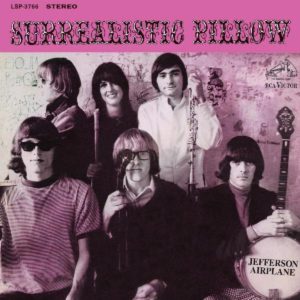
Jefferson Airplane – Surrealistic Pillow

Surrealistic Pillow

Jefferson AirplaneSurrealistic Pillow RCA Victor LSP 3766 (1967)


I just don’t know what to make of Jefferson Airplane.  Can’t say I ever listened to them much other than the ubiquitous singles that crop up in nearly every retro “Sixties” movie that uses “White Rabbit” or “Somebody to Love” for trippy atmosphere or “Volunteers” for rebellious protest attitude.  So, giving a few of their albums available from my local library a try, they now strike me as a band a little short on songwriting skills, at least in relation to their guitar prowess, and forcing themselves to do too many ballads and slower tunes that they didn’t pull off well.  They were at their best doing scorching psychedelic jams, with lots of space for guitarist Jorma Kaukonen to stretch out.  So, there’s good stuff here.  “Somebody to Love” is iconic, and it does highlight the darker side of free love and what was to come in the Summer of Love.  But lots of this feels like filler.   And singer Grace Slick is rather annoying, really.  She’s very didactic.  I found Live at the Fillmore Auditorium 10/15/66 (Late Show – Signe’s Farewell) from the pre-Slick era to be equally or more satisfying, and After Bathing at Baxter’s is certainly the band’s best.  Basically, this album was rendered obsolete a few months later when The 13th Floor Elevators released Easter Everywhere.  Otherwise, if you must have Sand Fran psych, just go straight for early Grateful Dead.  But I couldn’t shake the feeling listening to Surrealistic Pillow that I would rather be listening to Easter Everywhere.

Jandek – Interstellar Discussion

Interstellar Discussion

JandekInterstellar Discussion Corwood Industries 0747 (1984)


Jandek is an interesting proposition.  Interstellar Discussion makes for a good barometer to gauge why it is anyone listens to Jandek albums.  Side one very much sounds like a bunch of young people with minimal musical instrument proficiency banging away in a rehearsal space with a tape recorder running.  The harmonica parts seem almost overdubbed.  While the performances are, by most standards, inept, the guitar does display hints of a very deliberate and unusual sensibility.  Side two is acoustic stuff, like other early Jandek releases but seemingly trying more than usual to be melodic — and possibly failing at that effort.  So, there is something in here, weird outsider art potential, but this does sound like rehearsals on tape.  Actually, this listener subscribes to the theory that this recording is archival in nature and predates earlier Jandek/Units releases.  Some listeners may out of fascination just find a way to like this in spite of its objective qualities.  But, really, this is not as intriguing as other Jandek albums, in spite of its potential.  Given a more careful listen, it’s noticeably less proficient than other efforts.  If this is your favorite Jandek, you’re probably more interested in the myth and mystery than the actual music, or just see it as an affirmation of “be yourself” new ageism.

Jonathan Feldman – Police Shootings, Neoliberal Scarcity Regimes and the Left

Link to an article by Jonathan Feldman:

“Police Shootings, Neoliberal Scarcity Regimes and the Left: Behind the Balch Springs, Texas Murder”

Bonus link: “How Racial Disparity Does Not Help Make Sense of Patterns of Police Violence” (“It should be clear by now that the focus on racial disparity accepts the premise of neoliberal social justice that the problem of inequality is not its magnitude or intensity in general but whether or not it is distributed in a racially equitable way.”)

Andrew Hill – Smokestack

Smokestack

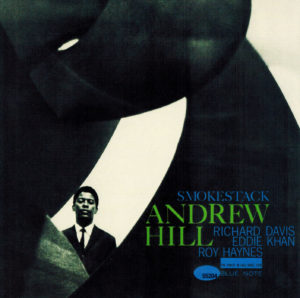
Andrew HillSmokestack Blue Note BLP 4160 (1964)


Hmmm. Quite an interesting album.  It was Hill’s second set recorded for Blue Note records, but was kept on the shelf for a few years before release.  The results are successful, but not entirely so.  The most striking feature of the album is the use of double bassist Richard Davis as a lead voice, a position in jazz combos most commonly held by wind instruments or piano.  On songs like “Wailing Wail”, “Not So”, “The Day After” and “Verne”, the effect is spectacular, providing deep shading to Hill’s typically intriguing compositions.  However, Davis is sometimes buried in the mix, and cannot clearly be heard over Hill and drummer Roy Haynes on “Smoke Stack” and other cuts.  To further complicate matters, Haynes seems just a bit ill at ease here.  A hallmark of Hill as a composer is, despite complex structures and arrangements, a strong dominant theme running through his songs.  In that respect it is more interesting to compare Hill with Albert Ayler or Cecil Taylor than more traditional post-bop players or the previous generation of jazz composers.  Here Haynes uses a bit too much space in his drumming, and he is so loud in the mix that this tends to obscure the main themes.  That is one of the main difficulties for a listener approaching this album for the first time.  Haynes was spectacularly effective on Black Fire.  In all, a great set of performances frequently marred by sloppy production, making this just slightly less enjoyable than other Hill recordings from the same time period.

Andrew Hill & Chico Hamilton – Dreams Come True

Dreams Come True

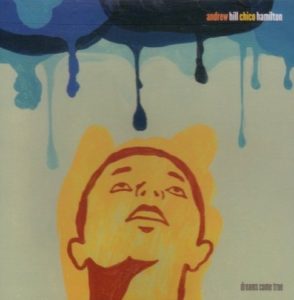
Andrew Hill & Chico HamiltonDreams Come True Joyous Shout! JS10010 (2008)


What a sorry album.  This was recorded back in 1993 and then released in 2008 in the wake of Andrew Hill’s death.  It should have stayed in the vaults.  It’s clearly just a crass attempt to cash in on the publicity surrounding Hill’s death.  The music is dull.  Hill’s playing is aimless, and there are pointless drum fills from Chico Hamilton littered everywhere.  One gets the sense the performers are trying to be too deferential to each other, to the point that neither steps up to take charge.  So there is a definite lack of purpose in the music — like this is merely a recorded practice session.  Take for instance “Watch That Dream,” which is a composition with plenty of potential, but Hamilton banging away on a tambourine is really too distracting to allow a listener to engage with the lovely melody.  This recording is probably best ignored in the catalogs of both performers.

On Criticism (4)

Martin Mull is credited with the phrase, “Writing about music is like dancing about architecture.”  There are many variations on this theme around.  The crux is that it is “impossible” or “pointless” (or some such thing) to write about music.

I once knew a guy who published his own independent film magazine, and he pontificated about how music writing seemed pointless to him because music needed to be experienced and there weren’t adequate ways to describe the content of music.  I always found his views rather self-serving, as a way to justify his choice to write about film instead.  And for that matter, musical notation provides extremely precise (if boring) ways to describe musical content.

When people talk about how futile it is to write about music, I wonder if they feel the same way about menus at restaurants.  Can a menu ever really capture the “experience” of eating one of the dishes?  Does it matter if it cannot?

More often than not, people who decry music writing are simply uninterested in the sorts of things that music writing can do, such as contextualize the social purpose as to why the music is being made (for live performance) or was made (for recordings and composition/songwriting).  Moreover, the people who emphasize “experience” probably just psychologically favor feeling over thinking, which is a tad arbitrary, no?