
Link to an article by Sand Avidar-Walzer:
My Own Mag
Link to RealityStudio’s archive of issues of Jeff Nuttall’s independent magazine:
Public Enemy – There’s a Poison Goin On….

Public Enemy – There’s a Poison Goin On…. Atomic Pop AP001 (1999)
After attempting to rethink the basis of Public Enemy’s music on the He Got Game soundtrack, which garnered mixed reviews at best, PE rethought their music again on There’s a Poison Goin On. In a way, it sort of set the tone for a lot of what the rest of PE’s career would be about. He Got Game catered to the more melodic R&B-inflected style of hip-hop that was gaining popularity at the time. The title track was great, but the rest didn’t impress. With There’s a Poison Goin On the group sort of splits the difference between more melodic beats and singing/raps and their old style. The results? Well, music nerds and hip-hop heads debate the best Wu-Tang Clan solo albums. This might be the best Wu-Tang “solo” album made by people unaffiliated with Wu-Tang! Chuck D is political, but less so than a decade earlier. “World Tour Sessions” is the catchiest thing here, and it has a little bit of Chuck’s politics, but it has a softer hook than something like their early 1990s hit “Can’t Truss It.” “I” is great. This was DJ Terminator X‘s last album with the group until a surprise reunion with the group more than a decade later.
Aside from the purely musical aspects of the album, Public Enemy established their new business model here. They signed with a new label dedicated to online distribution (though this was released in physical format too). The label flopped, as broadband internet access was not widespread yet. But more than distribution channels, the group was ready to sidestep major labels and stick with a more independent path, allowing them to try new things and have more control over their work.
This is a middle-of-the-pack PE album, but one that is worthwhile for fans who have already heard the classics.
Ty Moore & Patrick Ayers – The Disastrous Failure of Lesser Evilism
Link to an article by Ty Moore & Patrick Ayers:
Critterjams – Scott Adams and Donald Trump
Link to an article on Critterjams:
Sebadoh – Bakesale

Sebadoh – Bakesale Sub Pop sp260b (1994)
Here’s a real classic of the grunge/alternative rock period. There is a clear affinity for rough, almost garage rock-ish fuzz, but overall there is much purpose and effort put into establishing a clear and consistent perspective in the recordings. The songwriting retains the emotionally bare confessional tone of much of Sebadoh’s work, while also having rhythmic drive, strong riffs, and a stylistic connection to current genre trends. Balancing — and indeed synthesizing — those sorts of seemingly contradictory impulses is what carries the album. Refreshingly, though, Bakesale avoids the self-pitying mopeyness (and vague graininess) that was the bane of much lo-fi music. Joey Ramone once gave an interview in which he said quite directly that rock ‘n roll was music for outsiders. Bakesale honors that tradition while at the same time serves to rally the freaks (gabba gabba!). Looking back, this album really highlights the best of what the entire grunge/alternative/indie rock scene had to offer.
Michael Hudson – Review of Welcome to the Poisoned Chalice
Link to a review by Michael Hudson of James K Galbraith‘s book Welcome to the Poisoned Chalice: The Destruction of Greece and the Future of Europe (2016):
“Review of James Galbraith, Welcome to the Poisoned Chalice (2016)”
Select quote:
“At first glance the repeated ‘failure’ of austerity prescriptions to ‘help economies recover’ seems to be insanity – defined as doing the same thing again and again, hoping that the result may be different. But what if the financial planners are not insane? What if they simply seek professional success by rationalizing politics favored by the vested interests that employ them, headed by the IMF, central bankers and the policy think tanks and business schools they sponsor? The effects of pro-creditor policies have become so constant over so many decades that it now must be seen as deliberate, not a mistake that can be fixed by pointing out a more realistic body of economics (which already was available in the 1920s).”
This is reminiscent of a quote frequently attributed to Donald Berwick (among others): “Every system is perfectly designed to get the results it gets.” In the economic context, this notion is also explored further in Economists and the Powerful (2012).
Robert Kuttner – Hidden Injuries of Class, Race, and Culture
Link to an omnibus book review by Robert Kuttner:
“Hidden Injuries of Class, Race, and Culture”
Bonus links: “What Drives Trump Supporters?: Sociologist Arlie Russell Hochschild on Anger & Mourning of the Right” and “I Spent 5 Years With Some of Trump’s Biggest Fans. Here’s What They Won’t Tell You.” and “Rural Voting from Group Identity Resentment of Other Groups Not Ideology” and “Janesville: Microcosm of the Heartland Rustbelt” (but see “On the Differences of Comedy in the Time of Alt Right Transgression” — essentially rejecting the core premise of Hochschild’s affective sociology as an infantalization)
Camarón – La leyenda del tiempo
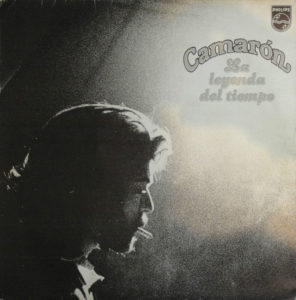
Camarón – La leyenda del tiempo Philips 63 28 255 (1979)
Camarón de la Isla is credited with being one of the key figures in revitalizing and spreading flamenco music in the latter part of the 20th Century. His voice is more or less perfectly suited to his music: raspy, agile, defiant, emotionally-laden. La leyenda del tiempo (translation: “The Legend of Time”) is considered one of the key documents of so-called “nuevo flamenco.” Traditional flamenco is a folk music that uses guitar (acoustic), vocals, and simple percussion from handclaps and snapping fingers, and is a dance music. It originated in the Andalucía region of southern Spain. The “nuevo” version incorporated many other sounds and instruments: electric guitar, bass, drum kits. In other words, it modernized the music by incorporating aspects of other musical styles, most notably rock. The most modernized tracks here are easy to spot, with synthesizer, electric bass, drums and such — even sitar on the closing “Nana del caballo grande.” And yet, they blend effortlessly with the traditional style of flamenco. The guitar playing (mostly by Tomatito) is just as fiery and detailed, the vocals just as impassioned. It simply has nothing to fear about embracing the modernity all around it. Recorded just a few years after the death of Generalissimo Franco, during the period of a return to a monarchy and some democratizing reforms in Spain, the timing of this music bridging the old and new is no coincidence — the lyrics of fully half the songs are drawn from Federico García Lorca, a member of the “Generation of ’27” who experimented to new poetic forms and was also a martyr of the anti-Franco Spanish socialists whose works had been banned in Spain for a time (until 1953). And yet, the album was a flop upon release, and it actually was reported to have angered longtime, traditionalist fans. As James Kirkup put it in an obituary:
“Flamenco purists deplored his adventurous crossover fusion of flamenco and rock, but they were reluctantly compelled to admit that he was a musical genius who revived the interest of the younger generation in a musical tradition that had been discredited as a symbol of the late dictatorship’s rabid nationalism.”
In spite of controversies he stirred, and the initial lack of success of this album, Camarón remained one of the most famous Spanish performers of his era, and this album has since come to be highly regarded. A comparison to this approach to music on a conceptual level might be Lucio Battisti‘s Anima latina, which has nothing to do with flamenco, but nonetheless, like nuevo flamenco, takes a kind of insular, provincial European music and incorporates international influences (although El Camarón sticks closer to tradition and virtuoso acoustic performance, and features a proud and resilient attitude in place of Battisti’s highly structural existential pondering).
Leonard Cohen – New Skin for the Old Ceremony
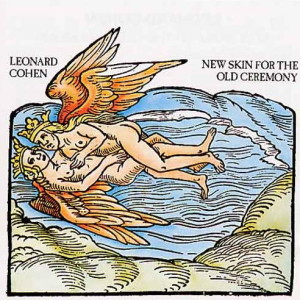
Leonard Cohen – New Skin for the Old Ceremony Columbia AL 33167 (1974)
Cohen summons an impressive assortment of styles. It is as if he tries them on, proving how versatile his songwriting can be by demonstrating that all the ones that fit. So take “Lover Lover Lover,” which even concludes with a bit of klezmer clarinet. Of course, then there is “Chelsea Hotel #2.” This is a song you can listen to, start over again, and again, and suddenly an hour has gone by listening to just that one song. It has Cohen’s inimitable sense of intimacy. Cohen later admitted the song is about Janis Joplin. Like a lot of Cohen’s best album-length statements, this one is great not because of one or two key songs, or even the production or eclectic styles. No, what makes the whole album great is Cohen’s brilliant sense of place and social context. He’s for the underdogs, doing what he can for their cause, a kind of consciousness-raising through song, without losing sight of the tenuous position of underdogs and the tactical challenges they face. This is epitomized by “There Is a War.” All said, this is one of Cohen’s better albums.