Link to an article by Jason Tebbe:
“Twenty-First Century Victorians”
Bonus link: The Theory of the Leisure Class
Cultural Detritus, Reviews, and Commentary

Link to an article by Jason Tebbe:
“Twenty-First Century Victorians”
Bonus link: The Theory of the Leisure Class
Link to a review by Lee Konstantinou of William Gaddis‘ novel J R (1975):
“Too Big to Succeed: On William Gaddis’s ‘J R’”
Bonus link: “Geoff’s Review of ‘J R'”
Link to an article by Dean Baker:
“Inequality As Policy: Selective Trade Protectionism Favors Higher Earners”
This article is Baker grandstanding as usual, making the same arguments he has made ad nauseam for many years. There are numerous flaws in his arguments, which is extremely unfortunate because he’s trying to make some important points, however crudely, about the promotion of inequality.
The major flaw in his argument about intellectual property (IP) law is that he conflates the specific case with the general case (a type of association fallacy). This is a flawed form of argument that many economists use regularly to deceive readers. Baker concludes that all IP is bad, but his argument relies almost exclusively on examples from copyright and pharma patents. It almost goes without saying that copyright laws are indeed maximalist and skewed toward special interests. His criticisms there are spot on and need no further explanation. His critiques of patents focus on pharmaceuticals. The problem is that pharma is not like other technologies. Pharma is a regulated industry, and companies are able to rent-seek even with unpatented drugs. Recent examples in the headlines include the Martin Shkreli saga and the EpiPen debacle. While excessive patent strength/value may be problematic, it is not the sole cause of rent-seeking problems. And there are so many unique aspects of the pharma industry (right down to doctors’ monopolization of writing prescriptions) that criticisms of pharma patents says almost nothing about patents in other technology areas. Baker writes, “The laws have been changed to extend patents to new areas such as life forms, business methods, and software.” The problem with this statement is that it is completely false. While the U.S. patent laws have indeed been updated with the America Invents Act, and other miscellaneous legislative changes, it is worth noting that these changes to the patent statutes did not alter patent-eligible subject matter (35 U.S.C. 101 – unchanged since 1952). While courts did expand patent subject matter eligibility from the early 1980s through the turn of the millennium, Baker ignores how the major development in patent law in judicial decisions over the last decade has been to curtail patent subject matter eligibility (Bilski v. Kappos, Mayo v. Prometheus Labs., Alice v. CLS Bank, Association for Molecular Pathology v. Myriad Genetics, etc.). Baker suggests a trend in a direction directly opposite to the bulk of the recent judicial record. While numerous other countries prohibit patenting of medical diagnosis or treatment inventions, and countries like Germany historically (though no longer) prohibited patenting chemical compositions, there was never such a ban in the United States. Furthermore, what about trademarks or trade secrets? These constitute whole areas of IP law, yet Baker makes no mention of them. This further underscores how Baker has cherry-picked specific cases, divorced from their specific factual contexts, and (misleadingly) presented them as the general case.
The comments to Baker’s article make some useful points. As Vic Volpe notes, software and financial patenting is arguably a bigger problem than pharma patents. (see also, e.g., http://open.mitchellhamline.edu/cybaris/vol5/iss2/1/). Also, BobbyG notes the misleading citation of average physician salaries in the article, which further evidences how Baker’s primary mode of argument is to distort the facts to serve his ideological agenda — in case it is in doubt what that is, Baker supports centrist “New Deal” Keynesian economic policies. So, while it is fine that Baker critiques neoliberal policy in its promotion of “winner take all” inequality, readers can rightfully question how and why he inserts New Deal liberalism in its place. Of course, many other critiques of patents and such are equally ideologically-driven, which is unfortunate because meaningful criticism is needed.
Addendum: Baker has continued to promote the same line in a further interview (no surprise). But what is hilariously ironic is that he makes the following snide comment: “There also is a reluctance to think differently. We often joke that intellectuals have a hard time accepting new ideas. Unfortunately it is close to accurate. Even well-established academics are much more likely to accept an idea from an academic with high standing than a person with less standing, no matter how compelling it might be.” Reading the whole interview makes clear that Baker fails to see how this criticism forcefully applies to him too!

Tame Impala – Lonerism Modular MODCD157 (2012)
So it’s quite easy to spot the references points to know where Tame Impala is coming from. Right away this music screams out its adulation for 1960s psychedelic rock. The lead singer could well pass for a John Lennon impersonator, and the weirder stuff of Magical Mystery Tour makes a decent reference point. Yet Animal Collective seems like an equal influence. What you end up with is something on the spectrum of post-psychedelic bands like Spacemen 3, The Brian Jonestown Massacre, Ty Segall and White Denim with a strong sense of melody and composition. Ultimately it’s the good craftsmanship and solid songwriting that carry this along. It may be a recombination of retro-isms, but the band’s enthusiasm makes it always a fun and fresh experience.
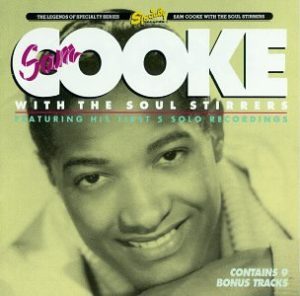
Sam Cooke With The Soul Stirrers – Sam Cooke With The Soul Stirrers Speciality SPCD-7009-2 (1991)
A good set, though still an imperfect one. Many reissues of Soul Stirrers material with Sam Cooke have overdubs that were not present on the original releases. Fortunately, the versions here are the originals. On the other hand, this set includes Sam Cooke’s first 5 solo recordings (some originally released under an alias “Dale Cook”), and those are for the most part a distraction. Sam Cooke’s softer, lighter lead vocals took gospel music in a whole new direction.
Link to an article by Russell Mokhiber:
Link to an article by Nicole Colson:
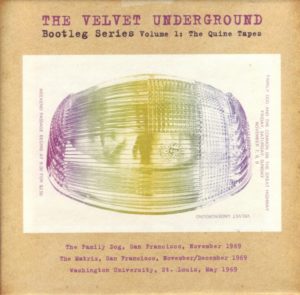
The Velvet Underground – Bootleg Series, Volume 1: The Quine Tapes Polydor 314 589 067-2 (2001)
The Quine Tapes is essential for any true Velvet Underground fan. Recorded from dates on the same tour as 1969: Velvet Underground Live With Lou Reed and The Complete Matrix Tapes, this “Bootleg Series” release is decidedly of amateur recording quality (the series’ title is honest at least). Robert Quine was one of the handful of Velvet Underground superfans in their day (Quine later co-founded The Voidoids and then played with Lou Reed). These recordings were made with a cassette recorder in the audience (the sound quality of the recording being comparable to The Stooges‘ Metallic KO and Television‘s The Blow-Up). Disc One is material from the Family Dog in San Francisco, while Discs Two & Three are primarily from the Matrix in San Francisco, with just one medley from Washington University in St. Louis.
Disc One’s “Foggy Notion” takes the song on an extended and explosive guitar solo (one of the set’s gems). Disc Two’s “White Light/White Heat” is both aggressive and precise. Disc Three’s early version of “New Age” is profoundly inspired and features different lyrics than later appeared on Loaded. “Black Angel’s Death Song” is different without viola, but retains all the essential elements. Of course, the importance of The Quine Tapes lies in the three versions of “Sister Ray” included, clocking in at 24:03, 38:00 & 28:43 on each respective disc. Surprisingly, these versions often move in and out of slow grooves amongst powerful bursts of beautiful noise. “Sister Ray” is probably the greatest rock song but only when performed by the Velvets — other artists attempting the song are asking to be made fools. My money is on the “Sister Ray” recorded at the Family Dog on 11.7.1969 (from Disc One) as the finest recording in this set.
The Quine Tapes features many extended song performances. This album proves that the Velvets with Doug Yule were a different band than the Velvet with John Cale but still a great band. Without compromising any creativity, the Velvets do their best to entice people into their music. Blending songs that never made it onto any studio albums with many of the group’s most experimental numbers from years past, The Quine Tapes allows you to put the 1969 Velvets in context. Fans will perennially wait for the “holy grail” of live recordings with John Cale still in the band, but they just don’t exist (else they would have been released by now)!
The Quine Tapes goes far beyond 1969: Velvet Underground Live in sheer breadth. Only one recorded song overlaps between the two albums. There is considerable overlap with The Complete Matrix Tapes, with that later release having supposedly higher fidelity.
While it can be somewhat frustrating when these bootleg recordings distort or fail to capture the entirety of the performances, the sheer brilliance of the Velvet’s musical ingenuity makes up for a lot of that. This isn’t a definitive Velvet Underground live recording. Nonetheless, The Quine Tapes is a portrait of the Velvet Underground as stylists rivaling anyone. The improvisational variety of songs within this release, much less compared to others, is astounding. There are no signs of the band’s (effective) demise looming a few month ahead. Maybe the album takes some effort but rarely in music are the rewards so great. This set is good for a VU fix no matter how severe.
Link to an article by Michael Hudson, excerpted from the book Absentee Ownership and its Discontents: Critical Essays on the legacy of Thorstein Veblen (2016):
“The Return of the Repressed Critique of Rentiers: Veblen in the 21st Century Rentier Capitalism”
Bonus link: “The Legacy of Veblen in the Age of Post-Industrial Capitalism”
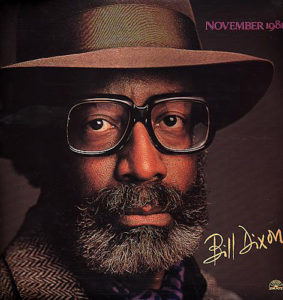
Bill Dixon – November 1981 Soul Note SN 1037/38 (1982)
The thoroughly factually-titled November 1981 features a combination of live and studio recordings made in Italy that month. The double-LP release featured the studio tracks on the first disc and the live tracks on the second, while the CD release put the live recordings first (minus some stage announcements) and the studio recordings last. The quartet of Dixon (t), Alan Silva (b), Mario Pavone (b), and Laurence Cook (d) has a good feel for each others’ talents. The two-bass lineup is reminiscent of the quartet Ornette Coleman led in the late 1960s — a bootleg of a Rome concert of that quartet came out in 1977. The bassists are able to alternate between pizzicato (plucked) and acro (bowed) playing, so that they avoid blending together too much. And yet the two bass lineup keeps the brightness of Dixon’s trumpet in the foreground. As usual, Dixon plays whinnies and squeaks, plus the occasional melodic figure, using space to structure his performances as much around what he doesn’t play as what he does. Cook plays decisively yet unobtrusively. Silva and Pavone add a lot in terms of distinctive riffs and textural coloring. Between the bassists and the drummer, at least one player always seems to suggest (if not outright deliver) some type of syncopation, which gives the music a sense of engagement, despite the highly abstract solos. On the whole, this music is characterized by each player making independent contributions that work together. Likely as not, at any given time there are multiple solos occurring simultaneously, without any player relegated to “accompaniment” as such. The results are dense, but given the way the doubling up of bassists makes this sound almost like a trio, it is not overpowering. The recording fidelity is very good, minimalistic with a deep low end and an almost ominous feeling. Dixon largely eschewed marketing and commercialism, and as a result his name and recordings are less known than they might be, though he remains one of the singular talents of the free jazz era. During the entirety of the 1970s, for instance, he released only one album under his own name (though archival recordings from that decade were later released). His recordings on the Italian Soul Note label, like this one, are the most widely available. Dixon had worked toward the sound employed here for some time, and these performances might be considered the culmination of that effort. In the coming years he would make music that was more abstract, without the grounding and contrasts of the syncopation from the rhythm section — not necessarily better or worse, just different. November 1981 is definitely a highlight in Dixon’s discography, and one of the more interesting and unique offerings in 1980s jazz.