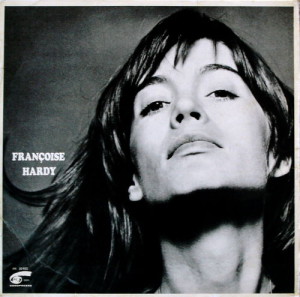
Françoise Hardy – La question

La question

Françoise HardyLa question Sonopresse HY 30.902 (1971)


Françoise Hardy was one of the more literate pop/folk artists of her time in the 1960s and 70s.  La question, her best-known album, is very nearly a collaboration with Tuca (Valeniza Zagni da Silva), a Brazilian musician who wrote or co-wrote most of the songs, plays guitar and contributed to arrangements.  There are small South American accents on the guitar playing, even as the album is thoroughly French.  But Hardy still makes her mark with perfectly hushed, contemplative vocals.  The song lyrics are practically adolescent poetry, mostly about romance and existential crises — though “Le martien” is a tale about aliens reminiscent of Neil Young‘s “After the Gold Rush.”  This is music about trying to find a hold on something when it seems like everything is about to wash away.  The words to describe it: melancholy, wistful, wounded, lonely, searching, moody, bookish, romantic.  Although impeccably recorded with a tasteful chamber pop setting, this is also a strikingly spare recording, with Hardy’s voice and acoustic guitar the only constants.  The title song, co-written by Hardy and Tuca, ends with the line “Tu es ma question sans réponse, mon cri muet et mon silence.” (“You’re my question without an answer, my mute cry and my silence.”).  With the Sixties over, May 1968 already fading from memory, La question is sort of like a counterpart to what Scott Walker had done in prior years: a sophisticated twisting of popular song in an introverted fashion.  But unlike Walker, Hardy performs almost exclusively for private, intimate listening.

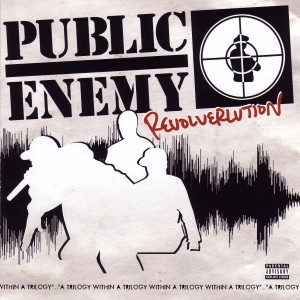
Public Enemy – Revolverlution

Revolverlution

Public EnemyRevolverlution SLAMjamz/Koch 238 388-2 (2002)


The year 1999 was pivotal for Public Enemy.  That was when they committed themselves to being an independent act, releasing music on Chuck D‘s own SLAMjamz label (distributed by Koch).  Yet, the price paid for independence from corporate media is the near total critical/radio/etc. indifference that goes with a minuscule marketing budget.  Their sound changed a bit too, gravitating toward more live instrumentation — they had done that before but now it was a leaner, guitar-driven approach — and using rhythm rather than shrieking noise to create a sense of aggression and urgency.

This starts off strong.  “Revolverlution” and “Gotta Give the Peeps What They Need” are some of the best offerings of the new material.  But the nagging thing about this album is that it isn’t all new material, exactly.  There are live tracks, old interviews and radio announcements, and remixes.  All these things are intermingled.  Now, some of the miscellaneous live and remix material is quite decent. (“Welcome to the Terrordome (LIVE Winterthur Switzerland 1992),” “B Side Wins Again (Scattershot Remix)”).  But there are only a handful of really compelling cuts across the whole album, and there is plenty of rather dubious filler.

Revolverlution is perhaps the group’s album with the most input from “minister of information” Professor Griff.  He is the lead MC on “Now A’Daze” and the rather good metal/hip-hop hybrid “What Good Is a Bomb” with 7th Octave.  In the past it was somewhat hard to tell what Griff contributed to recordings, specifically, but here his contributions are unmistakable.

Neil Young gave an interview talking about Living With War, his album indicting war in Iraq and President George W. Bush’s global “war on terror”.  He said he wondered where people like Bob Dylan were on those issues and felt like he had to do it himself.  Well, if old Neil was listening (he probably wasn’t) he might have noticed that Public Enemy was already making songs about just those topics (“Son of a Bush”).  The philosopher Hannah Arendt famously wrote about the trial of a Nazi officer Adolph Eichmann after WWII by coining the phrase “the banality of evil.”  As Judith Butler summed up Arendt’s concept, “that for which she faulted Eichmann was his failure to be critical of positive law, that is, a failure to take distance from the requirements that law and policy imposed upon him; in other words, she faults him for his obedience, his lack of critical distance, or his failure to think.”  If there is one characteristic that would define Public Enemy in their later years, it was that they tried harder than before to be the band that didn’t let things go, but did what they could to step outside the machinations of a music industry that they felt was going in the wrong direction, despite the commercial price they paid for their integrity.

The Chuck D has been a vocal proponent of remixes, emphasizing how it is part of an ongoing process of reinterpretation that is really an extension of sampling in hip-hop.  He has claimed that the album format was declining in relevance as digital downloads shifted interest to individual songs — something the group took seriously as the first major act to release an album (There’s a Poison Goin On….) for download online.  Yet, the cynical might take another view and say that the way old raps remain over new beats in these remixes could be a way for Chuck to lionize his own contributions while undermining the legacy of classic beats from producer Hank Shocklee, who acrimoniously split from the group years earlier and was at the center of a disastrous reunion attempt making a soundtrack album.  Anyway, the group had a contest for fans to remix classic PE tracks and the six “winners” are here on this album.  No one will confuse them with classic PE material, though there is at least one successful remix (“B Side Wins Again (Scattershot Remix)”).

Greatest Misses was a kind of precedent for an album like this, with a blend of unreleased material plus remixes and such.  But the former was a much stronger set of remixes, still coming from the band’s peak and involving some of the original (and now legendary) producers.  Revolverlution is one of the band’s weakest albums.  Now, if the group had taken the best new material here used it in place of the weakest stuff on New Whirl Odor or How You Sell Soul to a Soulless People Who Sold Their Soul??? (or merging the best selections from all three albums), now that would have been a killer album.  But it is still a good idea to check out a few of the best individual songs here, because they are great.

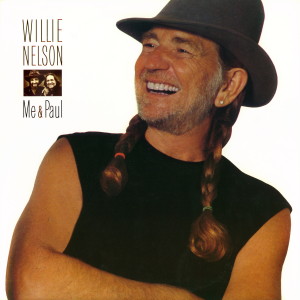
Willie Nelson – Me & Paul

Me & Paul

Willie NelsonMe & Paul Columbia FC 40008 (1985)


Me & Paul is largely a collection of old songs, many of which Willie had recorded before.  If the late 1980s were a low point of his long career, then this album is at least the best of his worst period.  There are hints here of a rambling man who once took country and rock music in both hands and cut them together, traits that were largely erased from his recordings that increasingly gravitated toward easy listening and pop sensibilities.  Granted, the flat, sterile 80s production values harm the songs more than they help — every re-recording here is inferior to the older one(s).  Anyone already a Nelson fan will find this mildly enjoyable, even if it won’t be the Nelson album they reach for most often, though the “presentable” slickness of these recordings won’t win many new converts to Nelson who shone brightest when he went just a little more against the grain.

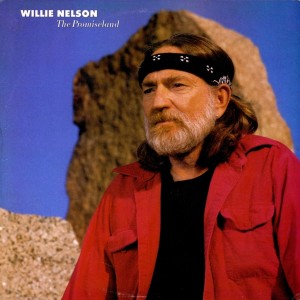
Willie Nelson – The Promiseland

The Promiseland

Willie NelsonThe Promiseland Columbia FC 40327 (1986)


The Promiseland is mostly easy listening pop with a country touch, and side two is easy listening western swing.  Nothing is bad, exactly, it just sort of passes by without making any sort of impression, good or bad.  The late 1980s were in some ways the nadir of Willie Nelson’s recording career.  His vocals were lazy and the instrumental accompaniment was formulaic.  The Promiseland exemplifies those tedious qualities of this part of Willie’s career, as he was caught up in fame and not particularly focused on his music — soon enough troubles with the taxman would compound the distractions he faced. Compare this album to The Sound in Your Mind, from a decade prior, which features some of Willie’s very best vocals.  Earlier he sung in a way that used the songs to express something deeper.  On The Promiseland, he is just singing what is written down, technically hitting all the notes but delivering them all in the same way (often using the same consistently off-key approach to singing), like he hasn’t stopped to consider at all what each song is meant to convey.  He sings like he’s on a factory assembly line.  Charlie Chaplin made the monotony of assembly line work the epitome of hilarity in Modern Times, capturing the degrading, back-breaking toll it takes, but Willie seems to be using such an approach here merely because it is the path of least resistance.  It adds nothing to the music, and actually probably prevents the music from ever being really compelling.

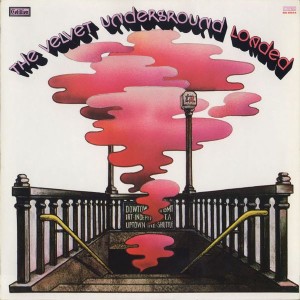
The Velvet Underground – Loaded

Loaded

The Velvet UndergroundLoaded Cotillion SD 9034 (1970)


“Sweet Jane” sums up the unbelievable scope of Loaded. With reverence for all the joys and sorrows of this world, compassion is what rises to the surface.

“Jack is in his corset/Jane is in her vest/ and me, I’m in a rock and roll band.”

Whether Jack or Jane is in the corset (seemingly each version transposes the two), the distinction is meaningless.  There are spectators, performers, pawns, poets, lovers, families, hypocrites, philosophers, dreamers, and more.  These simple categories simply don’t matter:

and there’s some evil mothers/ well, they’re gonna tell you everything is just dirt/ you know that, women never really faint/ and that villains always blink their eyes/ and that, you know, children are the only ones that blush/ or that life is just to die/ but anyone that ever had a heart/ oh, they wouldn’t turn around and break it/ and anyone that’s every played a part/ they wouldn’t turn around and hate it

The usual question and answer format of the Velvets’ earlier albums isn’t present on Loaded, but you can use your imagination.  The music is still there in one place or another.  People get by — that in itself can be glorious.  Maybe, as Arthur Rimbaud so eloquently stated, “Life is the farce all must perform.” The Velvets, with infinite compassion, simply take pleasure in the grand scheme of it all.  The greatest rock band faced imminent destruction while recording Loaded.  They certainly proved their conviction at the least.

Despite Atlantic/Cotillion Records’ every attempt to ruin Loaded, it still rocks.  Had the record company continued allowing full creative control, this album could have been one of those “top ten all-time”. Credit is due the Ahmet Ertegun for recognizing the group’s talents. Atlantic did initially consider signing the Velvets a prestigious “score,” but those feelings quickly changed.  Loaded took forever to complete as the Velvet Underground disintegrated as a band. Atlantic switched producers and rescinded much artistic control. This band could make the most innovative experimental rock if they chose to but instead, given the circumstances, made a great pop album.

The album loaded with possible hits. Yet, the original release had bizarre mixes that re-ordered and shortened songs (“New Age,” “Rock and Roll” and the unforgivable disservice done to “Sweet Jane,” otherwise one of the greatest modern rock songs ever).  There is no possible explanation for this.  When re-released on the “Fully Loaded Edition” reissue, the original mixes were restored.  Though the song order was never corrected, all the great songs are still there, somewhere.  The recordings of a few, like “Head Held High” still show an unreal studio awareness, with subtle textures and precise timing.  The final product is imperfect, but that gives Loaded a kind of underdog status in the Velvet’s catalog.

Lou Reed was on a fucking roll for Loaded.  Many of his most memorable lyrics are nicely contained on this one disc.  The largely autobiographical “Rock and Roll” is one of the great proclamations of the glory of rock music.  “Who Loves the Sun” starts the album off with a spat of disillusionment and sweet isolation.  Unlike the sonic attack of the Velvet’s first two albums, Loaded establishes them as pop song virtuosos the equals of other rock bands like The Beatles or The Rolling Stones.   “Lonesome Cowboy Bill,” about William S. Burroughs, is careening fun.  The Velvets had traditionally been a dark, bleak band, but only by choice.  Loaded conclusively proves their range included rock rebelliousness and pop sensibility as well, simultaneously.  It’s easy to yap about all the classic rock and roll songs found on this album, but it’s no use to state the obvious.

Sterling Morrison’s best guitar work is on White Light/ White Heat.  On Loaded, his influence is sparse but powerful.  Morrison always added humor to the Velvets.  He was an influence of humanity in the group.  Despite his crumbling faith in the group he turns in a few fine moments.  Doug Yule played some of the lead guitar parts.  Sterling adds the flavor to Loaded that makes it so fun.

Tension comes in simple, easy-to-grasp doses.  Doug Yule’s vocals falter at times (weakening the otherwise great tune “I Found A Reason”), but are generally strong (“Who Loves the Sun”).  Moe Tucker does not play drums due to pregnancy (it’s hard to reach drums around a baby). The obstacles were apparent. The way the Velvets forge ahead anyway is the real story behind Loaded.

Every force runs against the Velvets and they still prevail.  Thanks largely to Lou Reed’s songwriting genius as a profound lyricist; worldly computations and amputations (to use Reed’s vocabulary) do little to dampen the spirit of this great music. The Velvets keep their “Head Held High.”

Wouldn’t you be a bit disillusioned if you were the greatest rock band, but no one cared?  Loaded delivers everything a great rock album must:  catchy hooks, rebellious attitudes, and yes, it makes you want to jump up and play some rock and roll yourself.  Glory is attainable.  After hearing this album, you want to achieve it too.  You can; somehow it will all work out.

When Loaded failed to be the commercial hit it should have been and old frustrations lingered, the Velvets essentially broke up, continuing on only as essentially a new band with the old name.  More than a decade later, the music world retroactively identified the Velvet Underground as the pinnacle of rock music.  Time proves the Velvet Underground were always right, in a world that often wasn’t.  Like Arthur Rimbaud, respect came after their lifetime.  A reunion tour was short-lived.  Lou Reed’s ego destroyed the group more than once.  Fortunately, four studio records survived what the band’s members couldn’t.

I would say the original version of Loaded suffers from some ridiculous edits and remixes at the hands of the record label, but the Fully Loaded Edition and the Peel Slowly and See box nicely fix those problems.  So I recommend seeking out one of those reissues as opposed to the “original”.

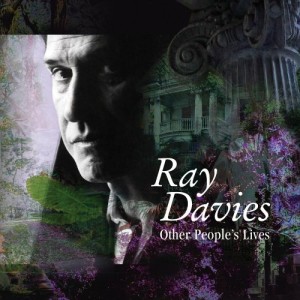
Ray Davies – Other People’s Lives

Other People's Livs

Ray DaviesOther People’s Lives V2 VVR1035352 (2006)


Hey, an old guy making a rock album.  Get me out of here!  This kind of lends support to the truism that rock and roll is a young person’s game.  There are a few rock songwriters/performers who can successfully work into middle age and beyond (Lou Reed).  Ray Davies, Elvis Costello, The Rolling Stones and so many others are not among those few.  For those who don’t know, Davies was the principle songwriter of The Kinks, penning songs that had the trappings of rock counterculture but with lyrics that were surprisingly politically conservative, of a kind of right-leaning populism.  His version of counterculture was passed by long ago and this pathetic batch of songs is dreadful.

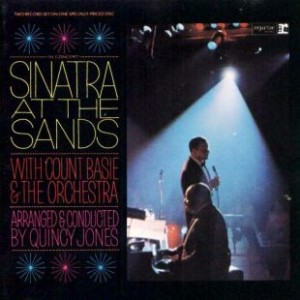
Frank Sinatra – Sinatra At the Sands

Sinatra at the Sands

Frank Sinatra With Count Basie & The OrchestraSinatra At the Sands Reprise 2F 1019 (1966)


Sinatra with Count Basie, arranged by Quincy Jones — what’s not to like?  Well, for starters, Sinatra was starting to sound a little sluggish in his vocals, and the Basie Orchestra was kind of an anachronism by the 1960s.  This is music from Sinatra the institution, and as such lumbers along in adherence to a formula that leaves little room for spontaneity or individualism.  The song selection pares away the more youthful love songs in favor of quite a few about longetivity and nostalgia.  Still, even if this represents the artist past their prime, it still beats most of the lounge concert records that Broadway singers without any swing released in this era.  Not a great one, but fans will get reasonable enjoyment from it.

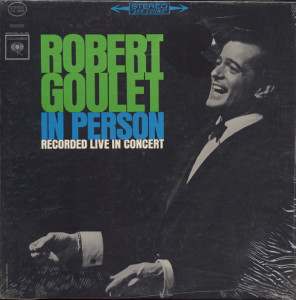
Robert Goulet – In Person: Recorded Live in Concert

In Person: Recorded Live in Concert

Robert GouletIn Person: Recorded Live in Concert Columbia CS 8888 (1963)


I went to a used book sale once where they had a bunch of old LPs for sale.  Clearly, someone had donated what must have been the complete 1960s catalog of Robert Goulet, because there was a big pile of them.  Since the price was right I picked one out that had the most interesting album cover (along with some non-Goulet picks like a surprising find in Symphony No. 3 (Gloria)).  Anyway, taking In Person home and finally giving it a spin I couldn’t help but laugh.  This has to be one of the most obnoxiously stupid live albums I’ve ever heard, complete with audience banter pointing out the most melodramatic elements of upcoming songs.  So, this thing has kitsch value, but really nothing else going for it.  But then, it wouldn’t be Robert Goulet if it was any other way.

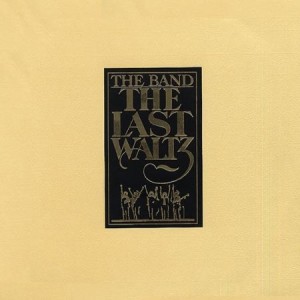
The Band – The Last Waltz

The Last Waltz

The BandThe Last Waltz Warner Bros. 3WS 3146 (1978)


Though sometimes deemed a “great album,” The Band’s Last Waltz is a humdrum affair that all too often relies on the mere presence of guest artists as a substitute for working toward interesting musical statements.  There are still a few choice performances.  “Helpless” with Neil Young, “Caravan” with Van Morrison, and “Life Is a Carnival” with just The Band are all quite good.  Bob Dylan‘s appearance is rather poor, on the other hand.  This would have been better as a single album than a triple one, and the movie made about the concert special seems crassly self-important.  It is worth mentioning that some songs from the concert film are not on the album, and vice-versa.  Some of the album tracks were also later overdubbed.  In 1976, when this concert was recorded, The Band’s style of “roots rock” no longer seemed to hold much relevance as the punks were well on their way and reveling in feel-good nostalgia seemed like a pretty tepid attitude in turbulent times.