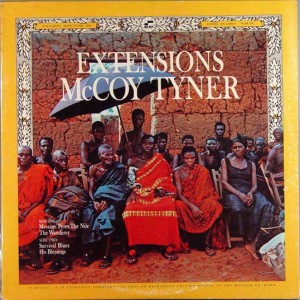
McCoy Tyner – Extensions BN-LA 006-F (1973)
A lot like Alice Coltrane of the period, though a bit more…calculated. And guess what? Alice is here!
Cultural Detritus, Reviews, and Commentary

McCoy Tyner – Extensions BN-LA 006-F (1973)
A lot like Alice Coltrane of the period, though a bit more…calculated. And guess what? Alice is here!
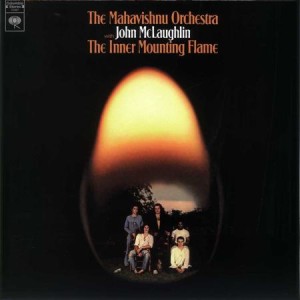
The Mahavishnu Orchestra With John McLaughlin – The Inner Mounting Flame Columbia KC 31067 (1971)
A great debut from one of the foremost jazz fusion outfits. This one is much more rock-oriented than the later albums. In fact, this one sounds more like a rock band exploring some very complex jazz themes rather than a jazz band incorporating rock rhythms, guitar riffs and the like. The group’s next album, Birds of Fire, would take a very different approach and utilize purely rock instrumentation to achieve a symphonic sound within the auspices of jazz fusion. Later albums would take a more prog-rock approach, with actual symphony orchestration set against more rock-centric noodling.
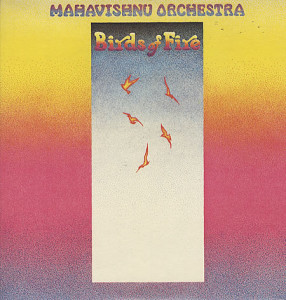
Mahavishnu Orchestra – Birds of Fire Columbia KC 31996 (1973)
I think this was the group’s very best album. Seamless, focused, dazzling. It’s all there.
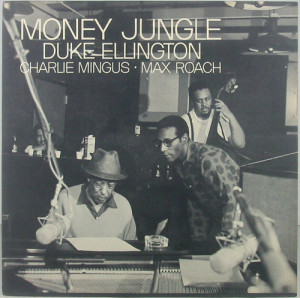
Duke Ellington / Charlie Mingus / Max Roach – Money Jungle United Artists UAJ 14017 (1963)
Superstar collaboration albums usually go one of two ways: (1) they produce a clash of egos ending in disaster; or (2) they go out in a whimper of disappointment, because the whole thing was a producer or executive’s idea and despite some good chemistry the one-off nature of the project didn’t allow enough time for things to come together. Money Jungle is something of the latter. In that, it is one of the more promising collaborations of its type. Yet it still feels like it could have been better. Duke made many collaboration albums, but what jumps out about this one is that rather than the other artist(s) coming over to his turf, this time it’s Duke who migrates over to the territory of the bop/hard bop camp. He proves he was an underrated pianist, though some of the slower tunes here feel almost like filler.
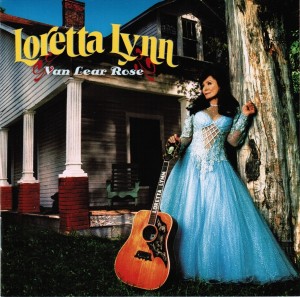
Loretta Lynn – Van Lear Rose Interscope B0002513-02 (2004)
Maybe much of the music industry had forgotten about Loretta Lynn by 2004, and younger urban audiences may have never really heard of her in the first place. But she was suddenly back in the charts with Van Lear Rose. And this was a convincing new offering, earning as much (or more) critical praise as it garnered in commercial success. Lynn wrote or co-wrote everything here, and it is the songwriting that makes the album what it is.
“Miss Being Mrs.” is a song she started co-writing with a friend back in the early 1980s, an idea that started with the title phrase, finished for purposes of the album. It is interesting that the song had origins so long ago, because Lynn was widowed and it seems like a very personal song for her, even if its origins suggest otherwise. It is the most spare performance on the album. It is just Lynn singing with acoustic guitar.
The story behind “Portland, Oregon” is described in her memoir Still Woman Enough. Lynn never drank much. But she was in a motel in Portland with Cal Smith (she admits to having a crush on him in her younger days) and various band members. Not knowing what to order, Smith suggests a “Sloe Gin Fizz.” As she gets a little drunk, her and Cal goof around to try to stir up controversy — Lynn’s husband Doolittle was a notoriously jealous man always suspicious of her cheating on him (even though it was him who regularly cheated on her). As she became pretty drunk Smith told her the bar was closing. Undeterred, she asks the bartender herself only to find out that the bar wasn’t really closed yet. So she orders a pitcher of sloe gin fizz to go. When she got back to her room, she started writing the song.
“High on a Mountain Top” has a bluegrass feel, with a clunky beat, chanted vocal backing, and rough-hewn violin. Lynn’s lyrics refer to her upbringing in the coal mining community of Butcher Holler, Kentucky. The title song “Van Lear Rose” is a tale about her family, specifically her mother — Lynn nominated her mother as her greatest teacher and her mother then received an award from the Carter White House in the late 1970s. “Story of My Life” is of course another autobiographical song, with more of a sense of humor than “Coal Miner’s Daughter” and with a longer time frame to draw from. “Little Red Shoes” is another autobiographical tale, delivered as sort of a spoken monologue, but it is less coherent than the way Lynn tells the story in one of her memoirs.
This “comeback” album (Lynn saw 2000’s Still Country! as her real comeback) was her best-selling since the late 1960s. Trendy indie-rock producer Jack White is on board. He is quoted as being a big Lynn fan, and he sought her out to do this project. In many ways, White is the album’s biggest liability — even though his very presence is what gave the album so much exposure and its commercial success. He over-uses heavy reverb and sustain on electric guitar (“Little Red Shoes”). If this is supposed to be a “crossover” effort, at times it seems like little more is done than put boilerplate (circa 2004) indie rock guitar behind Lynn. Though, in fairness, White also shakes Lynn loose from complacency and recording more of the same. He pairs her with his own hand-picked band, which Lynn nicknamed the “Do Whaters” because they did whatever was needed.
Lynn worked from within the Nashville system most of her career. As a result, she churned out albums at a breakneck pace. They were as a rule full of filler. Against that historical precedent, Van Lear Rose holds up pretty well. Lynn wasn’t know as primarily an album-focused recording artist. Even the best here doesn’t quite stack up with the finest recordings of her career (see Honky Tonk Girl: The Loretta Lynn Collection for that). Still, this comes close enough to belong in the conversation with her very best recorded work.
Public Enemy – Live From Metropolis Studios Universal 00602547228819 (2015)
If Public Enemy seemed to shun major labels in their later years, then Live From Metropolis Studios is an about-face. Still, it’s a pretty strong album, recorded live in a studio before an audience of about 125, and is helped by a “greatest hits live” format (like, ahem, Fight the Power! Greatest Hits Live!; there is nothing from their recent studio album Man Plans God Laughs) and hi-fidelity made possible by the “studio” setting. If live hip-hop usually only makes sense in person, with the energy of the interaction between the performers and the crowd fueling the experience, then live hip-hop recordings are often simply weak approximations of studio counterparts. Of course, DJ scratching can take on a bigger, or at least different, role in a live setting. But the real promise of recordings of live hip-hop is the use of a live backing band. With Public Enemy, that means The baNNed, featuring Khari Wynn on guitar, Davy DMX on bass, and T-Bone Motta on drums. Those guys lend some pretty tough punk/metal shadings to renditions of classics like “Black Steel in the Hour [of Chaos]” (which is performed sort of as a medley with snippets of songs like “MKLVFKWR” and “Do You Wanna Go Our Way???” worked in), “Shut Em Down” and “Harder Than You Think.”
Recorded in London in 2014, only part of the PE group is present. Professor Griff is absent, and only Pop Diesel and James Bomb from S1Ws made the trip. Although Terminator X reappeared on Man Plans God Laughs (his first recordings with the group in over 15 years), only DJ Lord appears here.
London is a special place for PE. In the late 1980s they toured there, before they really broke to wide audiences, and snippets from London concerts were prominently featured on their classic It Takes a Nation of Millions to Hold Us Back.
This album is a nice opportunity for old PW fans to catch up with the band, and hear a select few of their newer tunes of the last decade or so that they may have missed, and maybe there’s an off chance that younger listeners might tune in to one of hip-hop’s greatest acts for the first time.
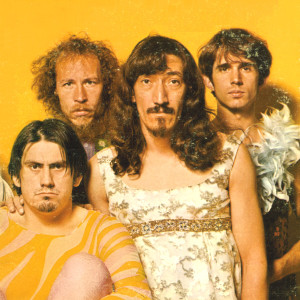
The Mothers of Invention – We’re Only In It For the Money Verve V6 5045X (1968)
This is hands-down the best album to come from The Mothers of Invention (it is often inexplicably filed under bandmember Frank Zappa‘s name in many record stores). It’s the one time their goofy, satirical sense of humor materialized on record in a way that both stayed true to its nonsensical sentiments and coalesced into a consistently moving body of songs.
In a way, this is the group’s Triumph des Willens [Triumph of the Will]. If that seems an odd comparison, know that the cynical attitude here is kind of what allows the band to forge on. The title may be “We’re Only In It For the Money” and that is supposed to be a joke, but aren’t they in it for the money in the end? The way the group skewers Yippie/Hippie culture is kind of an attack on what was the greatest threat to concentrated elite control of society since the labor movement and the associated threat of the collapse of capitalism from the Bolshevik Revolution through the Great Depression. Anyway, just like Triumph of the Will, this is still a great album because of the total conviction of what it is about, and the excellent execution.
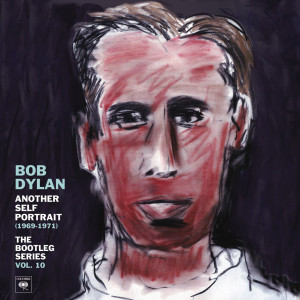
Bob Dylan – The Bootleg Series Vol. 10: Another Self Portrait (1969-1971) Columbia 88883 73488 2 (2013)
Drawing primarily from the years that produced Self Portrait, Dylan, and New Morning, but also touching briefly on The Basement Tapes, Nashville Skyline, and the new material from Bob Dylan’s Greatest Hits Vol. II, this tenth edition of the “Bootleg Series” focuses on a crucial turning point in Bob Dylan’s career, when for the first time he was drawing criticism and seemed to be making missteps. But set that all aside. The first disc of this collection is mostly rather excellent, and stands all on its own. From this evidence, Dylan had not run out of ideas. He had plenty. He was also capable of touching, heartfelt performances. But somebody, Dylan, his managers, the label…one of them, or bunches of them, seem to have conspired to present Dylan in the worst possible light back at the time of the original releases. This collection give everyone a second bite of the apple, so-to-speak. It finds Dylan doing something akin to the folk that he made in the early/mid 1960s. But by the dawn of the 1970s, commercial interests were looking west toward the burgeoning singer-songwriter movement that utilized more ornate studio embellishments than the kind of spare, acoustic folk Dylan was still frequently recording. This gives the impression that it was (stupidly, in hindsight) decided that Dylan needed to do something else. So he did. Dylan’s albums from the era ended up flawed, even dreadful at times. The songs on the first disc here are demo versions, unreleased outtakes, alternate versions, and a few versions that appear to be the released versions stripped of some or all original overdubs (akin, somewhat, to Willie Nelson‘s Naked Willie). The latter discs add more of the same, plus some live recordings. The deluxe edition includes a full disc of “The Complete, Historic ‘Isle of Wight’ Concert, 1969.” In truth the extra material is of marginal interest. The best material is on disc one; a single disc edition would actually be the one to get, if it existed. But all those details aside, this collection is great because it shows how even (or maybe especially) a huge star like Dylan faced pressure to do something “different” even when it was clear that doing more of the same is what would have worked best. The evidence is right here, and with hindsight thankfully the best of his efforts of the era are now available for all to hear.

Frank Zappa – Hot Rats Bizarre RS 6356 (1969)
Often cited as a key example of jazz fusion, I think Hot Rats makes a rather poor representation of the genre. For the most part, it’s a well-orchestrated affair that leaves precious little room for any significant improvisation. And after all, it’s improvisation that marks any music as “jazz”. Zappa, as usual, is really the opposite of what he pretends to be. This music is sort of a distraction, a cynical ploy that conceals behind a wall of exuberant, nearly psychedelic effects a kind of gutless service to all the lame institutions of the past. This isn’t the freaks revolting and taking over the world; this is the show that the “great and powerful” Wizard of Oz puts on to help the boring old man control the realm just out of sight. Or perhaps it is cheap vaudeville to let off some steam so that the machinery of established society keeps churning without exploding. Either way, the status quo emerges unscathed.
The best offering here is “Gumbo Variations” (as the title implies it’s really built more off Euro-classical tradition than any kind of jazz idiom). A few players rotate solos and you’re out. Don “Sugarcane” Harris puts in a nice electrified violin solo, but the song really drags after a while. Captain Beefheart makes an appearance on “Willie the Pimp”. Even Beefheart kind of gets lost on the album, scarcely utilized at all. The album is respectable, but, like most Frank Zappa albums, it just isn’t anything special.
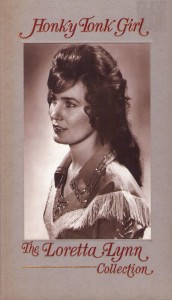
Loretta Lynn – Honky Tonk Girl: The Loretta Lynn Collection MCA MCAD3-11070 (1994)
Loretta Lynn was one of the great country music artists of the post-WWII era, for many reasons. Of course, she could sing. She had a voice that was entirely her own, prone to singing clear lines that melted into vibrato. She was a “coal miner’s daughter” raised in the Butcher Hollow part of Van Lear, Kentucky, and her diction and phrasing was definitely Appalachian, but she didn’t sing with a heavy southern drawl or affected country yodel. She wrote or co-wrote most of her own best songs. Many of them were autobiographical. But a key characteristic was that most of her best material forged a kind of personal independence. In a highly chauvinistic industry, she was able to craft a public persona of a woman in charge, able to make her own way. At a time when other female country singers rarely deviated from songs about romantic heartbreak (your typical country weeper song) or faithfulness, Lynn performed ones like “Fist City” that promised swift retribution for anyone (in that case her childrens’ bus driver) disrupting or undermining her life by chasing after her man — without crossing the line to simply claim her man as her possession she subverts the patriarchal notion of a woman being under the control of a man. One great example of this was an appearance on The Dean Martin Show in which a producer told her Martin would swivel her around and sit her in his lap during a song routine. She told the producer she wouldn’t sit in no man’s lap and that he could get someone else to do the show if that was the condition. They relented and Martin did not touch her during the performance.
Throughout her career she stayed true to her “hillbilly” roots. This isn’t to say she had a haughty, provincial attitude or asserted that rural folk were better than city folk. She instead had a strong sense of where she came from and was unapologetic about the perspective her upbringing gave her. This is epitomized by her hit “Coal Miner’s Daughter,” from her album of the same name, but also the title of both her 1977 memoir and a (rather good) New Hollywood biopic from 1980 starring Sissy Spacek (whom Lynn hand-picked for the role). She has recounted how Ernest Tubb said she was the only person he ever saw who never changed after she became famous.
She got her start as an independent (non-Nashville) act, recording the self-penned single “I’m a Honky Tonk Girl b/w Whispering Sea” in Hollywood (for Canadian label Zero) while she lived in Washington state. She has said her earliest sessions had a distinctive West Coast shuffle, and she recorded her first full-length album Loretta Lynn Sings in Los Angeles, with a subtle rhythmic swing to most of the songs that drew on just a little bit of rock and roll and hinted at the Bakersfield Sound. But one of Loretta Lynn’s greatest strengths — maybe her greatest — was her ability to go into the Nashville system and still make music her own way. She was far from a typical Nashville star, and her feisty persona cut against the grain of what was expected of female country stars (early influences were Kitty Wells and Patsy Cline, along with male role models like Ernest Tubb). Unlike, say, Johnny Cash, who existed kind of apart from the the Nashville system, Lynn worked her way into Nashville, performing on the Grand Ole Opry and such, but turning the Nashville system around for her own purposes, from the inside.
Lots of Lynn’s best songs follow a similar formula. In her earlier recordings she trades verses back and forth with instrumental statements from a pedal steel (Hawaiian) guitar, piano, or other instrument. The other instruments are not merely background accompaniment, but are given moments of roughly equal prominence with her voice. Everything is given its own space, without subjugating one to another. This is actually crucial for what made Loretta Lynn such a unique performer. Without being explicitly and overtly political, it is clear that her music reflected a worldview much to the political left of what Nashville country music typically promoted, seeking a more egalitarian way to “even things out” in society — a view complicated by her later political campaigning for politicians of the political right, due, apparently, just to personal affection. This is why the trading back-and-forth in a kind of call-and-response format suited her songs well. It also should be said that her music doesn’t fall into facile assumptions of the “proper” arrangement of people and things. Even as she implicitly suggests an end to patriarchy, there is more to the structure of her music than a simplistic shift to a differently ordered but essentially similar social hierarchy. In other words, implicitly drawing from christianity, it isn’t that everyone has a proper place. Lynn’s songs are often about the struggles of finding oneself in a particular position and looking for a way toward something else.
On the other hand, there isn’t some kind of reliance on Horatio Alger myths in Lynn’s music. Much like the classical historian Thucydides eschewed supernatural explanations for events in ancient Greece, there is no place for miracles or divine inspiration. The tales in Lynn’s songs are the product of human interactions. The essence is about movement in its most basic form, in relation to other people. Her traded statements with instrumentalists absolutely emphasize this relational aspect. In later years, this relationship was a little less natural. It didn’t disappear completely, but did seem somewhat more forced and the instrumentals more distant from Lynn’s vocals.
She absolutely places family, and her band, at the center of everything. She didn’t accomplish anything all on her own. But family and romantic relationships loom large in terms of the social interactions that preoccupied her songwriting. This is partly why her music is so durable, and as accessible and relatable a half century later as it was the day it was recorded.
Lynn claimed to be apolitical — which is a typical stance of political liberalism. Yet there is no escaping politics. “Dear Uncle Sam” is a war protest song. This is remarkable. Most of what country music had to say about the war can be summed up by Merle Haggard‘s “The Fightin’ Side of Me,” which is not so much a pro-war song as an anti-middle class song. The reality is that the most visible parts of the war protest movement were led by middle class students. Many historians attribute the end of the Vietnam War, that is, American withdrawal from the conflict, to have been precipitated by the draft, when the children of the middle class were forced to bear life and death burdens, not just the lower classes who volunteered. This is sometimes suggested as an explanation for the length and media disinterest in America’s longest war, in Afghanistan, or even the two wars in Iraq, which were all volunteer armies, drawn mostly from the lower classes. As epitomized by the Merle Haggard song, the tendency is to see military service as one of the proud ways that lower classes can provide public service, without much consideration given to that service being for wars of aggression. But Loretta Lynn’s “Dear Uncle Sam” takes a look at the costs borne by the lower classes. It is worth noting that Lynn wrote the song in 1966. The draft lottery for the Vietnam War was not instituted until 1969. When she sings about the personal cost to the protagonist, she is singing about how the burden of the war (of aggression — the relatively poor country of Vietnam posed zero military threat to the United States) fell disproportionately on the poor. This is a sentiment found in other songs of the era. Blues musician JB Lenoir wrote “Vietnam Blues” (released in 1970) from the perspective of war politics being a luxury for a black man suffering from domestic oppression. Then there is Joan Baez with 1973’s “Where Are You Now, My Son?” This was a song with lyrics, “They say that the war is done/ But where are you now my son?,” that seem to inhabit the same space as Lynn’s “Dear Uncle Sam.” But Baez has a shrill, preachy tone (albeit in a song interspersed with field recordings from Vietnam, complete with the sound of bombs in the background). The Baez song, most importantly, speaks primarily to an audience already opposed to the that war, or any other. Lynn, though, was speaking to an audience more in favor of the war, or at least, more indifferent or ambivalent to it.
Other Lynn songs like “Don’t Come Home a Drinkin’ (With Lovin’ on Your Mind),” “Rated X” and “The Pill” — even the Shel Silverstein-written “One’s on the Way” — had a definite feminist slant. The essence of feminism is the radical idea that women are equal to men. When Lynn sings about acting on her own, and making up her own mind, she is usurping a role dictated to women in a patriarchal society.
As time went on, Lynn’s sound changed (though Owen Bradley remained her producer for almost the entirety of her peak popularity). In the late 1960s, as she was fully a part of the Nashville scene, her songs featured more elaborate backing, using reverb, string arrangements and backing singers. Yet she stuck with a honky tonk-inflected style as other styles rose to prominence. Eventually, though, traces of a honky tonk sound were muted. Her music became smoother. The rhythms were softened, and there was generally less space and silence. At the same time her vocals were frequently more staccato. Sometimes her vocals were double-tracked. She still succeeded in this later period with songs like “Love Is the Foundation” and “Trouble in Paradise,” even “Hey Loretta,” “Out of My Head and Back in My Bed“ and the duet “You’re the Reason Our Kids Are Ugly“ too.
Duets with male singers were a significant part of Lynn’s career. Her early mentor Ernest Tubb was her first duet partner, but she later had a successful run of recordings with Conway Twitty that were arguably much better than those with Tubb.
Although few artists ever have a hit, even the few considered successful generally only stay relevant for five to maybe ten years. Loretta Lynn managed to stay relevant and popular for almost two decades, before fading from view somewhat. Granted, Lynn was churning out three to four full-length albums per year during her peak. The pace of her recording schedule virtually guaranteed that those albums would be loaded with filler. So a collection like Honky Tonk Girl does a great service in focusing on mostly the key singles. There are other Lynn collections and “best ofs” available, but many of those omit too much — like her iconic debut single “Honky Tonk Girl.” Granted, Honky Tonk Girl came out in 1994, a decade before her crossover/comeback album Van Lear Rose, so it can’t be a comprehensive overview of her entire career without at least one song (and preferably a handful of songs) from that album like the great “Miss Being Mrs.”
Still, Lynn suffered from a problem of many big stars. She toured way too much, and did too many television appearances, leaving her with too little time devoted to songwriting or recording. There are simple explanations for this trend. Musicians tend to make much more money from live performance than from recordings. The recordings tend to be seen as merely stimulating demand for concerts, and big stars tend to eventually take demand for their concerts for granted — until their fan base dwindles and young people have associated themselves with other, newer acts, perhaps blissfully unaware of the existence of the established acts. So it was with Loretta Lynn — she tried to write about the burdens of fame in her second memoir Still Woman Enough in which she also admits to losing interest in recording. By the 1980s she was recording mostly songs written by others. On top of that, most stars of the 1960s (in any genre) were floundering by the mid-1980s, and country music of that era was at an epic low point. Lynn was caught in those downward trends too. So disc three of Honky Tonk Girl is easily the least of the set, particularly because the second half of it dips in quality.
Honky Tonk Girl is still probably the best Lynn compilation available. Even the so-called The Definitive Collection lacks the iconic “I’m a Honky Tonk Girl”! In Honky Tonk Girl: My Life in Lyrics Lynn states that the song was the first she ever wrote (though elsewhere that honor is credited to the b-side “Whispering Sea”), about a woman who had never drank before but kept coming into the club where Lynn was working, sitting in the same booth and crying after a few beers, because her husband left her and her seven children for a younger woman. The thing about that song, and so many of Lynn’s best, is that it is absolutely genuine. She wrote about what she knew.
Beat writer William S. Burroughs once wrote an article “A Review of the Reviewers” (reprinted in The Adding Machine: Selected Essays), in which he said:
Matthew Arnold set up three criteria for criticism: 1. What is the writer trying to do? 2. How well does he succeed in doing it? … 3. Does the work exhibit “high seriousness”? That is, does it touch on basic issues of good and evil, life and death and the human condition. I would also apply a fourth criterion … Write about what you know. More writers fail because they try to write about things they don’t know than for any other reason.
Loretta Lynn was great because her best recorded work met all four of Burroughs’ criteria.
All said, Honky Tonk Girl is a great collection, and at least the first two discs are about as good as late 20th Century country music comes. Despite not being a complete career-spanning overview, and the lack of a disc-by-disc track listing — only a consecutively numbered list is provided, leaving the listener to guess at whether song number 24 appears on disc one or two, for instance — this is still music to return to often.