Eric B. & Rakim – Let the Rhythm Hit ‘Em

Let the Rhythm Hit 'Em

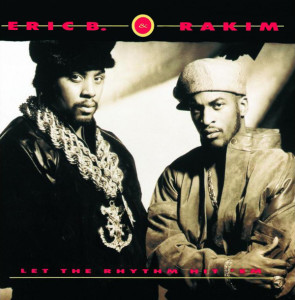
Eric B. & RakimLet the Rhythm Hit ‘Em MCA MCAD-6416 (1990)


Let the Rhythm Hit ‘Em was an ambitious hip-hop album in its day. The duo pulled rank. Their earlier albums were more popular and acclaimed then, but it’s those other ones that today sound like relics.

There are at least three stages to hearing this album. First, you just dig it because it’s a solid album with a snap to the beats. Next, you start to decipher Rakim’s intricate lyrics. Finally, you realize how intricate Eric B.’s mixes are and how they intensify everything on the disc. You don’t even have to get past phase one. Really that’s the beauty of it. Bobbing to it or dissecting it, either works.

That “Keep ‘Em Eager to Listen” comes right before “Set ‘Em Straight” says it all. Nothing on the album is accidental. This feels like the album Eric B. & Rakim always wanted to make if they could. Well they did it. The record receives all the talent like uninvited guests who arrive with inexplicable expectancy.

There seem to be more than enough James Brown samples to go around. It takes quite a Godfather fan to pick out precisely where they come from though. Eric B. breaks everything down a rebuilds something of an entirely different form. He was a bridge between old school and new school. As a DJ he could scratch with anybody, but he could build cohesive songs through improvisation. Eric B. seems to have a greater awareness of why he’s improvising and where this is all headed.

Rakim was simply one of the most talented rappers and lyricists of his day — a status that isn’t exclusive to hip-hop. “In the Ghetto” is the unsentimental tale of his grim existence. Rakim flexes his lyrical muscle to get some needed breathing room.

This is known as a lyricist’s album, but that sells Let the Rhythm Hit ‘Em short. Rakim lays out some fine lyrics but it’s the delivery and the assembly of the choice whole that make this a classic. Bleak in a dense mass. The lyrics fit into an orchestrated statement said in more than words.

Hip-hop albums too often end up disposable vehicles for nonsense fads. Eric B. & Rakim set out to make an album for the ages. Let the Rhythm Hit ‘Em quickened hip-hop’s ascension. A few have continued the challenge. The others perhaps ignore this as it might reveal their own weaknesses.
Yeah Yeah Yeahs – Yeah Yeah Yeahs

Yeah Yeah Yeahs

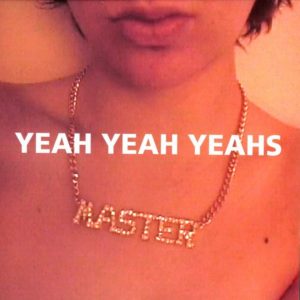
Yeah Yeah YeahsYeah Yeah Yeahs Shifty SH05 (2001)


[written back in 2001]

Against the weight of circumstance bearing on rock ‘n’ roll there are the Yeah Yeah Yeahs (YYY). They make art punk funk noise. Precisely what these post-no-wave New Yorkers actually have stumbled onto is a mystery of epic proportions. Here is a band willing to cop an attitude.

A holy racket that can level a city like a monster movie, Yeah Yeah Yeahs is “only” a five-song EP. Some garage-quality production values are not a major obstacle (Jerry Teel at Funhouse studios does a good job with probably few tools). EP’s are vehicles and this is quite a ride. This is just the beginning but the YYYs are way out in front of just a casual pace. They are already running.

The trio packs a multitude of delights. They are part rogues, artists, sexaholics and comedians. Karen O rock stars usually come in dreams. Does she embody pleasure or pain, or is she a prankster bent on destroying the distinction? Her sexy snarl is enough to leave a boy or girl confused and hoping for yet more confusion. Nick Zinner on guitar tears through his icy riffs. He can groove in deeper rhythms or attack with slashing solos (and take some nice photographs). Zinner is a major force. Brian Chase adds a deft touch on skins though lo-fi recordings never do drums justice.

The savvy lyrics have a medical efficiency. “Bang” is a pure sex song. “Mystery Girl” flaunts the unknown pleasures of all that lies ahead (with the appropriate lyric “take a deep breathe, babe/ ‘cause we just started”). “Our Time” is their contemporary anthem of disillusionment, chanting, “it’s our time/ to be hated” (patently destroying the essence of Tommy James & The Shondells‘ “Crimson & Clover”). Sometimes they are thinking while sometimes they just feel. Apparently inhibitions are needed urgently elsewhere.

The YYYs play groovy noise rock but with sketchy reference points. Comparisons hardly work (Boss Hog/JSBX? The Cramps? Gang of Four? Swans?). The YYYs stand on their own though. Yeah Yeah Yeahs is loud and subtle. It can move you or intrigue you. In other words, it can hit you in the gut or in the head. Yeah Yeah Yeahs’ empowerment lies in your choosing its target.

This EP is like the ground-floor entrance to the next big thing. Yeah Yeah Yeahs blasts you with the indifference of a finely tuned death trip. Critics have picked up the YYY’s scent. Either everyone else takes the hint now or thirty years later the YYYs will reunite for their first tour with seating for 30,000.

Scott Walker + Sunn O))) – Soused

Soused

Scott Walker + Sunn O)))Soused 4AD CAD3428CD (2014)


Scott Walker continues to challenge himself and audiences.  With Soused, he has teamed with drone metal outfit Sunn O))).  Comparisons have been drawn to Lou Reed‘s collaboration with Metallica on Lulu (2011), but comparisons could equally be drawn to Tony Conrad working with Faust on Outside the Dream Syndicate (1972).  The album opens strongly with the two best tracks, “Brando” and “Herod 2014.”  “Brando,” which might have been inspired by the strange Arthur Penn western The Missouri Breaks (1976) starring Marlon Brando and Jack Nicholson, sounds the most like Walker’s most recent albums.  There is a recurring riff a bit like Guns N’ Roses‘ “Sweet Child O’ Mine,” deflated and blunted.  The second track, “Herod 2014,” is the story of a mother hiding her children…from something not really named.  The song title is a reference to the biblical king of Judea.  There is a small bell that is repeatedly rung throughout the song, somewhat loudly at first but then pushed back into the background so that it is barely perceptible.  In an interview, Walker said, “The bell, in a sense, is representing her.”  The rest of the tracks, all written by Walker, come closer to the usual sound of Sunn O))).  They aren’t quite up to the first two tracks, but they don’t disappoint either.  This is a grim, confrontational album that tries to provoke and prod listeners.  But it also draws on plenty of dark, gallows humor.  It may not be the finest from either Walker or Sunn O))), but it is a worthy collaboration that finds a lot of common ground.

The Senior Dagar Brothers – Bihag Kamboji Malkosh

Bihag Kamboji Malkosh: Calcutta 1955

The Senior Dagar BrothersBihag Kamboji Malkosh: Calcutta 1955 Raga Records RAGA-221AB (2000)


This release is flawed only in the manner of its recording.  As a live release, and an old one at that, there are some background noises audible and one of the brothers coughs repeatedly during the performance.  “Raga Malkosh” is only heard for the first 25 minutes, and apparently the rest of the performance was not recorded.  Fortunately, those things are only occasional annoyances and shouldn’t keep anyone away from this music.  The performance itself is fantastic.  I can’t tell the two brothers (Aminuddin Khan Dagar and Moinuddin Khan Dagar) apart on this record, but I’ve heard people comment that they trade off vocals in different pitch ranges so as to extend their collective range.  These are morning ragas, so for best effect they should be heard in the morning.  Fans of this should be sure to check out Pandit Pran Nath too.

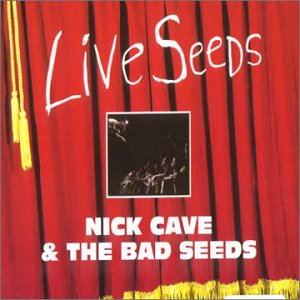
Nick Cave & The Bad Seeds – Live Seeds

Live Seeds

Nick Cave & The Bad SeedsLive Seeds Mute CDSTUMM122 (1993)


Live Seeds, like most offerings from Nick Cave’s middle period, is an uneven affair.  “Ship Song”, “Papa Won’t Leave You, Henry”, “From Her to Eternity” and “New Morning” are all fantastic, but elsewhere Cave and company lean far too heavily on his songwriting to do all the heavy lifting.  In a way, that saps all the energy out of the songs.  Maybe it’s a common trick artists use to regroup during a live set.  But that doesn’t help the album at all.

In short, Live Seeds is an improvement over some of Cave’s previous few studio albums, but it pales in comparison to his earliest solo albums and the best material he produced about a decade later.

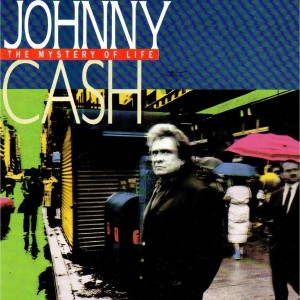
Johnny Cash – The Mystery of Life

The Mystery of Life

Johnny CashThe Mystery of Life Mercury 848 051-2 (1991)


By the early 1990s, it seemed like the world had given up on Johnny Cash.  Well, at least his record labels had all given up on him.  In an autobiography, he later claimed Mercury pressed only 500 copies of The Mystery of Life (Cash mistakenly called it The Meaning of Life), though it did scrape the bottom of the country charts.  That’s a shame, because Cash was clearly interested in recording.  His vocals sound clear and impassioned in a way that was totally lacking on most of his recordings from the late 1970s through just about all of the 1980s.  If Water From the Wells of Home was supposed to be his comeback, then it says something that this album is a step up.  It’s no winner.  It’s still a rather middling affair.  Producer “Cowboy” Jack Clement burdens this with heavy-handed production values that make all the instruments sound synthetic and artificial.  But on top of Cash’s strong vocals, the band plays well enough (if you can look past the way they are recorded).  Although the standard narrative is that Cash’s career was on the skids for decades before Rick Rubin revived it with American Recordings, this album is worth a look for fans to see that Cash was still in good form as a singer, but was always held back by everything else dumped into his records and a lack of promotion.  That is to say Rick Rubin didn’t change much when he came along, he just recorded Cash without the other clutter and otherwise let Cash himself do basically exactly what he was doing here — particularly for Unchained — and actually promoted him.  This one’s an interesting curio for those who’ve already heard Cash’s more acclaimed efforts and want to go back and fill-in some of the gaps to round out the picture.

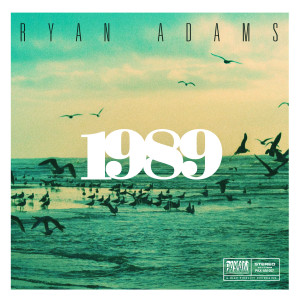
Ryan Adams – 1989

1989

Ryan Adams1989 Pax Am PAX-AM 057 (2015)


Ryan Adams covers Taylor Swift‘s entire album 1989.  The basic sound here is the increasingly slick 1970s rock flavored alt country that Adams has favored on recent studio albums.  That is fine, unto itself.  But if there was anything to like about Swift’s original album it certainly wasn’t the douchebag narcissism and malevolent mythologizing that sustained its songwriting.  So Adams keeps that part and jettisons the rest.  It kind of would have been more interesting if Adams had written new lyrics and sung them over the same music as Swift’s album.  But Adams tends not to have good ideas like that.

Sole – Live From Rome

Live From Rome

SoleLive From Rome anticon. ABR 0048 CD (2005)


Righteous indignation.

This is a much more overtly political album than Sole’s previous — and probably best — album Selling Live Water.  It isn’t nearly as successful.  Though there are good intentions everywhere on this disc, the music/beats aren’t always compelling.  I saw Sole live touring on this album, and he had a live band with him.  Frankly, many of the songs sounded better with the live band (the title “Live From Rome” alludes to the fall of the Roman Empire as a parallel to or hope for the fall of the American Empire; this is not a live recording).  The thundering “Dumb This Down” is probably the best here, but “Cheap Entertainment” is sort of subtly infectious.  Almost everything here is decent, but newcomers should start elsewhere.

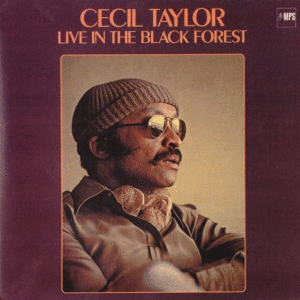
Cecil Taylor – Live in the Black Forest

Live in hte Black Forest

Cecil TaylorLive in the Black Forest MPS 0068.220 (1979)


One of many live Cecil Taylor recordings from the 1970s, Live in the Black Forest was recorded less than two weeks prior to One Too Many Salty Swift and Not Goodbye with the same Cecil Taylor Unit band.  Frankly, this is not as good as some of the others of that era.  There are two side-long tracks.  “Sperichill on Calling” is great, with an especially strong showing from Ramsey Ameen on violin, and generally more separation between the players.  “The Eel Pot” on side one is fine, but the sometimes unrelentingly chaotic performance kind of runs together after a while.  If the entire recording is analogized to a debate, then “The Eel Pot” is a bit combative, and “Sperichill on Calling” has more sympathetic goading and expansion of argument.  While listeners can’t really go wrong with any Taylor recordings of this era, Live in the Black Forest might be reserved until after some of the others.

Mavis Staples – Have a Little Faith

Have a Little Faith

Mavis StaplesHave a Little Faith Alligator ALCD 4899 (2004)


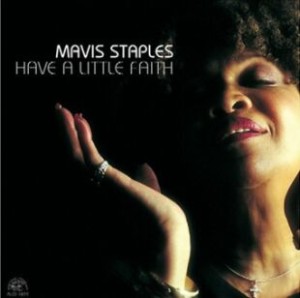
Mavis Staples had something of a late career resurgence with a number of well-received recordings.  Have a Little Faith came just before that resurgence.  While she sings well (of course!), the album as a whole is dull.  The songs frequently employ slick formula and cliches as if they are impressive, without any self-awareness or irony.  There is simply too much to take away from Mavis’ voice.  Pass on this and proceed to what came next, the warm and endearing We’ll Never Turn Back.