
Link to an article by Jacob Levich:
Author: Syd Fablo
Kathy Kiely – Author Thomas Frank Talks Hillary Clinton, Bernie Sanders and His New Book, “Listen Liberal”
Link to an interview of Thomas Frank by Kathy Kiely:
“Author Thomas Frank Talks Hillary Clinton, Bernie Sanders and His New Book, ‘Listen Liberal'”
Bonus links: “Thomas Frank on How Democrats Went From Being the ‘Party of the People’ to the Party of Rich Elites” and “How the Democrats Left the Door Wide Open for Donald Trump”
Tom Slee – The Sharing Economy’s Dirty Laundry
Link to an article by Tom Slee:
“The Sharing Economy’s Dirty Laundry”
Bonus links: “Raw Deals” and “Uber’s Consumer Democracy” and “Is Uber’s Business Model Screwing Its Workers?” and “NYC Taxi Driver Kills Himself at City Hall After Condemning Uber & Politicians for Financial Ruin” and “‘The Gig Economy’ Is the New Term for Serfdom” and “Meet ‘Sledgehammer Shannon,’ the Lawyer Who Is Uber’s Worst Nightmare” and “What’s Really New About the Gig Economy?” and “Uber’s Big Lie” and “Striking for the Future” and “Uber Takes a Hit in London” and “Amazon’s Last Mile” and “#DeleteUber for Good” (“Uber is … also about using its ‘tech’ branding to raise massive amounts of capital — so much that it could lose $5.2 billion just in the last quarter — to engage in a form of predatory pricing to drive traditional transport operators out of business and force regulators to remake existing laws in its favor. That fight is finally coming to a head.”) and Lehigh Valley Coal Co. v. Yensavage, 218 F. 547 (2d Cir. 1914), and “Why Courts Across the World Are Ruling That the Gig Economy Is Paving the Road to Serfdom”
Ryan Adams – 1989
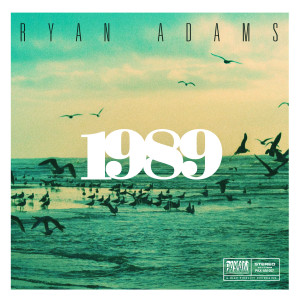
Ryan Adams – 1989 Pax Am PAX-AM 057 (2015)
Ryan Adams covers Taylor Swift‘s entire album 1989. The basic sound here is the increasingly slick 1970s rock flavored alt country that Adams has favored on recent studio albums. That is fine, unto itself. But if there was anything to like about Swift’s original album it certainly wasn’t the douchebag narcissism and malevolent mythologizing that sustained its songwriting. So Adams keeps that part and jettisons the rest. It kind of would have been more interesting if Adams had written new lyrics and sung them over the same music as Swift’s album. But Adams tends not to have good ideas like that.
Andrew Smolski – Drug War Capitalism: An Interview with Dawn Paley
Link to an interview of Dawn Paley, author of Drug War Capitalism (2014), conducted by Andrew Smolski:
Sole – Live From Rome

Sole – Live From Rome anticon. ABR 0048 CD (2005)
Righteous indignation.
This is a much more overtly political album than Sole’s previous — and probably best — album Selling Live Water. It isn’t nearly as successful. Though there are good intentions everywhere on this disc, the music/beats aren’t always compelling. I saw Sole live touring on this album, and he had a live band with him. Frankly, many of the songs sounded better with the live band (the title “Live From Rome” alludes to the fall of the Roman Empire as a parallel to or hope for the fall of the American Empire; this is not a live recording). The thundering “Dumb This Down” is probably the best here, but “Cheap Entertainment” is sort of subtly infectious. Almost everything here is decent, but newcomers should start elsewhere.
Ellen Brown – Exposing the Libyan Agenda
Link to an article by Ellen Brown:
“Exposing the Libyan Agenda: A Closer Look at Hillary’s Emails”
Cecil Taylor – Live in the Black Forest
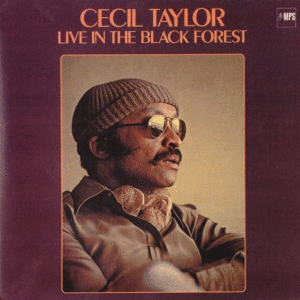
Cecil Taylor – Live in the Black Forest MPS 0068.220 (1979)
One of many live Cecil Taylor recordings from the 1970s, Live in the Black Forest was recorded less than two weeks prior to One Too Many Salty Swift and Not Goodbye with the same Cecil Taylor Unit band. Frankly, this is not as good as some of the others of that era. There are two side-long tracks. “Sperichill on Calling” is great, with an especially strong showing from Ramsey Ameen on violin, and generally more separation between the players. “The Eel Pot” on side one is fine, but the sometimes unrelentingly chaotic performance kind of runs together after a while. If the entire recording is analogized to a debate, then “The Eel Pot” is a bit combative, and “Sperichill on Calling” has more sympathetic goading and expansion of argument. While listeners can’t really go wrong with any Taylor recordings of this era, Live in the Black Forest might be reserved until after some of the others.
Mavis Staples – Have a Little Faith
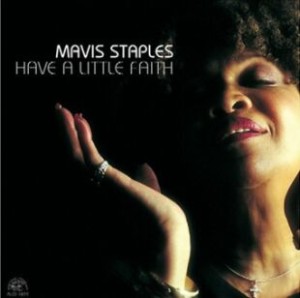
Mavis Staples – Have a Little Faith Alligator ALCD 4899 (2004)
Mavis Staples had something of a late career resurgence with a number of well-received recordings. Have a Little Faith came just before that resurgence. While she sings well (of course!), the album as a whole is dull. The songs frequently employ slick formula and cliches as if they are impressive, without any self-awareness or irony. There is simply too much to take away from Mavis’ voice. Pass on this and proceed to what came next, the warm and endearing We’ll Never Turn Back.
Neil Young – Chrome Dreams II

Neil Young – Chrome Dreams II Reprise 936 249 917-2 (2007)
A very eclectic album without being uneven. You get a real sampling of almost all aspects of Young’s music, from mellow country-rock to angry rockers. This was the sequel (of sorts) to the unreleased 1977 album Chrome Dreams. The highlight is “Ordinary People.” Operating in Bruce Springsteen mode, Young really delivers on a working man’s epic. It was dug up from the archives (from the This Note’s for You era) for this release. The only problem at this point is that younger listeners may have no context for a song about factory workers losing jobs. The song was from just after the first wave of the neoliberal assault on working America, wresting power and wealth away from industry and average folks (labor) to be placed in the hands of the Capital class and the FIRE sector (finance, insurance and real estate). The first assault was against unions (key in the auto industry), shifting election funding toward purely business sources, with corporate raiders (like in the popular movies Wall Street and Pretty Woman) pillaging assets and pensions, and in adjusting tax codes to drastically reduce taxes on the rich and drastically reducing payments toward programs that benefited the poor and middle class. The second wave of the neoliberal assault would be completed in a few years, with “free trade” agreements eliminating the possibility that domestic industry could be viable any longer, instead shifting focus to currency speculation that pillaged foreign central banks and with labor arbitrage “offshoring” jobs to distant locations with pauper labor. So Chrome Dreams II comes during the “post-industrial” era of the USA. Most factory jobs are long gone, so there haven’t been any to lose in a while. Its ambitions are futile now, but Young’s “Ordinary People” narrative still resonates with conviction the heartbreak and sadness and grim determination that transcends changed circumstance — today the narrative would be about a Midwest Methland where the factory is long gone and rural methamphetamine labs open up amid the whirlwind of lives and local economies circling the drain. In the end Chrome Dreams II proves that Neil Young is a more honest and genuine rock and roller than just about anybody else out there. Here’s to lost causes like that.