The Stooges – The Weirdness

The Weirdness

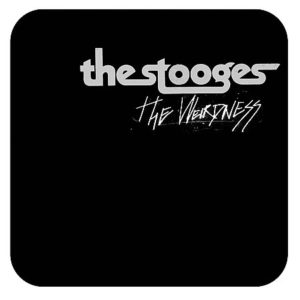
The StoogesThe Weirdness Virgin 7243 8 64648 2 8 (2007)


So wrong, so wrong, so wrong.  Reviewer BradL wrote about Dylan‘s Christmas in the Heart that “[a]nyone can make a mediocre record.  It takes true genius to make a wretched one.”  Iggy Pop has earned some ignoble piece of genius here because this is about as bad as they come.  You have a band calling itself The Stooges that only manages to sound like a tenth-rate Stooges knock-off.  File this alongside Heard Ya Missed Me, Well I’m Back and 15 Big Ones as another “comeback” album that should have never been.

Timothy Shenk – When Slaveholders Controlled the Government

Link to an interview with Matthew Karp, author of This Vast Southern Empire: Slaveholders at the Helm of American Foreign Policy (2016), by Timothy Shenk:

“Booked: When Slaveholders Controlled the Government, with Matthew Karp”

Bonus links: “When the South Held the Keys” and “Abolitionism: a Study Guide”

Sinéad O’Connor – Throw Down Your Arms

Throw Down Your Arms

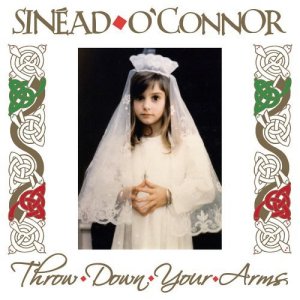
Sinéad O’ConnorThrow Down Your Arms Keltia KMCD166 (2005)


I do respect Sinéad O’Connor.  The media likes to focus on “controversy” in her “personal life.”  Mostly that is a product of her refusal to play by the rules of the mainstream media, and they always seek to punish and discredit those people — or else feign doing so to manufacture controversy, which is always good for grabbing attention in the slimiest way possible.  But even when doing things like tearing up a photo of Pope John Paul II on television (a stunt excised from most rebroadcasts), and less than two weeks later, after Kris Kristofferson introduced her as becoming “synonymous with courage and integrity,” being booed (quite ironically!) at the Bob Dylan: The 30th Anniversary Concert Celebration, in response to which she sung/spoke/shouted a rendition of Bob Marley‘s “War” that was omitted from the CD release, wasn’t she, well, entirely right?  It’s hard to look back on the problems the catholic church has faced with child abuse coverups and not find O’Connor vindicated.  And there are other examples of her being righteously correct against an onslaught of support for self-serving and brutal exploitation.  But much of the press’ reaction to her has to do with what seems like a genuine desire to be a normal person, rather than a complete narcissist myopically dedicated to creating an outrageously artificial public persona (which seems to sustain the profit margins of said same press).  As a celebrity musician, the closet comparison might be Neil Young, especially in his later years.  Both sometimes seem too normal and well-adjusted to have survived the entertainment industry as long as they have.  Though Young never generated nearly the same hostility that O’Connor did.

Anyway, O’Connor is really a great pop singer.  That much is beyond question.  Her voice can carry a whole song by itself.  Yet, the musical accompaniment on her albums, while complete professional and lacking any obvious flaws in performance, can be stylistically rather plain.  Throw Down Your Arms, on paper, looks poised to be yet another disastrous reggae album by a white onlooker.  But — surprise! — it is actually rather well-executed.  O’Connor’s voice is refreshingly well-adapted to this style of music, bringing to bear an astute sense of drama and theatrics, without pushing that too far.  The music, produced by stalwarts Sly & Robbie, is effective, never a liability or a distraction.  The album dips a bit toward the end.  Still, while no great landmark, this album is way better than it deserves to be.

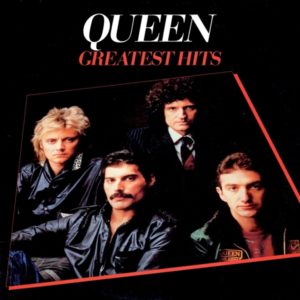
Queen – Greatest Hits

Greatest Hits

QueenGreatest Hits EMI EMTV 30 (1981)


Great stuff really.  These hits are still ubiquitous.  And they deserve to be.  What struck me listening to this for the n-th time was how the techniques that Queen use are not altogether that different from the ironic, kitschy mash-ups of tropicália, though this is undeniably camp rather than social protest music.  But the underlying musical techniques have similarities.  Susan Sontag famously wrote that camp was characterized by artifice, exaggeration, a conversion of the serious to the frivolous, and naïve unpretentiousness.  Even with the very exaggerated, flamboyant frivolity of something like “Bohemian Rhapsody” or even “Don’t Stop Me Now” there really is hardly a whiff of pretension.  The band never blinks no matter how silly the premise.

One thing I’ll always remember about Queen is that a guy I used to work with (in retail) would stroll along at work and sing “Killer Queen” (or at least a verse or two over and over again) in a kind of stoner drawl.  That kind of sums up Queen for me: a band that is a distraction, an escape, greasing the wheels of daily life, and completely and totally okay with being that and no more than that.  The thing to question about something like that is how it tends to justify the status quo, no matter what that is, but , still, few convey a poignant sense of motion holding distinct concepts in a particular relationship to each other quite like Queen.  As one person put it, “The great thing about Queen was that they could unite both meathead jock-rockers and sexually adventurous drama nerds, whether those two groups wanted to be united or not.”

This collection of hits is all you need from the band.  There are also Vols. II and III, but those get lame quickly.  Sure, there is still room to quibble with a few of the selections here, like the lack of “Under Pressure,” and “Flash” belongs at the very end.  But those are minor concerns.

The Swan Silvertones – Day By Day

Day By Day

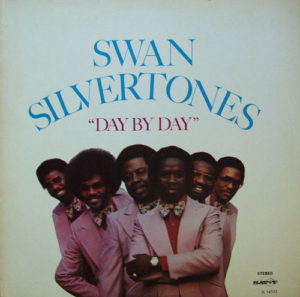
The Swan SilvertonesDay By Day Savoy SL-14555 (1981)


Much like The Soul Stirrers and Fairport Convention, The Swan Silvertones were recording long after the original members had left.  The current group was led by lead singer Louis Johnson.  The songs all have a Memphis soul feel.  There are none of the intricate vocal harmonies of years past.  Louis Johnson still has a good voice, though he doesn’t seem to have the range he once did.  The new singers aren’t prominent enough to be memorable here.  Still, the mellow sound of the album has its charms.  This might just be the best offering from the group’s years on Savoy Records.

David Wineberg – The Man With Two Brains

Link to David Wineberg’s review of Chris Knight‘s book Decoding Chomsky: Science and Revolutionary Politics (2016):

“The Man With Two Brains”

Bonus links: “Decoding Chomsky. Science and Revolutionary Politics. Chris Knight. A Review.” (this review usefully relies on Bourdieu), and “Understanding the Labyrinth: Noam Chomsky’s Science and Politics” (“Chomsky’s stance undercuts the responsibility of scientists to speak out as public intellectuals against dishonest invocation of pretended science [o]n behalf of commercial and political interests.”), and Systemic Functional Linguistics, and Denial AKA disavowal (“In Verleugnung, the defense consists in denying something that affects the individual and is a way of affirming what he or she is apparently denying.”) and “Chomsky, Wolfe and Me” and “Noam Chomsky Responds to Chris Knight’s Book, Decoding Chomsky: Science and Revolutionary Politics” and “When Chomsky Worked on Weapons Systems for the Pentagon”  (“In Chomsky’s writings, individualism and genetic determinism are both taken to astonishing extremes.”)


To the extent that Knight (or others) are insisting that Chomsky (or others) assume the position of a Hegelian “beautiful soul” I disagree.  Other other hand, from sort of a Bourdieu (or Bachelard) sort of sociological perspective, it is crucial to understand the institutional field in which a “major” academic like Chomsky operates.  I think Knight is more concerned with how Chomsky is or isn’t a “useful idiot” for military interests like Robert Oppenheimer with the Manhattan Project.

João Gilberto – Chega de saudade

Chega de saudade

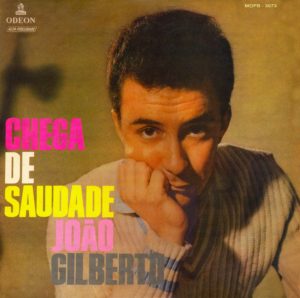
João GilbertoChega de saudade Odeon MOFB 3073 (1959)


Chega de saudade was an album credited as the being the very first in an entirely new genre: bossa nova.  João Gilberto was the genre’s true master, the epitome of its cool, detached, laid-back qualities, with a voice perfectly suited to the music and an often-imitated but never duplicated style on the guitar.  He is supported by some jazzy accompaniment.  It is complementary.  Yes, this is music of the well-off, but it is music of the most aware and sympathetic among them.  In an era before the LP format really came into its own, this is one of the early milestones.  It still sounds great more than a half-century later.  His next few albums, though still good, lacked the utterly effortless cool achieved here.  Then came international success with the excellent collaboration Getz / Gilberto.  Also check out Gilberto’s arguably best album, the eponymous 1973 effort  João Gilberto.

On Fidel Castro’s Death

Links to commentary upon the death of Fidel Castro: