Link to an essay by Jorge Luis Borges (translated by James E. Irby):
An event retroactively creating its own possibility is what Hegel called “totalizing”
Cultural Detritus, Reviews, and Commentary

Link to an essay by Jorge Luis Borges (translated by James E. Irby):
An event retroactively creating its own possibility is what Hegel called “totalizing”
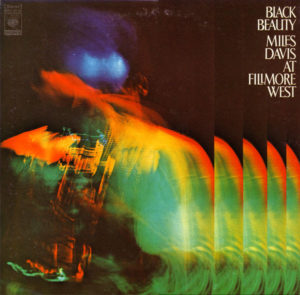
Miles Davis – Black Beauty: Miles Davis at Fillmore West CBS/Sony SOPJ 39-40 (1973)
Good stuff. Most if not all of this ranks among Miles’ best of the era. Fans of Miles’ fusion period will find a lot to like here — though newcomers should perhaps proceed to Live-Evil and Agharta first. This set sounds a lot harder and funkier than Bitches Brew, which came out around the time this set was recorded, though Black Beauty has a little more space than the denser material Miles would gravitate toward into the mid-Seventies. Steve Grossman is the newbie in the band. He wants to play as far out there as he can. He is outclassed and in a bit over his head sometimes, but things still work out in the end. Chick Corea is really the star here. He’s a monster. His nimble, distorted keyboards light up the set with some pretty intense workouts. In many ways he fills out the group’s sound the way an electric guitarist like Pete Cosey would in later years. At times his noisy, distorted keyboard makes this practically sound like experimental punk rock, crossed with European avant garde electronic composition. Miles is relatively subdued by comparison. He is almost off in the background much of the time, content to just nudge things one way or another from time to time.
To hear essentially the same lineup on a lot of the same material approximately one month earlier, with Wayne Shorter instead of Grossman on sax, try Live at the Fillmore East (March 7, 1970): It’s About That Time. And to hear more from the next day and roughly two months later, try the crushing box set Miles at the Fillmore: The Bootleg Series Vol. 3 — which has some of the very best performances from a great period for Miles. It seems like every minute Miles played on stage or in a studio in the early 1970s will eventually be released, and the world will be better off for it. Black Beauty is a great one, and is particularly memorable thanks to Chick Corea.
Link to an interview of David Harvey conducted by Vincent Emanuele:
“Rebel Cities, Urban Resistance and Capitalism: A Conversation with David Harvey”
Harvey is best in these sort of interview settings. It is great that the conversation touches on questions of culture and symbols — though there is not much depth here beyond simply raising those issues. It is worth noting that Pierre Bourdieu and others have offered substantial analytic tools to bolster theory in that area.
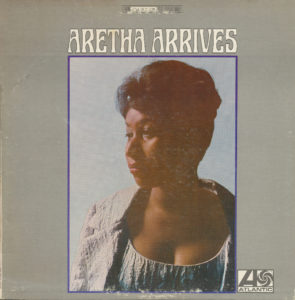
Aretha Franklin – Aretha Arrives Atlantic SD 8150 (1967)
Often viewed as an album rushed out by Atlantic Records to capitalize on the success of Aretha’s breakout (and still best) album I Never Loved a Man the Way I Love You. But, really, this is a very solid second-tier Franklin album. It starts off inauspiciously with “Satisfaction” and “You Are My Sunshine.” Some of the other songs feature adequate but rather uninspired string arrangements. Yet “Never Let Me Go” is an effective and modern ballad, and “96 Tears” works pretty well even though a garage rock rave-up hardly would seem like a good song for Aretha to sing. And, of course, the closer “Baby, I Love You” is one of the single best things Aretha ever did.
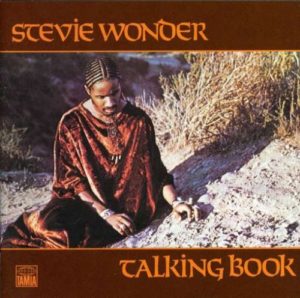
Stevie Wonder – Talking Book Tamla T-319L (1972)
Two killer songs: “You Are the Sunshine of My Life” and “Superstition.” Those are among the most memorable soul recordings of the early 1970s. “I Believe (When I Fall in Love It Will Be Forever)” is a good song too. The rest? Well, there is definitely a lot of pleasant filler, though some of this (“Big Brother,” “Blame It on the Sun”) is maybe even sub-par. As full-length albums go, I find this one a bit overrated. His next two are his best and the one before this is also better. Still, it’s hard to beat those two killer songs!
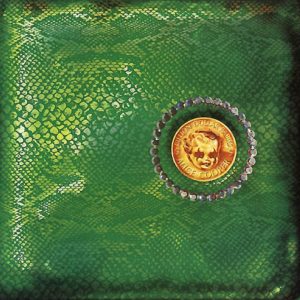
Alice Cooper – Billion Dollar Babies Warner Bros. BS 2685 (1973)
I wanted this to be better than it really is. On side one, in particular, the band seems a bit sluggish, even as the songs have much potential. Side two picks things up some. It opens with the hit “No More Mr. Nice Guy,” then goes on to include the admirably out-of-character piano ballad “Mary Ann” and concludes with one of the best songs, “I Love the Dead.” On the whole, this is solid hard rock for the era, but it does seem like it could have been better.
Link to an article by David Hudson:
“Public Officials Can’t Evade Public Records Laws Through Personal Email Accounts”
Link to an article by George Wuerthner:
“Follow the Money: How to Read Peer-Reviewed Science”
Bonus links: “The Peer Review Hypocrisy” and “Peer Review as Censorship” and “Offline: The Crisis in Scientific Publishing”
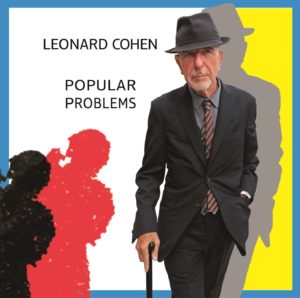
Leonard Cohen – Popular Problems Columbia 88875014292 (2014)
Cohen’s penultimate studio album is a good one from his late-career comeback. The lyrics may not quite reach the insights of, says, Ten New Songs, but this is one of his more musical efforts of the later years. Strangely enough, this is reminiscent of recent Rosanne Cash albums.
Link to an article by Martha Rosenberg:
“They Aren’t All Safe: Pharma is Willing to Look ‘Unscientific’ to Sell Vaccines”
Bonus links: “The Vaccination Quandary” (Note: he’s actually referring to Sherri Tenpenny, not Shirley Tenpenny.) and “FDA Commissioner Hamburg Appointed WHO Deputy?: A Sad Legacy” and “Poison Spring: The Secret History of Pollution and the EPA” and “Public Interest Group Calls for Investigation Into Harassment of USDA Scientists” and “Suppressing Scientific Discourse on Vaccines? Self-Perceptions of Researchers and Practitioners”