Link to an interview of Clive Thompson conducted by Michael J. Coren:
“Luddites Have Been Getting a Bad rap for 200 Years. But, Turns Out, They Were Right”
Bonus link: “When Robots Take All of Our Jobs, Remember the Luddites”
Cultural Detritus, Reviews, and Commentary

Link to an interview of Clive Thompson conducted by Michael J. Coren:
“Luddites Have Been Getting a Bad rap for 200 Years. But, Turns Out, They Were Right”
Bonus link: “When Robots Take All of Our Jobs, Remember the Luddites”
Link to an article by Tom Bartlett:
“Can We Really Measure Implicit Bias? Maybe Not”
A problem with “implicit bias” theory is that it has its own implicit bias of the cognitivist and/or politically liberal variety. In short, the question of detecting “implicit bias” is inexorably tied to a supposed “solution” (or “acceptable” range of solutions) that is less explicitly discussed, thereby denying the political character of how the question is formulated in the first instance. While no doubt the elimination of bias/discrimination/oppression is important, it is possible to question whether advocacy of political liberalism under the guise of “neutral” science is worthwhile to those ends. Conservatives, who are mostly the problem in terms of advocating for biased institutions, obviously oppose this stuff because they realize it is set up to be against them and their desired hierarchies of inequality. Moreover, proffering political liberalism as the solution to the problem of bias has the subtle effect of excluding liberalism from being part of the problem — especially if liberalism is seen as being about limiting/softening but still maintaining the sorts of hierarchies of inequality that conservatism seeks. So consider what follows a critique of “implicit bias” theory from a left perspective.
Bonus links: “Understanding the Racial Wealth Gap” and “A Southern City With Northern Problems”
Link to an article by Salvador Rangel & Jeb Sprague-Silgado:
“The U.S. Political Scene: Whiteness and the Legitimacy Crisis of Global Capitalism”
Really one the best general summaries of the Trump phenomenon and its underlying drivers and political base.
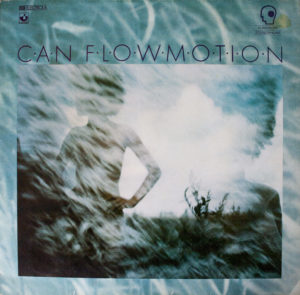
CAN – Flowmotion Harvest 1C 062-31 837 (1976)
Flowmotion is very nearly a great album. Bassist Holger Czukay described it as “innovative and eclectic” and “one of Can’s underrated albums.” He is right on both counts. Fans have been sleeping on this one.
The album has a strange reputation. The opening “I Want More” was a hit single in the UK, and one of the band’s biggest commercial successes of their entire career. Yet, at the same time, fans and critics have often expressed skepticism at that song and the album as a whole.
Undoubtedly, this album sounds markedly different from what the band had previously released. There were influences of reggae and disco. As one reviewer noted, the album has a “casual, Caribbean feel”, characterizing it as “a worthy and sincere engagement with then-current trends (which, come to think of it, is exactly what Can was doing in ’68. It’s just that ’76 was no ’68. Should Can be blamed for changing with the times, or is Western society itself the culprit?)”. The back of the album jacket featured two hexagrams from the I Ching: Hexagram 29, 坎 (kǎn), “gorge” or “the abyss” (in the oceanographic sense), which has inner and outer trigrams that both represent water; and Hexagram 59, 渙 (huàn), “dispersing” or “dissolution”, which has an inner trigram for water and an outer trigram for wind.
The ambivalence to this album — if not outright dislike of it — might be best understood in the context of general trends and the generalized backlash at disco at the time. As has been well-documented, the “disco sucks” movement was largely driven by homophobic and racist sentiments (even if the individualism it represented could be critiqued on rational grounds). Disco-bashing has also become a somewhat of a quasi-elitist stance — disco becoming associated with the working class and the less educated. For that matter, there were many albums going for a “tropical”/”Caribbean” feel around this time, and most were pretty bad. Flowmotion was probably just lumped in with other music that was chasing fads. That was probably the kiss of death for its critical reception, especially for a band characterized (sometimes unfairly) as being sui generis and as making music without precedent.
“I Want More” is a light funk-disco dance number, bizarre in having no lead vocalist, only background vocals. Mostly the singing is a kind of group chant, indistinct and diffuse. Against an infectious and repetitive guitar riff, there are single note keyboard interjections from Irmin Schmidt while drummer Jaki Liebezeit seems to (subtly) play two layers of rhythm at once, one slow and the other in double time.
“Cascade Waltz” is a whimsical number that crosses a reggae beat and slurred, tropical guitar lines with a formal European waltz (and foreshadows the band’s 1978 single “Can-Can”). Michael Karoli‘s deadpan vocals add yet another dimension to the song, one seemingly at odds with both the prim formalism and sunny playfulness floating around.
“Laugh Till You Cry, Live Till You Die (O.R.N.)” is kind of the heart of the album. Karoli is overdubbed on electric violin, guitar and bağlama (a kind of Turkish lute). This song comes the closest to straight-up reggae. The balance between genuine experimentation and accessible pop catchiness is spot on. Jazz records that do this are often described as being “inside” and “outside” at the same time. If Karoli is the star of that song, he powers the closing title as well — a more than ten-minute purely instrumental excursion with ambient washes of keyboard, menacing swells of bass, and swirling psychedelic guitar solos. “Flowmotion” is sort of the late-1970s counterpart to the band’s epic “Mother Sky” (from Soundtracks).
“Bablyonian Pearl” is kind of a goofy novelty song. It seems like a meeting of “Full Moon on the Highway” (from Landed) and “Come Sta, La Luna” (from Soon Over Balauma) over a loopy, slightly reggae-tinged beat. “…And More” was the hit single’s B-side. It is kind of a throwaway here, and is also the shortest song. It isn’t bad, though, and might work as incidental film music.
“Smoke (E.F.S. No. 59)” may have been the band “getting back into the sixties again“. But that sinister, gloomy track is totally at odds with the rest of the album. It represents a sequencing problem — kind of like the “We Will Fall” problem (in reference to the song from The Stooges‘ debut album). The song itself is perfectly fine, except that it totally disrupts the album and doesn’t belong alongside tunes that are within reach of Jimmy Buffett.
What does all this add up to? That is sort of the main question this album presents. There are great songs here. Yet the album as a whole struggles in places, due to sequencing more than anything else. Replacing “Smoke” with something more in line with the rest of the songs would have been an improvement — perhaps like “Sunshine Day and Night” from the generally tepid follow-up Saw Delight. There is also no denying that CAN was still genuinely experimenting, and those experiments pretty much all succeed. That they could experiment while also making overtures to accessible pop music is a real achievement. Usually such efforts have a high “degree of difficulty”. In hindsight, listeners who can get past biases against either pop music or experimental music (as the case may be) might find much to like here.
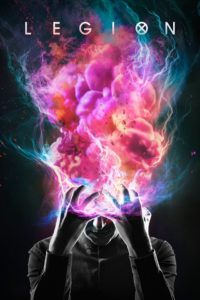
Legion (2017- )
Director: various
Main Cast: Dan Stevens, Rachel Keller, Aubrey Plaza, Bill Irwin, Jeremie Harris, Amber Midthunder
Here is an example of television living up to some of its potential. Legion, a flagship “prestige” show made by some of the largest media companies in history, mostly succeeds.
The show has the production values of cinema rather than of most things on television. The basic sitcom-style show is presented as filmed theater. Think of the “filmed before a live studio audience” approach. There are edits and one or more cameras, but the camera is like a “neutral” observer of a space in which actors work through a script. In contrast, nearly every (season one) episode of Legion has a long slow-motion sequence, a montage of close-ups of inanimate objects, etc. There are many elaborate sets and costumes, and numerous episodes have scenes filmed on location outdoors. There is also extensive integration of music to help convey meaning/perspective rather than just set a mood — the soundtrack is most impressive. These are common devices, but they are more extensively used in cinema than TV. In fact, most of the series can fairly be called pastiche. Everything is old, sometimes knowingly old. But this is not a drawback (copping from They Live is a great idea, for instance).
The cast is excellent. The characters are good too. Jemaine Clement as the pretentious wanna-be beatnik is delicious. Bill Stevens is excellent as the lead, though Aubrey Plaza kind of steals the show in the last half of the first season. While some of the casting could be called multicultural pandering, it resists such labels — rather than the dubious Commander Chakotay character on Star Trek: Voyager, we have the ass-kicking mutant Kerry Loudermilk (Midthunder).
As to the story, well, it poses some fascinating questions, even if the quasi-resolution of the first season falls back on boring convention and there is a lame “stand by your man” subplot. Much of the show is set in mental hospitals, and relies extensively on scenes involving psychotherapy sessions. (Fredric Jameson posited such things as being a key part of an American Utopia). A central question is whether the main character is insane/schizophrenic or a powerful mutant with magical powers. The way this is presented across the first five episodes is to suggest that the main character’s entire personality is constructed to create a certain appearance to the outside world. Actually, this parallels a crucial insight of the French psychoanalyst Jacques Lacan! Personality is an attempt to cover the void of being. And, as Sigmund Freud long ago explained, there is an unconscious that people cannot directly access. The last few episodes draw away from all this, turning instead toward a pagan “endless battle between good and evil” motif. But even in the last episodes, the show openly acknowledges that the main character being encouraged to reconsider his entire life of memories from the standpoint of being a misunderstood demi-god rather than as a mentally defective wreck might well be manipulative pandering or self-serving empowerment fantasy (or both).
The first season does grind to a halt somewhat in episode six, but picks up again in the last few episodes, only to falter as the series bends over backwards to leave the main plot unresolved to allow for later seasons (though it does this less obnoxiously than The Strain, for instance; yet the next season was almost immediately unwatchably bad). This would have been better conceived as a mini-series than a multi-season series, probably. But it does deserve credit for being among the more complexly “adult” level comic/superhero/sci-fi productions of its day, even more so than X-men franchise-related feature films.
Link to an article by Patrick Cockburn:
“Treating Mental Health Patients as Criminals”
Bonus link: “The Left Hand and the Right Hand of the State”

X-Men: Apocalypse (2016)
20th Century Fox
Director: Bryan Singer
Main Cast: James McAvoy, Michael Fassbender, Jennifer Lawrence, Nicholas Hoult, Oscar Isaac
Although perhaps not as clear-cut as the Batman film The Dark Knight Rises in terms of making the “superhero” the bad guy (a right-wing capitalist vigilante) and the “supervillian” the good guy (an enlightenment-era agent of revolution-from-below), X-Men: Apocalypse follows a similar trajectory. Apocalypse AKA En Sabah Nur (Isaac) is a powerful ancient mutant who is unearthed in the 1980s and seeks to destroy (mostly capitalist) human civilization. He starts by safely destroying all of the world’s nuclear weapons (just like star child). The X-Men gather to defeat him. The thing is, it is mostly just assumed that the audience should oppose Apocalypse. This film does not explain why he is bad. He claims to bring the world peace. He takes steps in that direction, by getting rid of the nuclear weapons, promoting two women in his “administration,” etc. Yes, he does destroy a lot of things and kill some people — some of them monstrous. But should he just be seen as a metaphor for the ancient tradition of Jubilee, the “year of the lord,” in which a (usually new) ruler would annul all personal debts and declare a clean slate? In that sense, can the X-Men be considered like Obama/Clintonite neoliberals, defending the financial sector from the villagers and their “pitchforks” and the possibility of “old testament justice” (as the disgraced Treasury Secretary Tim Geithner snidely opposed after the 2007 financial crash)? True, in the film Professor X (McAvoy) pleads for the strong to protect the weak, rather than for the strong to join Apocalypse. But, it is fair to ask whether the X-Men are really defending the weak, or merely cynically pretending to do so while supporting present-day institutions by which the strong systematically oppress the weak (what is sometimes called “structural violence”). On top of that, the overall story is a little disjointed in trying to introduce too many characters. But on the plus side, this film has better dramatic acting than most superhero films, and it does convey emotion in an effective way at times.
Link to a review of the film Maze Runner: The Scorch Trials (2015) by reviewer roriconfan:
Link to an article by Diana Johnstone summarizing the French presidential election environment:
“The Main Issue in the French Presidential Election: National Sovereignty”
(see also: “Slavoj Žižek: Dear Britain”)
Plus, here is a link to an interview of Raquel Garrido conducted by Cole Stangler about the most promising candidate, Jean-Luc Mélenchon:
Another contextual link: