
Interview with Jacob Silverman, author of Terms of Service, by Michael Schulson:
Bob Dylan – The Bootleg Series Vol. 5: Live 1975
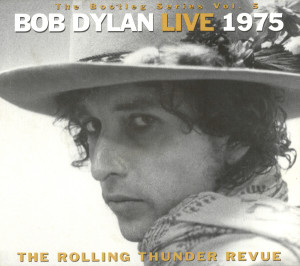
Bob Dylan – The Bootleg Series Vol. 5: Live 1975 – The Rolling Thunder Revue Legacy C2K 87047 (2002)
When Bob Dylan embarked on his “Rolling Thunder Revue” in 1975, it was part of his creative renaissance. It was his second wind after a hum-drum few years at the dawn of the 1970s. The revue traveled by train and included a laundry list of friends and collaborators, new and old. Before The Bootleg Series Vol. 5, Hard Rain had already been released documenting the tour. But Hard Rain was tired and disappointing. Here, Dylan sounds desperate, in the sense of being urged to go on.
This one opens with a blazing “Tonight I’ll Be Staying Here With You” (a song debuted on Nashville Skyline). It then drifts into a few rather dated reworkings of old songs. Dylan’s backing band may feature a lot of big names, but they play a kind of music that often suffers from the worst excesses of the era: ornate guitar wankery, hollow, tinny and effect-laden engineering, and a full and claustrophobic sound that lacks space. They are basically just self-indulgent hippie jams. But the end of disc one turns to folk. This highlights much of what was missing on Hard Rain and much of what came next in Dylan’s career. He started as a folkie, and he was a good one! He then went electric, which was what launched him to superstardom. His contentious concerts of that era would feature some acoustic folk and also electric rock. His albums of that era mostly did this too. Later though, particularly from the late 1970s onward, everything was more or less electric. He was far less successful in a purely rock setting. For whatever reason, there was only so much rock music that Dylan could put out at one time. It could be — let’s not forget — that when Dylan went electric it was before the modern rock era. It was only about a decade out from Elvis and other early rock that was not strictly urban. As that kind of stuff was left behind, Dylan didn’t adapt particularly well. Maybe folk seemed equally of the past at times (he did return to it though). But a set like The Bootleg Series Vol. 5 includes the right amount of folk. It’s some of the most consistent material here. For instance, there’s a great “Tangled Up in Blue” here (maybe better than the studio version). The set wraps with more electric material at the end of disc two. The last few electric songs work better on average than much of disc one, settling into a sound comparable to contemporary Grateful Dead. The second disc also features a lot of songs from the not-yet-released Desire, and the whole band seems engaged with the new material.
There is something hard in this music. It looks back more than forward. It is like a reaction to the 1960s. Not everything had gone as planned. Dylan couldn’t have anticipated his celebrity status. He probably wouldn’t have expected his career to start slipping in the 70s. What makes this interesting in how it tries to avoid defeat. But in doing that you can sense that much more than before the possibility of defeat looms larger in Dylan’s consciousness. This was it though. Desire, released a few months later, would be the last truly relevant Dylan album.
[One note about the packaging here. I checked this out from my library, so something might have been missing from the box, but there appears to be no listing of recording dates or personnel for each song. Presumably, this is culled from multiple concerts. It’s quite impossible to tell though.]
Right and Left Against the State: Education Without Classes
Link to an article by Comrade Motopu:
“Right and Left Against the State: Education Without Classes”
Jerry Douglas – The Best Kept Secret
Zhenjie Zhou on Corporate Crime in China
Link to an interview with Zhenjie Zhou:
“Zhenjie Zhou on Corporate Crime in China”
Bonus link: “AFT Ends Four Month Old Coca-Cola Boycott”
Nicholas Fitz – Economic Inequality: It’s Far Worse Than You Think
Link to an article by Nicholas Fitz:
Bob Dylan – At Budokan
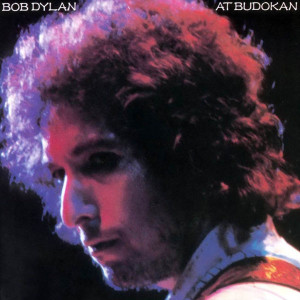
Bob Dylan – At Budokan Columbia PC2 36067 (1979)
Count At Budokan among the group of most divisive albums in the Dylan catalog. Recorded in Japan on a 1978 tour, amidst sessions for Street-Legal, it finds Dylan making an attempt to develop a Vegas-style show with a horn section and backing singers. The template for this type of show is an Elvis Presley album like Elvis in Person at the International Hotel, Las Vegas, Nevada and Aloha From Hawaii Via Satellite. Like the former Elvis album, Dylan is doing new arrangements of his old hits. The problem here is mostly that flautist/saxophonist/etc. Steve Douglas is TERRIBLE! That flute is too loud and the sax is clichéd. And the band as whole is a little stiff. In hindsight, others have pointed out that shows from the tour in England were stronger and would have made for a better album. As it stands, one of this album’s biggest liabilities is that it’s far too long. At two discs, there’s a full disc worth of unnecessary reggae and easy listening mediocrity. That’s too bad, because some of this — “Maggie’s Farm,” “All I Really Want to Do,” and “It’s Alright, Ma (I’m Only Bleeding)” — really sounds good in its new setting. And, hey, Dylan is actually trying to sing, and doing a decent job of it by his usual standards.
Noah Berlatsky – Doing K to 12
Link to Noah Berlatsky’s review of Annette Fuentes‘ book Lockdown High: When the Schoolhouse Becomes a Jailhouse (2011):
Miles Davis – Bags Groove

Miles Davis – Bags Groove Prestige PRLP 7109 (1957)
My early reaction to this album was “it’s good not great.” Well, coming back to it years later my opinion has changed a bit. While I still look at this and say Miles’ playing is nothing special, due to his general complacency and the fact that he hasn’t yet realized the full potential of his stemless Harmon mute, I have to give credit to the rest of the band for truly achieving something special. The rhythm section steals the show. Percy Heath gives amazing performances throughout, and, despite the fact that he never solos, he’s the still the album’s star in my mind. People have long talked about Monk‘s solo on the title track (take 1), and that’s all well justified. It smokes. Unfortunately, he’s only heard on the title track. But Horace Silver plays well when he’s substituting for Monk, and Sonny Rollins‘ style is well-suited to the music. Milt Jackson also plays really well in his one appearance. Kenny Clarke is solid as always, and, significantly, he doesn’t distract from the other performers–something not to be underestimated with a talented group like this. Bag’s Groove is an excellent album to play in mixed company, even among people who have no specific knowledge of or appreciation for jazz. It’s about as good as “straight” jazz ever got.
Noam Chomsky – On Institutional Stupidity
Link to a transcript of a speech by Noam Chomsky: