Link to an article by Juan Cruz Ferre:
“Argentina: Workers’ Management as a Response to the Crisis”
Cultural Detritus, Reviews, and Commentary

Link to an article by Juan Cruz Ferre:
“Argentina: Workers’ Management as a Response to the Crisis”
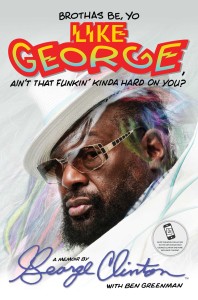
George Clinton With Ben Greenman – Brothas Be, Yo Like George, Ain’t That Funkin’ Kinda Hard on You?: A Memoir (Simon & Schuster 2014)
George Clinton, of Parliament–Funkadelic fame, has written his memoir in the “as told to” format with journalist Ben Greenman. This gives the book a narrative feel, as if gathered from a series of conversations or recorded monologues. It’s comparable to other memoirs in that format (Cash: The Autobiography, The Autobiography of Malcolm X). Fans of Clinton’s music will learn plenty about how his bands evolved. The accounts of some of his bandmates are a little selective. Though his friendship with Sly Stone in the 1980s and 90s is rendered well as a sympathetic portrait of another star on a downward slide still trying to forge his own way. The first parts of the book, recounting his early days in a hard-working touring band and the middle years as part of a colossal musical entertainment empire that evolves into a corporate “organization”, are snappy and engaging like most music memoirs of this sort, while the last part of book covering the later years (tales of old fart funkadelijunkie) are bitter and resentful and a bit less endearing, just like so many of these memoirs that chronicle the autumnal years when few(er) were listening.
Latter-day fans who think of Parliament-Funkdaelic as two sides of the same band may be surprised to learn how differently they evolved, meeting only for a brief window in time. Funkadelic established itself first, and the band was influenced by psychedelic rock. Clinton mentions the English rock supergroup Cream as an influence repeatedly, and The Beatles, and Jimi Hendrix. He had an appreciation for the white British invasion blues-rock bands, applauding their interpretations of black American blues. He talks about Funkadelic being a very democratic band into the early 1970s. But he also discusses those days like a businessman, never failing to mention how he watched the charts for ideas, made promotional connections in radio, and worked every angle on commercial terms. When Parliament takes off in popularity, Clinton jumps at the chance to be the frontman. He felt that to be really huge a band has to have a focal point. What he glosses over, though, is what the rest of the band thought about that. Clinton talks about some of the key members like Eddie Hazel, but others are mentioned more in passing. He addresses some of the splinter bands led by others with a sense of slightly condescending pity.
If you believe Clinton’s account — and you probably can’t believe all of it — he has been screwed royally on financial matters and he’s cleaned up his life just before writing this book. Still, he comes across as pretty defensive. He has a rationale for everything. Yet he works pretty hard to put those rationales across to the reader, while trying not to let on to those intentions and apologetics. He is also a bit hypocritical. He waxes on about how all music is adapted from other music. And yet, a good portion of this book is a rant about how he’s been ripped off, especially in the hip-hop era when DJs have frequently sampled Parliament-Funkadelic songs. On one page, he’s praising adaptations of old songs (without payment), on another he’s complaining how he hasn’t been paid for samples. Now, he makes some good points that sampling royalties shouldn’t be set up as they are, and should instead be proportional to the sales of the sampler. But his arguments are confused and rather self-serving, ultimately resting on nothing more than his whims and fancies. Some deserve compensation, and others not, and the two can hardly be told apart without Clinton’s infinite wisdom (read: unlimited discretion). He mentions the George Harrison/Chiffons copyright lawsuit, and defends the ridiculous outcome. Yeah, maybe Clinton fell in with some crooked people who haven’t compensated him and pocketed the difference. He makes that case. It is a fair argument. But the idea that anybody at all should be raking in royalties for their efforts of decades before, and that sampling isn’t a fair use that creates no need for royalty payments, have kind of assumed away a big part of the public policy issues.
The most interesting way to look at this book is to set aside Clinton’s own spin and put his hippie ideals into a sharper critical focus. Sure, he was into free love and all that, though pretty early on he tried to reveal the superficiality of much of the 60s counterculture, in terms of how it failed to fundamentally transform society. But doesn’t that critique apply to him as well? The book doesn’t go there, but it should have.
Clinton is fast to discard the democratic cooperation of Funkadelic to achieve bigger commercial success with Parliament. The question of what was surrendered in that process goes largely unexamined, and the assumption that big commercial success is necessarily an achievement superior to purely cultural cachet looms large over the narrative. He derides those who sought material possessions. Yet at the same time he talks about how he instead wanted to use his wealth from Parliament’s success to accumulate experiences. Social scientists have explored how developing “cultural capital” through exclusive experiences and the “nonproductive consumption of time” is just another mode of establishing social distinction, not really opposed to the kind of thinking that gives rise to conspicuous consumption of luxury items. This is a curious flaw in Clinton’s version of hippie ideals.
He blasts those whose message was about “pointing at a power structure and condemning it as they went about installing themselves at the head of a new one.” But again, his pleas for credit (and remuneration) for his past achievements kind of seek to locate himself at a particular position in popular musical history, which is to say in a hierarchy. When discussing a Funkadelic reunion project that required large payments to Bootsy Collins and Bernie Worrell, Clinton complains about how they wanted to be reinstated as co-leaders and acted like stars, lording that status over the long-time (yet non-famous) members of his working band. Who decided that Clinton gets to make these calls? Hasn’t the audience, for better or worse, decided that they want to hear Bernie and Bootsy more than the members of Clinton’s latter-day working band? Isn’t that really why Clinton recruited Bernie and Bootsy back in the first place? There is a tacit assumption that in spite of what the audience thinks he gets to be the center of the operation and, like a CEO, slot everyone else in the band into their “proper” place. Sound very hippie-like to you? Or were hippies always short-sighted capitalists at heart, evidenced by the way they later gave into the “me generation” and vapid 1980s Reaganomics materialism? Don’t expect Clinton to pause long on these questions, because he doesn’t.
No doubt, Clinton has made some great music in his long career. But was his autobiography published only because of his musical talent or did his relentless ability to self-promote have more to do with it? The man admits some faults and mistakes, for sure, but those admissions are limited mostly to things he feels like he has since resolved. The demons he hasn’t bested still lurk in the shadows, and those shadows seep into the pages of this book more than Clinton probably intended. It is good to have this available as Clinton’s side of the story, but there are other perspectives that need to be explored to understand the Parliament-Funkadelic legacy.
Link to an article by Ellen Brown:
“Derailing Amtrak: Tracking the Latest Disaster in the Infrastructure Crisis”
Link to an article by Jeffrey St. Clair:
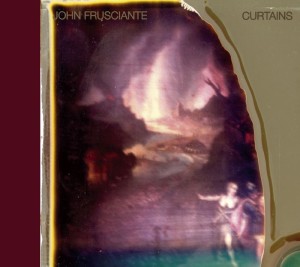
John Frusciante – Curtains Record Collection 9362-48959-2 (2005)
The last entry in the series of albums John Frusciante began releasing in 2004, Curtains shines through with his best vocals and most consistent songwriting yet. An emphasis on acoustic guitar suits the somber music. Frusciante’s lyrics are still somewhat lacking, but this album is so heartfelt and genuine that such concerns wash away with the gentle melodies and soothing harmonies he always seems to find.
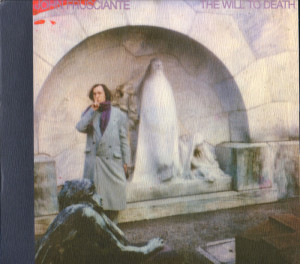
John Frusciante – The Will to Death Record Collection 9362-48800-2 (2004)
When iconoclastic filmmaker John Cassavetes started making movies he funded entirely himself, he filmed them in a way that ignored getting a scene “in focus” or the sound “just right” if that would in any way inhibit the actors. The Will to Death is one of six (!) albums John Frusciante released in 2004. He recorded it without worrying about his guitar going slightly out of tune or missing a beat here or there. More important than any detail is the basic spirit of each song. That is what matters to music like this. It’s not polished, but it sure is sincere.
An interviewer once recalled meeting jazz luminary Sun Ra at Ra’s place in Philadelphia. Sun Ra was looking around for some sheet music while the interviewer waited. When asked about the random piles of things, Sun Ra responded by saying that if he organized, he would only find what he was looking for. That story might explain a great deal about John Frusciante’s The Will to Death (and maybe Cassavetes too). Recorded quickly, without extensive revising and adjusting, the album thrives in what Frusciante perhaps never expected his songs contained.
The brooding, frustrated guitar sounds mark the introspective music of The Will to Death, as might be obvious from the title alone. Yet, it is his resilient attitude that makes John Frusciante fascinating. He survives the contradictions of being the self-destructive outsider in his comfortable other gig (Red Hot Chili Peppers). Surviving wouldn’t seem to be his objective, though. There is an unending desire to grow in each of his songs. Despite the occasional maudlin flourishes and the many clumsy lyrics, there are no diversions from that basic desire. The missteps in the music are weaknesses it seems are shared in the person of John Frusciante. What places The Will to Death far above his previous solo recording is his courage to proceed straight through those flaws. The hidden beauty of the album is that it does proceed without stopping to question itself. To do that genuinely is always enough.
“The Will to Death” is probably the best song Frusciante has written to date. In a somber melody, he wraps the hopelessly romantic ideas that can define a life. “Loss,” “The Days Have Turned” and possibly “Time Runs Out” follow as the next best examples of Frusciante’s evolving songwriting skills. At their best, the songs, in both trivial detail and grand aspiration, simply are what they are. The same also goes for Frusciante’s voice. His vocals have greatly improved across the years. Together with Josh Klinghoffer‘s nicely suited contributions on drums and some miscellaneous instruments, the difficulties of making music like this fade away.
An album like this probably isn’t for everyone. The immediate pleasure of Red Hot Chili Peppers’ recordings will surely appeal to many more people. Those songs are direct reflections of attitudes often found so desirable. The Will to Death is something different. It is obscure, indirect. Any reaction to it has to be earnest because no guidance is given toward a particular one. John Frusciante has made a commendable — courageous — effort here. You might be surprised what you find in hearing it.
Link to an interview with Vicenç Navarro:
“How Should Economics Be Taught? A Conversation With Vicenç Navarro”
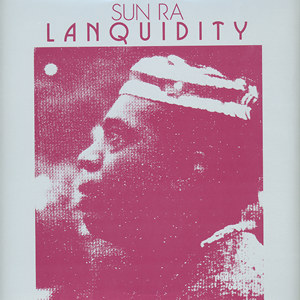
Sun Ra – Lanquidity Philly Jazz PJ666 (1978)
Disco has never found such fine improvisational treatment as on Lanquidity. Sun Ra was one of the most interesting musical figures of the last century. He claimed to be from Saturn, and it is practically impossible to prove otherwise. The myth he developed enhanced the music by giving the whole experience a charm all its own. Always one to challenge conventional wisdom, Sun Ra expanded what you could do with “serious” music.
Why a disco-jazz album? Generally, people don’t expect a jazz pioneer to take up doo-wop, R&B, or disco, not to mention both free jazz and big-band jazz. But Sun Ra did, and there is no better way to obliterate worthless preconceptions. In the liner notes to a CD reissue executive producer Tom Buchler quotes Sun Ra saying, “’People are sleeping, and I’m here to wake them up from their slumber.’” While bold statements of space-age philosophy are a natural part of Sun Ra’s myth, there is a literal meaning as well. Occasionally known as “Le Sony’r Ra” or Herman “Sonny” Blount, he was a master of using sound to alter moods — like waking someone in the audience from a drunken stupor, a true story.
Lanquidity has more passion and feeling than seems possible. Sun Ra has absorbed the language of Donna Summer into his improvisational vocabulary. His Arkestra — hailing from Philadelphia somewhat late in Sun Ra’s career — is particularly strong with John Gilmore, Marshall Allen, June Tyson, but also Eddie Gale, and people identified as Disco Kid and Artaukatune. The group’s performance is inspired. The singular vision of the album seldom, if ever, falters. When dealing with talented musicians, restraining them to simple material is challenging, just as working intuitive players of limited means into an ensemble is a challenge. Sun Ra pulls off a unified sound without restricting the creative energy of the collective.
Though sometimes strained, Lanquidity is as effective as nearly anything in Sun Ra’s extensive catalog. At the same time, the songs are very comforting. Song like “There Are Other Worlds (They Have Not Told You of)” and “Twin Stars of Thence” live up to their cosmic names. The music follows a more conventional structure than albums like Atlantis and The Magic City. This never limits the album. The title track explores every creative possibility without over-complicating the matter. “Where Pathways Meet” finds Sun Ra providing varied responses to the main theme and solos, cleverly remaining in the background for most of the song.
This album’s appeal ranges from avant-garde jazz fans to Studio 54 revivalists. While traditional disco fans might find Lanquidity a bit strange at first, it might grow on them. Keep in mind that many original Sun Ra albums had hand-painted covers. The original release of Lanquidity first appeared with only a photocopy attached to the front. Finding these albums was difficult, except for those who frequented Arkestra concerts. Hopefully every Sun Ra release can eventually find a re-release.
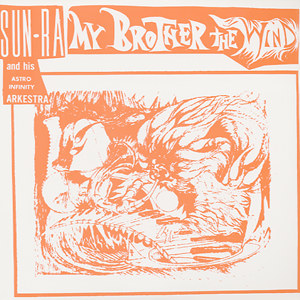
Sun Ra – My Brother the Wind Vol. II El Saturn LP 523 (1971)
My Brother the Wind Vol II is a tale of two sides–Sun Ra had a penchant for programming El Saturn LPs to be rather different from side to side. One is filled with solo recordings of Sun Ra taking his then-new mini-moog synthesizer through its paces. The other side features a full band entering the realm of soul jazz. Vocalist June Tyson is the star of the group material. She must have been born with the same Saturn-ian mindset as Ra, because she seems to intuit all of Ra’s music in a way that hardly could be learned. The group performances feel a bit as if they are making an effort to connect with the organ-driven groove jazz of the type Jimmy Smith played (maybe a closer comparison though would be Larry Young‘s Unity). That was some of the most popular commercial jazz of the last decade. The thing is, it was by this time the music of the previous decade. Sun Ra seemed to be a bit behind the curve when he offered it on an album released in the early 1970s. Nonetheless, the wilder sax soloing here (“Otherness Blue”) is as unexpected as Sonny Sharrock‘s guitar was in Herbie Mann‘s band (Sharrock has told a funny story about an unfortunate gig in Oshkosh, Wisconsin when some old ladies booked Mann, with Sharrock in tow, entirely by mistake out of confusion between him and Herb Alpert & The Tijuana Brass and struggled to be polite after hearing Sharrock’s psychedelic performance on electric guitar). The moog tracks on the flip side were probably pretty out there at the time. Given what others, and Sun Ra himself (The Solar-Myth Approach Volume 1, The Great Lost Sun Ra Albums: Cymbals / Crystal Spears, Concert for the Comet Kohoutek, etc.), did in the coming years, the sense of experimentation feels quite a bit tamer in retrospect. This music can feel a little dated in ways later electrified efforts by the Arkestra wouldn’t. Although this material is decent and pretty accessible for the most part, and it does map out certain elements that would become defining characteristics of Ra’s Seventies period, feel free to skip right past this and come back to it once you have a fair amount of the Sun Ra catalog under your belt.
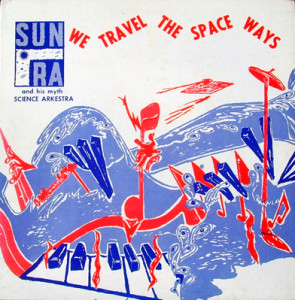
Sun Ra and His Myth Science Arkestra – We Travel the Space Ways El Saturn HK 5445 (1967)
Sort of a vault-clearing assemblage of material recorded in Chicago between 1956 and 1961. It finds Ra exploring a swinging, bluesy kind of afro-futurist/sci-fi exotica, with a few tracks in a straighter big band mode, though many other Chicago-period recordings are fuller realizations of those styles. Here the musicians sound just slightly tentative at times and the arrangements are shy of Sun Ra’s very best work. Still, “Tapestry from an Asteroid” is quite lovely (better than the more polished version on The Futuristic Sounds of Sun Ra), and “Space Loneliness” and “New Horizons” are the highlights.