Sonic Youth – Sonic Nurse

Sonic Nurse

Sonic YouthSonic Nurse Geffen B0002549-12 (2004)


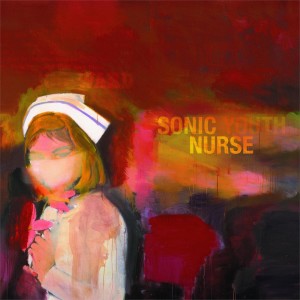
And suddenly, after a string of excellent — if frequently under-appreciated — albums, Sonic Youth deliver a backwards-looking dud.  Sonic Nurse isn’t a bad album, so much as a boring one that traverses territory very familiar to the band.  The opening “Pattern Recognition” sounds like the Youth of the late 1980s (Daydream Nation), just sort of older-sounding, er, “senior”-sounding?  Maybe that is what listeners wanted, after the band explored new and different approaches for the previous few years this album won them many more accolades.  But none of the noise at the end of “Pattern Recognition” comes close to, say, “Karen Revisited” from Murray Street.  The lengthy jam “Stones” is a really good one that nonetheless at times seems like just a more melancholy retread of “Rain on Tin” from Murray Street.  Another of the best songs here is “Unmade Bed” which is a dad-rock version of the the mellow noise ballads the band had been exploring since the mid-1990s.  It has abrupt transitions between noisier guitar solos and sparser yet also choppier vocal segments — reminiscent of Experimental Jet Set, Trash and No Star.  Nothing flows.  Overall, if there is one thing that disappoints more than others it is Jim O’Rourke‘s electronic noise, which seems more of an afterthought, and for that matter tends toward the obvious more than it should. These songs always seem to undermine themselves just as they start to get going — much like the self-consciously frustrating approach of O’Rourke’s later solo album The Visitor.  Giving this album a listen ten years after first release, it isn’t bad, but still seems fundamentally nostalgic and sentimental in ways that are contrary to everything that this band used to stand for, making this almost their Achtung Baby moment.

Sonic Youth – Murray Street

Murray Street

Sonic YouthMurray Street Geffen 493 319-2 (2002)


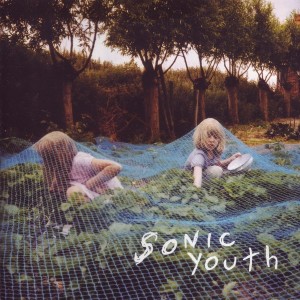
Murray Street is an album Sonic Youth always had in them, bouncing around. The sounds were just waiting to come out. When the timing was right, it appeared on record, but not before the timing was just right.  They had to make the last few records (Washing Machine, A Thousand Leaves, SYR4: Goodbye 20th Century and NYC Ghosts & Flowers) first to line up the competing elements (noisy experiments and chilled-out mood music mediated by explorations of harmonics and overtones) that sort of reach an amiable compromise here.  Looking back, though, they never reached this level of accomplishment on record again before the band’s demise.

The late 1990s saw Sonic Youth coping with being a rock music institution. That’s irony for you. Nothing on Murray Street sounds ironic, because of the group’s gift for anticipating the punch lines of jokes still being formulated in the minds of doubters. This was supposed to be the second of a planned trilogy of albums about Sonic Youth’s New York City haunts, which began with NYC Ghosts & Flowers but which never seemed to find its third installment, this nostalgic phase has nonetheless worked out quite well for the Youth. It finds “Plastic Sun” with Kim Gordon doing her best Patti Smith. And “Sympathy for the Strawberry” sounding like a forgotten Television song somehow recorded in the 1960s. Even “Rain On Tin” almost seems inspired by the Grateful Dead stopping by the Fillmore East. Murray Street is all New York City.

“Karen Revisited,” “The Empty Page” and,especially, “Rain on Tin” form the backbone of the album. The tempos are slow, and the guitar chords are softened at the edges with fuzzy noise that makes them sort of wash away one into the next.  A slightly harder-edged counterpart would be Boris & Merzbow‘s live collaboration Rock Dream.  But this venerable band needs a “Radical Adults Lick Godhead Style” too. It is the disc’s punch line, two-thirds through. The saxophones of Borbetomagus join the Youth to necessitate double checking that listeners are safely beyond throat-kicking distance. Then the album drifts into two more improvised numbers to close.

This album made Jim O’Rourke, officially, the fifth member of Sonic Youth. He was often “accused” of being a noisy guy. Yet he has a deep pop sensibility too.  On Murray Street O’Rourke helped the Youth put together perhaps their mellowest album to date (some consider this a flaw of the album, because it deviates from their expectations). Having O’Rourke around brings out personality quirks rarely heard before from the Youth. For example, Lee Ranaldo’s jam band attitude sees more light of day.

The temptation in this part of Sonic Youth’s career, though, was to make a bunch of albums that mechanically rotate through each member’s slightly different interests. Sonic Youth spare us those gory (and boring) details. Murray Street cuts itself to proper form. The album comes across as well rounded and unified, varied yet whole. There is some brilliant O’Rourke-orchestrated noise on the 11-minute “Karen Revisited,” but not before delivering one of the best Lee Ranaldo beat/hippie epics.  There is no abrupt rupture as the song changes direction.  Mostly, though, the Youth are out to groove. Reconstructed surf and R&B riffs permeate the disc. Yet they are at the same time sublimated beneath electronic noise.  There is considerably less snottiness than in the old days.  That proves no loss.  The subversively catchy songs almost belie what they are. This is inventive music that wants to be as endearing as anything you’ve heard before.

Murray Street is for everyone, not just Sonic Youth diehards. It refines and expands upon the ideas first sketched out on Washing Machine, making this the bigger accomplishment. There are enough layers to appreciate it both at first and over time. Murray Street is another disc to add to Sonic Youth’s pile of really good ones.  It is tempting to say it (slightly) lacks the daring to make it one of their very best, but it has stood the test of time so well and is, to these ears at least, maybe a more welcoming listen that the acknowledged classics.  Hell, maybe it is time to simply call this one of the band’s best.

Sonic Youth – Washing Machine

Washing Machine

Sonic YouthWashing Machine DCG DGCD-24825 (1995)


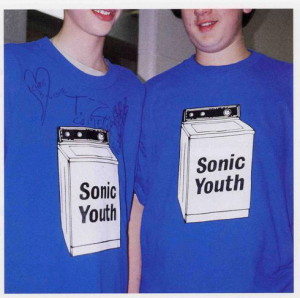
Washing Machine was a turning point for Sonic Youth.  The band had been around for a while, and the early 1990s saw them give way a bit too much to grunge/alternative rock fads, leading to what some consider (perhaps a bit unjustly) their very nadir as recording artists with Experimental Jet Set, Trash, and No Star.  But they re-emerged with Washing Machine chock full of new ideas and began to establish themselves as rock music elders, of sorts.  At least in hindsight that is the reputation this album has earned.  Truthfully, some of the moody atmospherics and slower tempos here were already popping up on Experimental Jet Set, Trash, and No Star in brief, undeveloped snippets.  Here those ideas are expanded to song length.  As a whole, Washing Machine is all over the place, with the fuzzy, washed out psychedelia of “The Diamond Sea” (which paves the way for A Thousand Leaves), a smooth, epic guitar anthem “Washing Machine” (paving the way for Murray Street), a beat poetry monologue “Skip Tracer” (paving the way for NYC Ghosts & Flowers), the skewed indie pop of “Little Trouble Girl” (something they seemed aiming at for a long time but hadn’t perfected until now), plus some noisy and rough guitar rock (looking back to the early 1990s).  It takes the album a while to warm up, because it opens with tepid, grungy numbers that seem almost stuck in the past.  But things pick up quickly.  There are great ideas here.  Yet, it seems like the Youth refined many of these ideas on later efforts that are often unfairly maligned.

Gerry Veenstra – Class Position and Musical Tastes

Link to an article by Gerry Veenstra:

“Class Position and Musical Tastes: A Sing-off Between the Cultural Omnivorism and Bourdieusian Homology Frameworks” (and associated press release)

Bonus link: “Bourdieu’s Disavowal of Lacan: Psychoanalytic Theory and the Concepts of ‘Habitus’ and ‘Symbolic Capital'”

Bob Dylan – Real Live

Real Live

Bob DylanReal Live Columbia CK 39944 (1984)


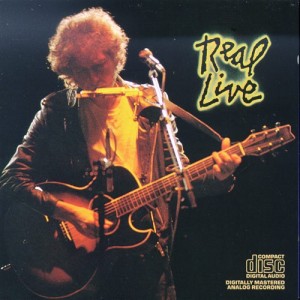
Most listeners look back on Bob Dylan’s 1980s output with regret, pondering what might have been.  Now most people look right past Saved and Shot of Love (possibly a mistake; they are okay).  They then look on Infidels with bemused sadness, wishing that “Blind Willie McTell” and other great songs hadn’t been excluded from it.  Dylan had frequented some punk concerts around that time due to his son’s interest, and in support of Infidels he appeared on the TV show “Late Night with David Letterman” in early 1984 with The Plugz as his backing band.  He captured a lot of punk energy on great renditions of “Jokerman” and “License to Kill.”  But that proved to be the only appearance of Dylan with that particular backing band.  Touring Europe later that year he instead enlisted Mick Taylor (who played on Infidels) and Ian McLagan.  He did not bring along the bass/drums rhythm section of Sly & Robbie from the Infidels sessions.  Real Live was culled from three July dates in England and Ireland.  Carlos Santana makes a guest appearance on “Tombstone Blues” from one of the English dates.  This touring band plays professionally, but largely without much personality.  The results are at best a kind of traipse through pub rock versions of mostly old Dylan standards (had Dylan been inspired by his pal Johnny Cash‘s Rockabilly Blues with its similar pub-rock influence?).  The general effect is one of aging rockers trying and failing to sound relevant to newer tastes.  It does sound a hell of a lot more modern than maybe anything in Dylan’s catalog, though.  It may not be the disaster that some make it out to be, but it’s still a pretty middling effort.  Most listeners can skip past it.  Now, if those Letterman recordings were released, those would be worth seeking out.