Shawn Phillips – Collaboration

Collaboration

Shawn PhillipsCollaboration A&M SP 4324 (1971)


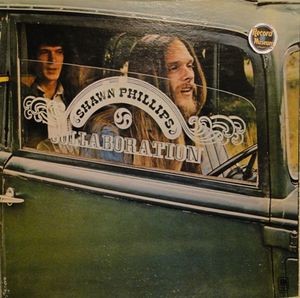
A bit too hippie-dippy at times, there is an over-abundance of gimmicks in the vocals, and the lyrics often fall flat or provoke half a cringe, but there is a lot to admire in the musical innovations here.  Phillips takes folk and throws it together with prog rock, with touches of jazz and classical.  This album is titled Collaboration and the jacket describes it as a collaboration by Shawn Phillips with Paul Buckmaster and Peter Robinson.  Buckmaster does some amazing things.  The song “Us We Are” includes orchestration, but it is so subtle and organic that the string and horn orchestrations are already well underway before they are noticeable!  Songs like “Moonshine” have some nice keyboards from Robinson too, with a dexterity and morose ease that works very well.  The side one closer “Armed” brings all the instrumentalists’ talents together best.  So, while Collaboration has its appeal, it is perhaps a step down from Second Contribution, which is much more consistent even if somewhat less daring or innovative.  It might have been better with an additional collaborator to handle lyrics and vocals.

Johnny Cash – The Fabulous Johnny Cash

The Fabulous Johnny Cash

Johnny CashThe Fabulous Johnny Cash Columbia CS 8122 (1959)


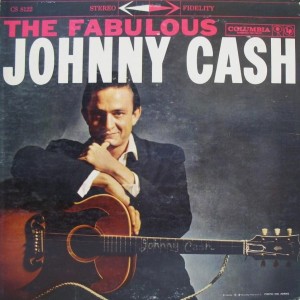
The Fabulous Johnny Cash was the Cash’s first full-length album for Columbia Records after leaving Sun Records in an abrupt and strained departure.  He more or less picked up exactly where he left off at Sun.  Every song is drenched in reverb.  He mixes in a number of melodramatic love songs, which he had started doing in his final days recording for Sun.  There also are more male backing vocals.  But Columbia was able to record Cash better than the tiny Sun, so his voice is cradled in velvety surroundings, sounding as smooth as it possibly could be.  The songs here are nothing particularly special, except for “I Still Miss Someone,” one of his best.  On the whole, the weaker songs hold this back a bit, but just for how the recordings and his voice sound it’s among Cash’s better efforts of the 1950s.  But The Sound of Johnny Cash and Songs of Our Soil are both similar albums that are each better overall.

Tom Zé – Fabrication Defect: Com defeito de fabricação

Fabrication Defect: Com defeito de fabricação

Tom ZéFabrication Defect: Com defeito de fabricação Luaka Bop 9362-46953-2 (1998)


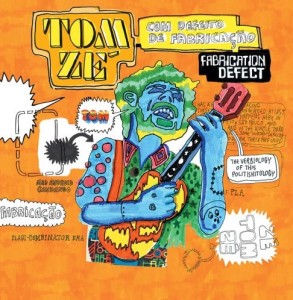
When it comes to the work of Tom Zé, the most common comparisons from the English-speaking rock/pop music realm are Tom Waits (from the 1980s) or Captain Beefheart.  But the premise of Fabrication Defect, a concept album about the people of the Third World as “androids” having the “defects” and effrontery to “think, dance and dream,” takes its philosophy straight from the likes of the French writer Jean Genet, a lifelong thief who celebrated that role precisely because it was seen as a perversion by an immoral and corrupt social order.  Zé is part prankster, part eccentric visionary, part musical historian.  You won’t find a whole lot of popular music albums from people in their 60s this sharply caustic and irreverent.  But Zé is one of those beautiful oddities who makes his own precedent.  Fabrication Defect has the same wit and blend of high theory and fun gags (with a bit more in the gags department) as his great mid-1970s albums.

Funkadelic – Standing on the Verge of Getting It On

Standing on the Verge of Getting It On

FunkadelicStanding on the Verge of Getting It On Westbound WB 1001 (1974)


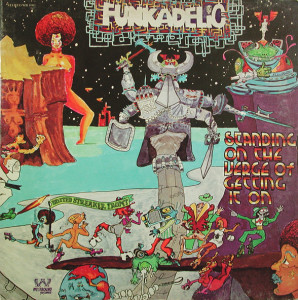
As Funkadelic and Parliament started to diverge, Standing on the Verge of Getting It On is kind of a return to form for guitarist Eddie Hazell.  He dominates some of the best parts of this album, especially the lengthy closer “Good Thoughts, Bad Thoughts” — kind of a sequel to “Maggot Brain.”  “I’ll Stay” is another good one.  Hell, this whole album rocks like only Funkadelic could.  There are heavy grooves, and a heavy commitment to “free love” and whatever remained of the 1960s freak scene.  Of course it all sounds like a psychedelic trip too.  No other band managed the precarious balancing act of holding forth all the black and white musical elements that came so naturally to this group.  As Parliament gained popularity, there would be a lot less chaotic weirdness and more focused grooves, making this something of a last gasp for the offhand, working band qualities that carry much of the album so well.

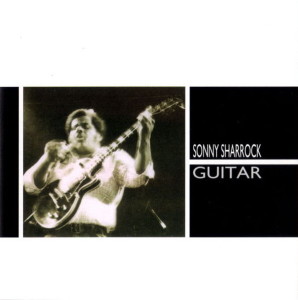
Sonny Sharrock – Guitar

Guitar

Sonny SharrockGuitar Enemy 88561-8177-1 (1986)


Sonny Sharrock’s solo album Guitar is a jazz album that might fairly be called sui generis.  Sure, there are other solo guitar albums out there.  But Guitar uniquely tried to push across atonal free jazz noise (high theory) and lovely melodic composition (low entertainment) simultaneously using contemporary recording techniques.  While that risked reaching neither sort of audience, the album in many ways succeeds in breaking down intellectual barriers that usually segregate the musical genres Sonny throws together.  Sharrock had been doing these sorts of things for a long time, though here he is routinely exploring disparate concepts within a given song, rather than merely in the juxtaposition between different songs (though there is some of that too).  “Like Voices of Sleeping Birds” perhaps best exemplifies the collision of sweetly strummed melody and caustic runs of biting metallic noise.  Those two parts of the song are opposite extremes, brought together to imply a third path that is not wholly determined by either extreme but that also is not a unified synthesis — both parts remain intact.  The music throughout the album is performed “solo”, but with the aid of studio overdubbing Sharrock lays down a sort of harmonic bed of echoing, reverb-laden sounds, which might have significant melodic content or might be more like atonal washes and pulses of sound, then he recorded solos over that foundation.  So he really accompanies himself.  It all sounds like it was recorded in the mid-1980s, because it was recorded then.  The album has a tinny, sterile, compressed sound.  But rarely did music of the day glide past such heavy-handed production so readily.  There is a glimmer to Sharrock’s guitar playing that can’t be denied.  He sounds like he’s making music that matters, to him if no one else.  Whether the version of his old composition “Blind Willie,” with celebratory and rousing riffs, or “Devils Doll Baby,” with abrasive and angular playing, or “Broken Toys” and “They Enter the Dream,” with pleasant and sentimental melodies, or “Kula-Mae,” with menacing rock phrasing, Sharrock always offers a twist on familiar forms.  Back in this time period, there were a lot of “fantasy” genre movies, and in a way Guitar is like a little musical fantasy epic brimming with hopes and dreams, and desires and laments.  In any event, listeners who like this may find themselves utterly captivated by it.  One of Sharrock’s best.

Kamasi Washington – The Epic

The Epic

Kamasi WashingtonThe Epic Brainfeeder BFCD050 (2015)


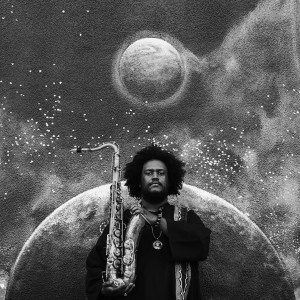
Washington’s studio debut album, the sprawling three-CD The Epic is organized as a kind of summary of jazz of the last 60-70 years meant to be as accessible as possible to audiences more familiar with hip-hop.  This veers toward the sorts of jazz sampled the most in hip-hop: fusion, organ-driven soul jazz, urban smooth jazz/acid jazz, slick L.A. jazz with a big-band vibe, 70s “spiritual” jazz; plus there is a heavy dose of classic quartet period Coltrane — for credibility.  Though certainly The Epic avoids entirely the comically paternalistic zip-zap-rap jazz/hip-hop hybridization of corny bands like Buckshot LeFonque.  Hip-hop is only implied, by omission.  One device that is particularly effectively used are late 1960s style vocal choruses to build momentum (though the vocal solos are less impressive).  In the end, the album succeeds in its rather modest ambitions.  It doesn’t really expand upon anything it alludes to.  There is no attempt to break any new ground.  Yet it genuinely gets in tune with the historical precedents it recreates, demonstrating a kind of deference and respect, while always seeming fully committed to its project without irony or detachment — sometimes the leading innovators can’t do such things well because they get bored or become condescending.  It also adopts certain bygone styles that never really bubbled up to wide audiences, because they were ones always committed to a space largely outside (and often opposed to) the strictures of big business music.  That makes it all the more significant to recreate these particular styles now — more significant than other retro-focused practitioners like Wynton Marsalis recreating jazz forms from exclusively before its democratizing, liberation movements.  Anthony Braxton named three categories of musicians/music: restructuralists (the revolutionaries), stylists (who expand upon existing concepts) and traditionalists (who work within existing forms).  The Epic is a traditionalist recording.  If you want a more challenging run at the same concept from a stylist rather than a traditionalist, you could go back to early Norman Connors, or maybe even James Carter‘s Conversin’ With the Elders.  For a sort of textbook-like primer of modern jazz from about 1964 to maybe 1979, though, this is about as good as can be hoped.  Of course, jazz heads might get bored with this as much as a tenured professor would reading an introductory textbook, but they should lighten up and accept the premise of this music, which is sort of to popularize the stuff they have been familiar with since the beginning.

Johnny Cash – The Best of The Johnny Cash TV Show: 1969-1971

The Best of the Johnny Cash TV Show: 1969-1971

Johnny CashThe Best of The Johnny Cash TV Show: 1969-1971 Legacy 88697 21230 2 (2008)


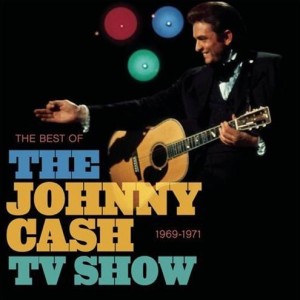
TV variety shows were pretty popular on American networks around the time Johnny Cash got his own in the late 1960s.  It didn’t last long, as in Cash’s view he and the network execs just didn’t see eye-to-eye.  Cash wanting to do a lot of christian material was a big source of friction, supposedly.  The “rural purge” by TV networks also played a significant role.  Anyway, some material from the show had been released on The Johnny Cash Show (1970).  Though the title may be a bit misleading, The Best of The Johnny Cash TV Show: 1969-1971 is entirely different from the earlier album and contains material never before released on record — apparently recorded by Cash and tucked away only to be discovered and restored after his death (something that seems irrelevant given that the TV network’s tapes still exist; the origins of this album seem tied up in licensing disputes between ABC and CBS of no substantive interest to music listeners).  Only a few of the performances are by Cash.  Most are popular artists doing their hits or covering popular country songs.  The performances can be a bit rough, with Cash coughing or other singers just not being miked well.  And Waylon Jennings doing Chuck Berry‘s “Brown Eyed Handsome Man” is cringe worthy (this is the worst of his performances on the episode it was drawn from).  But there are a few nice moments, like Ray Charles doing “Ring of Fire” (though the bass player is a bit off and Ray’s breathy whispered vocals sound like they weren’t captured well).  The best things here though are a duet between Cash and Joni Mitchell backed by strings and piano on Bob Dylan‘s “Girl From the North Country” and James Taylor doing his signature song “Fire and Rain.”  The earlier album from the TV show was better, but this is still enjoyable enough.  This one, however, captures more thoroughly (and however awkwardly) the rural-urban exchange that Cash’s show embodied. Dylan gave an interview where he said, “I think of rock ’n’ roll as a combination of country blues and swing band music, not Chicago blues, and modern pop. Real rock ’n’ roll hasn’t existed since when? 1961, 1962?”  He also said, “And that was extremely threatening for the city fathers, I would think. When they finally recognized what it was, they had to dismantle it, which they did, starting with payola scandals and things like that. The black element was turned into soul music and the white element was turned into English pop. They separated it.”  In a way, Cash’s show brought some of these elements back together, across the music industry’s lines of segregation, maybe not always into an inseparable combination like rock ‘n’ roll but at least on the same nationally televised stage.

Johnny Cash – A Concert: Behind Prison Walls

A Concert: Behind Prison Walls

Johnny CashA Concert: Behind Prison Walls Eagle ER 20027-2 (2003)


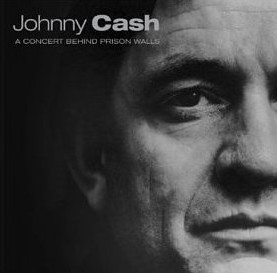
A 1974 TV special recorded at Tennessee State Prison and hosted by former Folsom Prison inmate Glen Sherley was titled “A Flower Out of Place.”  It featured Johnny Cash and others.  Cash had been instrumental in securing Sherley’s release from prison, and famously performed Sherley’s song “Greystone Chapel” for the legendary At Folsom Prison recording.  Decades later the TV special was released on DVD and also on this CD, retitled A Concert: Behind Prison Walls.  Sherley is excised from the performances on the CD, and it’s credited only to Cash.  Roy Clark (of Hee-Haw fame) is here and plays some mean guitar.  Cash is not in good form, and is just kind of going through the motions.  This show was set up on kind of a big stage and has none of the intimacy of Cash’s 1960s prison albums.  TV or no TV, if you count this as another Cash “prison album” it was his fourth within six years, which you could easily say was beating the concept to death and you would probably be right.

Gilberto Gil – Gilberto Gil [Cérebro eletrônico]

Gilberto Gil [Cérebro eletrônico]

Gilberto GilGilberto Gil [Cérebro eletrônico] Philips R 765.087 L (1969)


With vocals recorded while Gil was under house arrest by the Brazilian military junta (using a metronome — audible in places), and later orchestrated by Rogério Duprat, Gilberto Gil’s second self-titled album (sometimes referred to by the first song “Cérebro eletrônico” to distinguish it) is more intensely rocking and more overtly filled with electronic effects and musings than its immediate predecessor.  Duprat may have had a freer hand here given Gil’s jailing, which is fine — Duprat was a genius, so who is to complain?  The music also veers more toward private musings and existential concerns.  Eclecticism remains, but the album also somehow manages to feel more cohesive that its predecessor, with sustained emphasis on rock and experimental composition.  This remains one of the best offerings from a very fertile time in the Brazilian music counterculture.