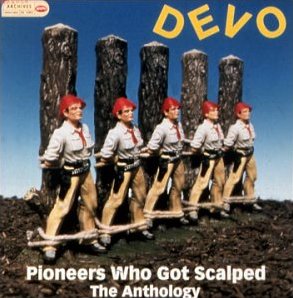
DEVO – Pioneers Who Got Scalped: The Anthology

Pioneers Who Got Scalped: The Anthology

DEVOPioneers Who Got Scalped: The Anthology Rhino R2 75967 (2000)


Well, Pioneers Who Got Scalped is a real mixed bag.  Disc one starts out great, but listening to disc two is a real chore.  In their early days, DEVO had sharp songwriting skills and a clever, absurdist sense of humor.  People call them a punk band, but I see them more as a disco band strongly influenced by punk rock–not that those genre distinctions really matter.  The band’s earliest recordings that open disc one satirize popular culture, often by way of clever new arrangements of well-known pop songs that frequently deploy mechanized, angular rhythms.  However, all that didn’t last.  By disc two, though it is apparent towards the end of disc one as well, the band just ran out of ideas.  Their recordings were still well-crafted but their songwriting became confined to unremarkably generic 1980s synth-pop, their sense of humor common.  I suppose it becomes difficult to skewer pop culture the more you become a part of mainstream pop culture.  And looking back it is hard to see DEVO as anything but a part of mainstream pop culture, from “Whip It” onward at least.

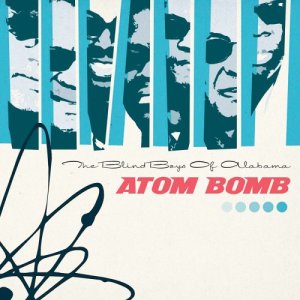
The Blind Boys of Alabama – Atom Bomb

Atom Bomb

The Blind Boys of AlabamaAtom Bomb Real World 6 19225 2 (2005)


A really fine album from a group that had existed more than 65 years (!) when this was released.  Breaking it down mathematically, you’ll be hard pressed to find many veteran groups that have made an album half this good after being around a mere one-sixth as long.  I watched the Boys perform on The Tonight Show promoting this album, and Jimmy Carter did a little showman’s trick and held a note for about a full minute (using circular breathing), wowing the crowd.

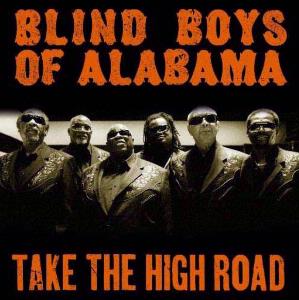
Blind Boys of Alabama – Take the High Road

Take the High Road

Blind Boys of AlabamaTake the High Road Saguaro Road 26393-D (2011)


So, The Blind Boys (of Alabama) have been offering a pretty steady number of new albums, despite members being quite advanced in age.  It doesn’t take Sherlock Holmes to note that these recent albums have made liberal use of marketing gimmicks.  An album of pop covers–check!  Christmas album with guest spots–check!  An album recorded in New Orleans with brass bands–check!  So, here they’re at it again, this time it’s all about guest spots.  Those kinds of albums are usually quite dull, and this one is too.

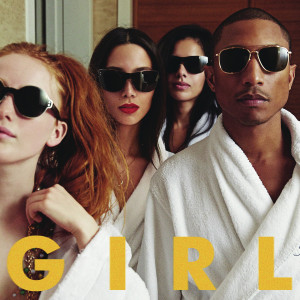
Pharrell Williams – G I R L

G I R L

Pharrell WilliamsG I R L Columbia 88843 05507 2 (2014)


Renowned music producer Pharrell Williams has been one of the most identifiable voices of American pop music in the preceding decade or so.  Recording as a solo artist, though, something is lacking most of the time.  The hit single “Happy” is here, and it is about 100 times better than anything else on G I R L.  It takes the positive energy of OutKast‘s “Hey Ya!” and applies a more laid-back vibe.  The thing is that happiness is for idiots.  The way Pharrell sings about it, the concept is nothing more than jouissance, that is, a death drive for excess enjoyment beyond simple plaisir (pleasure), which in the end leads to pain.  Or at least, so says psychoanalysis.  The rest of the songs have lame lyrics, and a tentative delivery that lacks music commitment from Pharrell.  The backing music is fine.  It isn’t innovative.  This guy has been doing this stuff for a decade.  But most feel like only sketches of songs not fully developed.  All together, it hardly gets beyond the hit single.  Pass on this, and stick just with “Happy.”

David Bowie – David Bowie [Space Oddity]

David Bowie

David BowieDavid Bowie Philips SBL 7912 (1969)


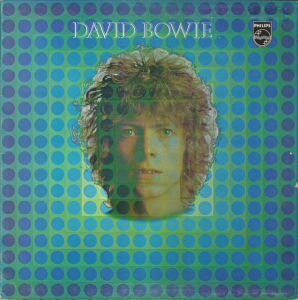
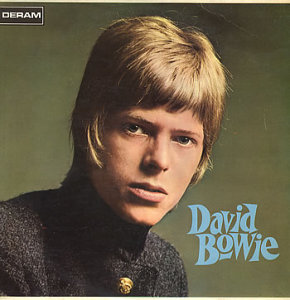
David Bowie’s career underwent something of a sea change between his debut and his sophomore album — curiously, both self-titled.  On the debut, he charted a path firmly in line with prim and proper British folk pop, albeit with an intelligent wit and alacrity.  For this, his second album, he switches sides and turns toward the counter-culture (just look at the changes in hairstyles on the album covers!), with a far more modern sound rooted in the folk-rock of Donovan and the like.  Yet this album is listenable only about once, with lots of stilted, half-formed songs and rather under-developed performances.  The hints of pure rock on “Unwashed and Somewhat Slightly Dazed” and elsewhere proved to be the way forward for Bowie.  He would go further in that direction with his next effort, The Man Who Sold the World.

David Bowie – David Bowie

David Bowie

David BowieDavid Bowie Deram SML 1007 (1967)


A period piece, for sure.  But with its naïve, playful, tame approach to poppy British (very British) folk, it has a certain amount of charm.  These days, most listeners are Bowie fanatics wanting to puzzle at how his sophisticated sensibility can just barely peek out from behind this seemly impenetrable shell of conformist pop music.

Brandi Carlile – Bear Creek

Bear Creek

Brandi CarlileBear Creek Columbia 88691 96122 2 (2012)


This album is all over the place.  At least she got through the checklist of styles drawn up before recording this…  A good part of it resides in the same indie/alt-country territory as the likes of Neko Case and Jenny Lewis with the Watson Twins. But it also swings over to the realm of synthetic indie pop a bit like Metric.  Oh, and more than that.  Her vocals have the same white girl singing like a black gospel/soul singer vibe that Amy Winehouse, Adele (whatever her last name is), Elton John and others have used.  “That Wasn’t Me” is the minor hit, and it’s good.  “Save Part of Yourself” works well too.  But much of this seems unable to offer anything on its own, instead burdened with having to cover as much territory as possible.  The biggest liability is how this was recorded, in a way that takes the edges out and remains non-committal.  Carlile might have some potential if a great producer took her in and guided her to stronger material and a sound of her own.

St. Paul & The Broken Bones – Half the City

Half the City

St. Paul & The Broken BonesHalf the City Single Lock SL 003 (2014)


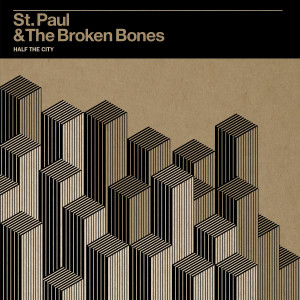
Singer Paul Janeway (AKA St. Paul) has a voice a bit like Sam Moore (of Sam & Dave) or maybe even Al Green, and other southern soul singers of the past.  He and his group, The Broken Bones, have a retro soul sound.  This is something the likes of Lee Fields have mastered in recent years.  What this isn’t is “neo-soul” like that of Raphael Saadiq, Macy Gray, or Amy Winehouse, who apply a more modern sense of detachment and even cultivate an elitist camaraderie with supposed social misfits set aginst old fashioned arrangements and instrumentation, or the more progressive types who have tried to rethink some of the foundations of soul music and flirt with hip-hop elements, like Erykah Badu, D’Angelo and Lauryn Hill.  If the band’s web site press release is to be believed, Janeway grew up steeped in gospel music, not soul, rock and other secular music.  This would, in theory, position him in much the same place at the first generation soul singers, who drew from gospel more than anything else.  But Janeway also cites the showmanship of Tom Waits and Nick Cave & The Bad Seeds.  A grim, gothic edge like those secular rock music influences might be detected more in the guitar and drums than the vocals on Half the City.  But those reference points also hint at the likely audience for St. Paul & The Broken Bones.  This is music mostly for urban, affluent and educated people; a mostly white audience.  The retro stylings are for people with the time to reconsider the past, finding that the sophisticated edginess of old soul music gives voice to what is is relevant to their own contemporary experiences.  The pose a question of what authenticity means today.

The opener “I’m Torn Up” is a slow burn torch song with a horn section playing something not unlike Terence Trent D’Arby‘s mid-1990s UK hit “Holding on to You.”  D’Arby may not seem like the most “authentic” soul music reference point, even if he did make some convincingly good music in his day, but there are some similarities in the horn charts.

There is punchy guitar on the title track “Half the City.”  A little guitar distortion shows up at the very end of “Dixie Rothko.”  These are just elements of the music, juxtaposed to create a hint of more contemporary relevance.

Half The City keeps ahead of any claims of monotony.  There is a nice balance between more up-tempo numbers, and slower ballads.  And there is Janeway’s voice.  He’s a surprisingly good soul singer.  His vocal tone is just a bit sour, in a slightly higher register than some of the gruff and gravelly southern soul singers of the past–Sam Moore is definitely the closest comparison.  Janeway tries to shred his vocal chords at times, and while it occasionally seems like he needs a little more momentum to really do it, the mere process of trying is enough for the performances to succeed.

Retro music can sometimes be hollow.  As an approximation of something else, it can lack immediacy and vitality.  Not so with Half the City.  This is music that might adopt the styles of the past, but it mostly cruises by with a lot of energy, retaining a looseness that sidesteps the problems of stifling perfectionism.  Along with Lee Fields’ Faithful Man (2012), this is probably one of the most durable retro-soul albums of recent years.

The Rolling Stones – Their Satanic Majesties Request

Their Satanic Majesties Request

The Rolling StonesTheir Satanic Majesties Request Decca TXS 103 (1967)


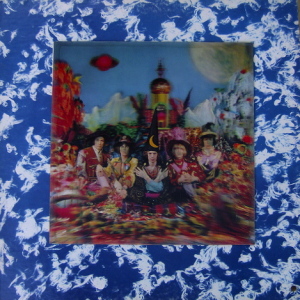
The Rolling Stones made one out-and-out psychedelic album. It was Satanic Majesties. The record is a non-stop creative journey. While perhaps the most idealistic Stones album, Satanic Majesties also has a gritty, cynical realism just under the surface. Somehow this lends power to the dreamy psychedelia. It makes the music more legitimate. The uplifting qualities aren’t escapist.

“She’s A Rainbow” is such a wonderful song. It opens with an electronic and found sound segment before leading into sweet piano melody. John Paul Jones (future Led Zeppelin) provided string arrangements. While there is a lot of effort to organize the music, this is still more instinctual than perfectionist. It feels so natural. Even the eeriness seems to belong where it is. The array of instruments used, from horns to a xylophone, make songs like “Sing This All Together” vibrant. Each little sound contributes something unique.

Two more of the very best songs are “2000 Man” and “2000 Light Years from Home.” The disillusionment and desire of “2000 Man” make quite a potion. The acoustic guitar seems to merge with the sitar. I sometimes think it is a song about a homosexual in a heterosexual marriage, but I see that as only one of many interpretations. It also is about modern alienation and the desire to cure intractable loneliness. The spooky “2000 Light Years from Home” has a Moog synthesizer slinking along a rather hip rhythm.

“Sing This All Together (See What Happens)” tends to get a critical thrashing, but this is unfair. This post-modern sound collage went down before Captain Beefheart, Funkadelic, Miles Davis or just about anyone else in rock, pop or jazz dared actually try such a thing–though The Mothers of Invention did some similar things around the same time.

“Citadel” is a rocking song about New York City. Jagger throws in some references to some locals including Candy Darling (also the subject of The Velvet Underground’s “Candy Says”).

“Gomper” and “In Another Land” tend to wander a bit, though they still are for the most part good songs if taken on their own terms.

People tend to dismiss this album as a failed attempt to match The BeatlesSergeant Pepper’s Lonely Hearts Club Band.  I have never been convinced Sergeant Pepper’s is so great an album, even if it has a few great songs.  But more to the point, this album is more like Pink Floyd‘s The Piper at the Gates of Dawn than Sergeant Pepper’s anyway.  In any event, Satanic Majesties is a wildly unique, modern and enjoyable album–not just among Stones albums.  I start listening to it to try to entertain myself but then I always go further and open my mind to new ways of hearing and thinking.