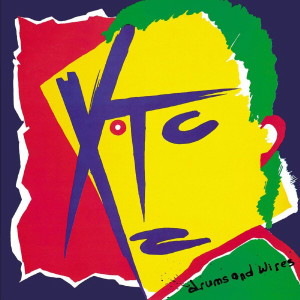
XTC – Drums and Wires Virgin V 2129 (1979)
Basically a superior British version of Talking Heads.
Cultural Detritus, Reviews, and Commentary

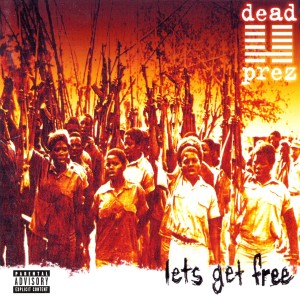
dead prez – Let’s Get Free Loud 1867-2 (2000)
dead prez are not a passive kind of group. The duo’s logo is the hexagram “Shih” (the army) from the I Ching (the Chinese Book of Changes). This represents the power collectively residing in the people. Lets Get Free unabashedly tries make use of that power. stic.man and M-1’s raps are direct. They can be more purposeful than elegant, but that is part of the uncompromising artistic position dead prez take. Lets Get Free has a southern sound with little treble and a whole lot of bass. The first side of the record is a cynical condemnation of American society. “‘They’ Schools” is a broad critique of a defective educational system only responsive to white interests. Side 2 makes plans for the future. “Discipline” and “Animal In Man” reveal some diverse talent. The instrumental “You’ll Find A Way” has a smooth, assured attitude and keeps the record fresh. “Hip-Hop” was the underground hit. There are some cringe-worthy songs here, but mostly this is good.
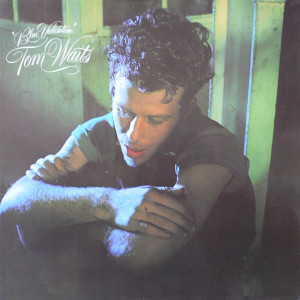
Tom Waits – Blue Valentine Asylum 6E-162 (1978)
While not Tom Waits’ most strikingly original work, his Hollywood beatnik shtick is still quite effective here. There are plenty of faux jazz ballads, a showtune, and a few intimations of his edgier eighties songwriting. He even manages to pull off the maudlin “Kentucky Avenue”. Everything seems more polished and sober than Small Change and most people find it far more inspired than Foreign Affairs. This is one of Waits’ most successful albums of the 1970s. It was also his last effort completely dedicated to this particular old time hipster musical persona. His next albums would start to take a left turn toward rogue carnival weirdness.
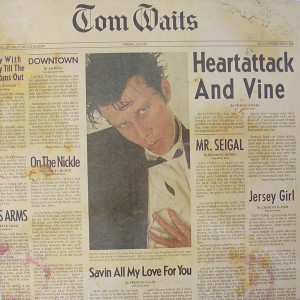
Tom Waits – Heartattack and Vine Asylum 6E-295 (1980)
Here Waits is still operating within the realm of orchestrated pop balladry (“Saving All My Love for You,” “On the Nickel,” “Ruby’s Arms”), but he’s made a noticeable change in welcoming more harder-edged blues-rock sounds to his palette, with heavier drums and guitar and no piano (“Heartattack and Vine,” “‘Til the Money Runs Out”). This proved to be a transitional album as Waits moved toward his edgier mid-80s sound. But often he is stuck with a slick, “professional”, L.A. kind of sound (“In Shades,” “Downtown”) that is too much of a compromise between the two poles of the album. Even when he does succeed in one firm style or another, it is hard to find people who want to swing between gravelly crooning and gruff R&B the way this album is presented. There is definitely good stuff here, but the sum total is a little unsatisfying. After marrying Kathleen Brennan, whom he met while working on One From the Heart, he basically committed to the style of Swordfishtrombones and stuck with that approach for the rest of his career.
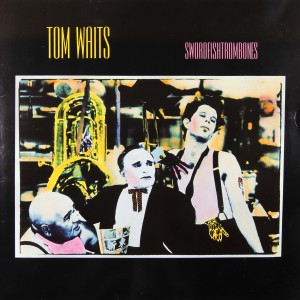
Tom Waits – Swordfishtrombones Island ILPS 9762 (1983)
A good album, but one I hardly ever revisit. Of course I dig stuff like “16 Shells From a Thirty-Ought-Six”. You would have to be a major asshole not to. But this album as a whole doesn’t resonate with me like some of his others. Still a fine effort and among Tom Waits’ better ones. This would be his last album for nearly twenty years to look back at all on the lounge jazz/blues that characterized much of his 1970s output.
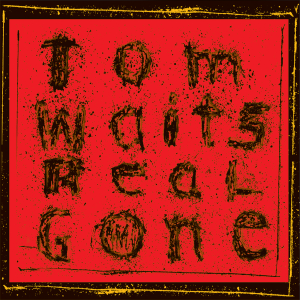
Tom Waits – Real Gone Anti- Records 86678-2 (2004)
Some killer songs, “Hoist That Rag” chief among them, but also a lot of filler in the middle part of the album. Marc Ribot is a strong presence.
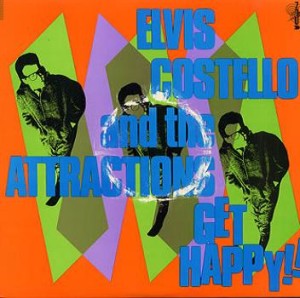
Elvis Costello and The Attractions – Get Happy!! F-Beat XXLP1 (1980)
There is a good chance that asking some fans their favorite Elvis Costello album will get the answer: Get Happy!! What essentially begins as a genre exercise in soul and R&B ends up as an enduring statement that went beyond new wave clichés. It has more energy than seemed possible from Costello. He directs this into a completely honest brew of catchy melodies and soulful backbeats.
This is one of the classic new wave albums because it’s also an anti-new wave album. The ancient modernism of the conflicted emotions stands out. This isn’t so much a fun pop album. Get Happy!! is about music that you often need to hear. It works upon you. The phrase “Get happy” is a hollow motivational catchphrase. This album wonders why. The purportedly trivial gets its due. Anyone who has ever been sad, lonely, depressed, disenchanted, or anything other than what they want to be, has the needs to hear this album.
“I Can’t Stand Up (For Falling Down)” takes the overlooked Sam & Dave classic (penned by Hayes/Porter) someplace new. Costello takes on the song at a double-time tempo. He tweaks a few of the lyrics to his purposes and adapts where needed his vocal style. He emerges with a something entirely more frantic and delusional. Costello wants to escape the inescapable. Sam & Dave sang a slow, bluesy ballad. Costello reinterprets the song where he acts before he thinks as an excuse to avoid his pain. How could he “fall down” at the pace of he sings this song? His desires are as real as he makes them, conviction his only ally.
Costello was an intelligent hipster. Here he directs his thoughts to the minutiae of life; its illusions fascinate him. The songs don’t come to explicit conclusions. Get Happy!! doesn’t provide answers. Perhaps the only thing Costello and The Attractions do identify with are old Stax and Atlantic soul sides and some wont to act. His usual cynicism is held in check by the glaring deference to pop music of the past. So under it all is a love for music, and that love gets put to use.
So with “Beaten to the Punch” Costello has his lyrics as sharp as ever (for example, “if you got a head for figures then you better count me out” is a great line wherever it lies). Hesitation seems to be everyone else’s problem but Elvis can’t help but implicate himself in the mess. While he claims to have no choice in these matters, he certainly knows where he wants to end up. The way to get there just isn’t what he had hoped for. The tables turn and he’s as desperate as everyone else.
Maybe the honesty of this record comes as a by-product of a hasty recording process (think Big Star’s Third). That separates Get Happy!! from Costello’s other sometimes dubious efforts to reinvent himself. With so many great songs like “Black & White World,” “New Amsterdam,” “High Fidelity,” and “Riot Act,” he obviates the need for posturing. This is a last-ditch effort to make something, anything, happen. The record simply isn’t calculated for Costello to position himself as some kind of legendary songwriter or rock star. When talented artists make music they feel, on instinct, without over-thinking, it can be unique in all the right ways. So it was with Get Happy!!
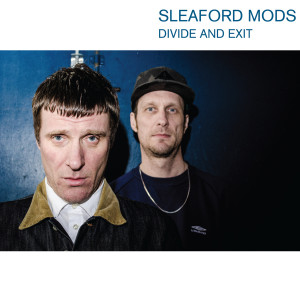
Sleaford Mods – Divide and Exit Harbinger HARBINGER121CD (2014)
Sleaford mods basically adopt the rhythmic post-punk sound of The Fall. Although they certainly aren’t the first to do so, it is interesting that they sound like latter-day Fall (year 2000 onward). Vocalist Jason Williamson sounds a bit like Ian Dury too. Decent working class rock.

Various Artists – Rogue’s Gallery: Pirate Ballads, Sea Songs, & Chanteys Anti- Records 86817-2 (2006)
Meh. These kinds of albums rarely fully succeed. There is some great material, but some truly horrible performances too. As to the best stuff, I would point to Loudon Wainwright III‘s stunning rendition of “Turkish Revelry” (which was written back in 1635 or earlier and titled “The Sweet Trinity” when collected by Francis Child, but also known as “Sir Walter Raleigh Sailing In The Lowlands”, “The Golden Vanity”, “The Golden Willow Tree” and other name variants — The Carter Family recorded it as “Sinking in the Lonesome Sea“) and the two Baby Gramps songs. Other decent stuff is Richard Greene and Jackshit‘s “Shenandoah” and Lucinda Williams‘s “Bonnie Portmore”. Yet, I feel obligated to warn that some of this stuff is just so terrible as to kind of ruin the whole album. As the liner notes attest, it seems a few artists just kind of showed up at the studio and played whatever, without familiarity with the material or much rehearsal. The results in those instances seem to be as terrible as circumstances would suggest. This album is not good enough to recommend, except for the Loudon Wainwright and Baby Gramps tracks, which are great and well worth seeking out.
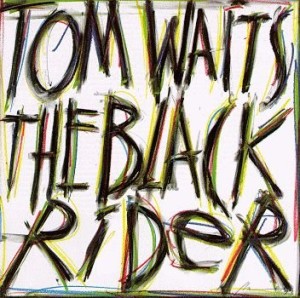
Tom Waits – The Black Rider Island 314-518 559-2 (1993)
I’ve never been fully satisfied with The Black Rider. It was created as part of a theater production of the same name that joined Tom Waits with one of the century’s greatest writers (William S. Burroughs) and one of the world’s most respected theater artists (Robert Wilson). There is a weak link though…and it’s Tom Waits! The story (thanks to Burroughs) is a brilliant parable. I have not had the opportunity to see a theater production of the work and judge Wilson’s contributions, but reliable sources have raved about it. So why can’t this album hold up? Well, it has its moments. But too often Waits gets ahead of his compositional abilities, trying too hard to sound like a latter day Kurt Weill or something. Underneath it all, there is still something amazing about this album. Too bad Waits couldn’t pull it together like on Bone Machine.