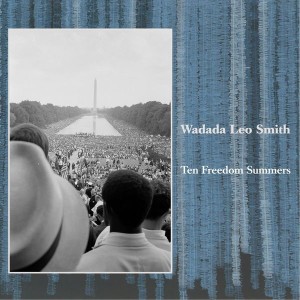
Wadada Leo Smith – Ten Freedom Summers

Ten Freedom Summers

Wadada Leo SmithTen Freedom Summers Cuneiform RUNE 350/351/352/353 (2012)


Supposedly decades in the making, this massive four-disc collection of music by trumpeter Wadada Leo Smith chronicles the freedom movement (a/k/a civil rights movement) in the United States for the years 1954-64.  It features quartet and quintet jazz combos as well as a chamber orchestra.  On the plus side, this work is nothing if not eclectic.  When it opens with “Dred Scott, 1857,” it has the unmistakably measured, conversational style of Bill Dixon.  A little further in, “Thurgood Marshall and Brown vs. Board of Education: A Dream of Equal Education, 1954” is punchier, more blues-inflected.  By the time the fourth disc rolls around, it settles into a very “typical” spare, rattling-drum modern jazz style.  Unfortunately, there is something rather lacking in this work.  It’s that this takes itself so serious that there isn’t any energy left to let it breathe.  Nothing here innovates, really, and the music isn’t particularly evocative either.  Compared to, say, Philip Cohran and the Artistic Heritage Ensemble‘s The Malcolm X Memorial (A Tribute in Music), this feels a little pedantic and dull.  It’s not bad.  No, it’s actually performed as well as it could be.  But it’s ambitions are unfocused and too shallow.  I think, much like Matana Roberts (though Smith is a substantially more talented performer), this album practices a kind of intellectual bullying.  It takes on a subject for which there is a “correct” view, and adopting that view, there is an effort to silence dissent about the execution and specific content of the compositions and performances purely on the basis of the thematic focus.  So, even if you agree with the notion of equality (which I do), it is still possible to find this music, heard as a discourse about it, unpersuasive and uninteresting.


The Cure – Kiss Me Kiss Me Kiss Me

Kiss Me Kiss Me Kiss Me

The CureKiss Me Kiss Me Kiss Me Fiction FIXH13 (1987)


Like most double albums, this one is too long.  There also is a bizarre eclecticism at play that just doesn’t quite work.  “Just Like Heaven” is classic Cure, with a little bit of punk bite but still very catchy (even if Dinosaur Jr.‘s cover version is better).  As for the rest, well, it’s just all over the map.  At times there is the percussion-laden sound of Public Image Ltd.‘s The Flowers of Romance, plenty of middle-eastern influences, a little lukewarm funk-rock, and even some inklings of the jazz odyssey of Wish — though it’s hard not to think that we are witnesses of the new birth of Spın̈al Tap, mark II.  The Cure try many things here but do few of them well.  This could be worse, and there are some decent songs.  It’s still a disappointment though.

PiL – Metal Box

Metal Box

PiLMetal Box Virgin METAL 1 (1979)


So much of the most innovative music of the 70s came together on Metal Box (originally three metal discs packaged in a film container, the later U.S. version titled Second Edition had a less expensive package). Public Image Ltd. (PiL) kept the immediacy, power, and attitude of punk while creating a special new blend of “pop” music.

The Sex Pistols had booted John Lydon (a/k/a Johnny Rotten) forcing him to find something new. What he found was guitarist Keith Levene and the perfect forum to rant.

Metal Box, the group’s second album, uses only extremes. Pounding bass and icy guitar hiss over the top grind like machinery. Lydon’s paranoid shouting plows through, questioning everything. He rips out the sounds in his head for the world to hear. PiL released singles from the album, but even those great songs seem out of place by themselves. The flow and endless vamps need to slowly overtake you as you listen.

Keith Levene is the sound of PiL. He plays phenomenally inventive solos, as on “Chant” where his scathing guitar laces over muffled repetitions of “love/war/kill/hate.” He comes close to sounding like James “Blood” Ulmer most of the time, improvising in a way that values random effects and eliminates the possibility of mistake. Jah Wobble on bass is also an absolute necessity for this music to work, adding the only melodies. The spontaneous energy keeps the experiments within arm’s reach. The drummer du jour adds little but manages not to spoil the album either.

Dance music, the likes of dub and disco, was the common denominator for PiL. While it seems each performer is doing something completely different, the record pulls it all together with the open space and sweeping textures of CAN’s krautrock. There really are no low points on the entire album. PiL’s debut had connections to the past, but this album (their second) was a step through a gateway. Superficially, Metal Box was absorbed into pop music, though few of the influenced masses think to tracing their roots through PiL.

Great music is tied so much to the social fabric of its time, so that great music tends to come in waves. Metal Box is one of the most brilliant works from an incredible period that birthed the 80s. Even among stiff competition, it stands out as inspired, cohesive, and enduring.

John Cale once said that rock and roll is about screaming and getting paid for it. PiL pulls off that tenuous circus balancing act in profound fashion. My mom once commented while I was listening to Metal Box that it sounded like someone screaming and trying to get paid for it. I don’t think she realized how right she was! This is an album for people who love rock and roll down to their souls, and no one else.

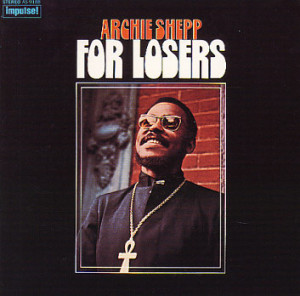
Archie Shepp – For Losers

For Losers

Archie SheppFor Losers Impulse! AS-9188 (1970)


You could look at this album as the greatest waste of talent on vinyl.  You’ve got some of the greatest jazz performers around playing…straight soul charts.  Yet, it works.  Shepp was the brash youngster of the 1960s jazz avant-garde.  He was, typically, a step behind the leading lights, and rarely seemed to deliver on what his talent promised, but, he was only one step behind, and he still delivered something, all of which does count.  Tellingly, the first session for For Losers was just a few days after Albert Ayler‘s New Grass, with the same producer (Bob Thiele).  Additional material from these sessions was later released on the forgettable outtakes collection Kwanza.  In the rapprochement between jazz and rock, Shepp’s style may have ended up being one not pursued by others, usually dismissed as being too deferential to rock/soul structures, but it still holds up on its own terms decades later.

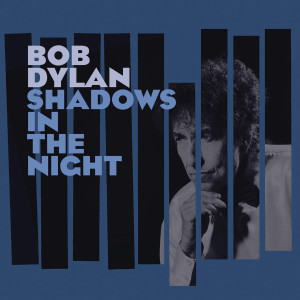
Bob Dylan – Shadows in the Night

Shadows of the Night

Bob DylanShadows in the Night Columbia 88875057962 (2015)


Rock, country, etc. musicians making albums of traditional American pop “standards” are just something that needs to be accepted as some kind of sad inevitability.  They sell like hotcakes.  If you set aside the category of singers like Scott Walker, who seemed fit for traditional pop from the outset, there is a long history of “crossover” attempts in this direction.  Just before The Beatles broke up, Ringo Starr released Sentimental Journey (1970), a collection of standards.  The biggest pioneer, though, was Harry Nilsson, with A Little Touch of Schmilsson in the Night (1973).  That was followed by João Gilberto‘s Amoroso (1977) and Willie Nelson‘s smash hit Stardust (1978), and everything from Linda Ronstadt‘s What’s New (1983) to Sinéad O’Connor‘s Am I Not Your Girl? (1992), Rod Stewart‘s It Had to Be You… The Great American Songbook (2002), and beyond.  Sure, Dylan had done crooning before, if you paid attention (you probably didn’t).  But doing a standards album at age 73, well, it seems to prove Keith Richards‘ claim that Dylan’s “christian” phase was a ploy to sell records.  After all, to promote Shadows in the Night, Dylan gave an exclusive interview with the magazine for AARP (American Association for Retired Persons).  Who else but old, retired people want to buy an album of standards?  Yeah, Dylan sings better here than on Christmas in the Heart, but who cares?  His voice is still ravaged, and there are better singers out there to do pure singing.  And Frank Sinatra albums are still available…

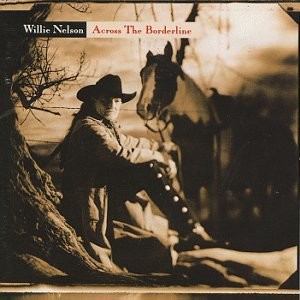
Willie Nelson – Across the Borderline

Across the Borderline

Willie NelsonAcross the Borderline Columbia CK 52752 (1993)


It’s hard to mention Willie Nelson’s name without two things immediately coming to mind: marijuana and the IRS (Internal Revenue Service).  It’s the latter that provides the backdrop for this album.  Due to reliance on investment advice that turned out to be fraudulent, Willie accumulated a tax debt to which the government added numerous penalties so that it ballooned to many millions of dollars.  As it turns out, Willie didn’t manage his money well and his star (and record sales) had faded, leaving him without the funds to pay the bill.  So began a period of years when friends and fans purchased his old assets and sold them back to him–often for pennies on the dollar.  He even released an album direct-marketed over TV, The IRS Tapes: Who’ll Buy My Memories?, to help pay the IRS.  Eventually Willie won a lawsuit over the accounting firm that gave him the investment advise originally, and he settled the IRS debt and returned his full attention to the music business.  The first album after the IRS days drew to a close was Across the Borderline.

This album shows more promise than anything Willie had done since the mid/late 1970s.  Paul Simon‘s “American Tune” is a fantastic opener, and there is more great stuff in store like John Hiatt‘s “(The) Most Unoriginal Sin.”  But, the album doesn’t quite hold to that high standard throughout.  It feels like Willie is trying to follow the same path as Bob Dylan by recruiting a rock producer, Don Was (plus Paul Simon and Roy Halee).  Hell, Willie even teams up with Dylan for “Heartland” and covers another Dylan tune later on the album.  After a full decade of lazy irrelevance, Across the Borderline showed Willie still had good music in him.  But it would be in the late 1990s that he delivered his best recordings since the 70s, in Spirit and Teatro.

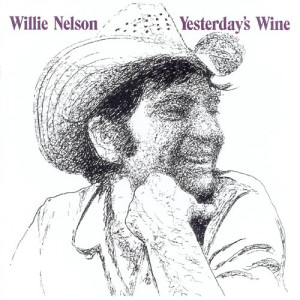
Willie Nelson – Yesterday’s Wine

Yesterday's Wine

Willie NelsonYesterday’s Wine RCA Victor LSP-4568 (1971)


Willie Nelson had a recording session scheduled in May 1971.  He had grown lazy as a songwriter over the years, and he didn’t really have material lined up for the album. The night before recording began (!), he wrote much of the material — at least seven of the songs — that ended up on Yesterday’s Wine.  The result is a major departure from his “typical Nashville” albums of the previous ten years.  This subdued concept album about coming to terms with religion in adulthood strips the music back to spare, intimate settings.  Often there is little more than Nelson’s voice, acoustic guitar and bass, with piano or steel guitar appearing only briefly, even just momentarily.  Although mellower and more laid-back (the Willie Way!), it’s a format a bit like Bob Dylan‘s albums Nashville Skyline or John Wesley Harding (not all that surprising, given that session man Charlie McCoy appears on both Dylan’s and Nelson’s albums).  The singer-songwriter movement sweeping the music industry seems to have had some effect on Nelson.  Recorded with a mix of Nelson’s touring band and a few session men, the album’s experiments don’t fully succeed.  There is a stiffness in the performances, with the backing band often just plodding along — it’s hard to blame them for lack of practice, though, when the songs were written the night before!  Nelson seems tentative in his vocals too.  He’s in new, unfamiliar territory, and he hasn’t entirely sorted out where he’s headed.  His vocals shed much of the crooning style that he relied on so much the previous decade.  The album’s greatest strength remains the excellent songwriting.  Chief among the new songs is the classic road rambling tale “Me and Paul,” written in honor of Nelson’s touring drummer and former pimp/hoodlum Paul English.

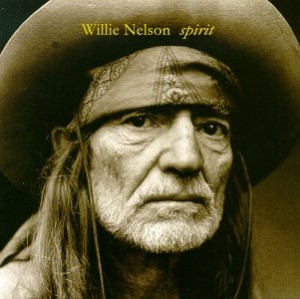
Willie Nelson – Spirit

Spirit

Willie NelsonSpirit Island 314-524 242-2 (1996)


Not as well-known as Willie’s great albums of the 1970s, Spirit is one of his few later-career efforts that belongs in that same category of his very best.  1976’s The Sound In Your Mind was his peak as a vocalist, but Spirit is his peak as a guitarist.  His iconic nylon stringed guitar Trigger never sounded better.

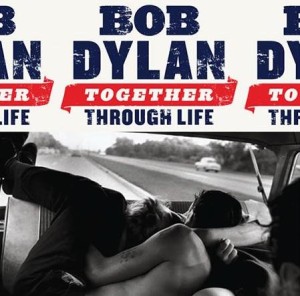
Bob Dylan – Together Through Life

Together Through Life

Bob DylanTogether Through Life Columbia 88697 43893 2 (2009)


Here’s the first real break in continuity Dylan has offered in his recordings since Time Out of Mind more than a decade earlier.  There are similarities, of course.  This still works with simple blues forms, but Dylan is also leaning on the melodramatic airs of Tin Pan Alley.  The songwriting is perhaps less compelling than on his last few albums.  Lots of the material was co-written with Robert Hunter, the frequent lyricist for The Grateful Dead.  But, surprisingly, the production values of the album are quite nice.  It sounds crisp and woody, rather than warm and fuzzy like the last few recordings.  It seems almost like the musicians are performing live right in front of you.  An accordion is featured prominently (you may remember this only as “the accordion album”, like jazz musician Henry Threadgill‘s Where’s Your Cup?).  This one may seem like a throwaway, but it does have an easygoing charm even if that very quality simultaneously threatens to prevent it from reaching escape velocity to leave the orbit of easy listening/adult contemporary schmaltz.  Although it’s rather listenable it isn’t always memorable.  If people often say that any effort you put into listening to Dylan’s music is repaid many times over, then this album turns that around because it makes for probably the easiest listening in his whole catalog but intense scrutiny probably won’t pay off as much.

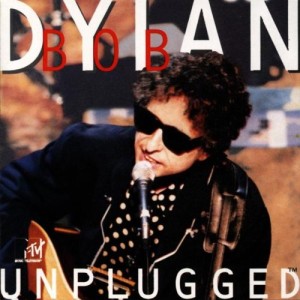
Bob Dylan – MTV Unplugged

MTV Unplugged

Bob DylanMTV Unplugged Columbia CK 67000 (1995)


Here’s a turning point for Dylan.  He had been in a tailspin (often a flaming tailspin) since the late 1970s.  His (in)ability to cope with his celebrity status was a big part of the problem, and over time he simply wasn’t usually engaged in the recording process.  Dylan would veto efforts by producers to clean up his albums, and he would veto the inclusion of some of the better songs (borne out by the Bootleg Series and Biograph sets).  He also would not rehearse sufficiently with his bands prior to recording, and would refuse to do further takes to get a song right.  Worst of all, he just tended to coast by while putting in a half effort, at best.  This was all compounded by him allegedly being an alcoholic.  But a lot of this changed when MTV approached him to do an “unplugged” concert series and album.  For the first time in decades, maybe even ever, he was willing to listen to what the studio execs wanted.  They wanted Bob Dylan’s greatest hits live.  Bob proves somewhat disinterested in these performances, but in listening to the executives he sort of grew up in a way.  He was, to put it bluntly, selling out.  But in selling out he was also accepting a more viable way of managing his career.  In a word, it was professionalism — making him out to be something more like a hard-working entertainer doing what was expected of him by others than a sensitive “artiste” holding out that his place and legacy in society wasn’t fully crystallized.  He was ready to give his fans what they wanted, mostly because he was paying attention to the business side of his affairs and seemed to want the steady stream of income that some concessions would provide.  But this was also his recognition that he didn’t have complete latitude and needed to take into account circumstances beyond his control.  So consider MTV Unplugged like Dylan clearing his throat, preparing to launch into the last part of his career with some sort of enthusiasm.  Once he accepted his status as a “rock legend” from an earlier era he could work within that context for his next album Time Out of Mind, spinning tales of jaded regret, bemused nostalgia and weary longing that only work from that perspective of aged credibility (the classic mid-life crisis resolution).  Freed from the burdens of having to sound “new” and “contemporary” he could just pick out bits and pieces from familiar terrain and put them together in a way that sounded convincing not contrived.