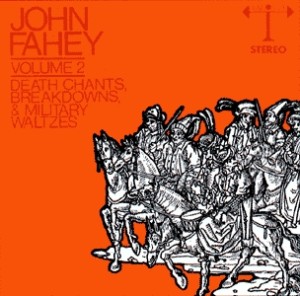
John Fahey – Vol. II: Death Chants, Breakdowns and Military Waltzes

Vol. II: Death Chants, Breakdowns and Military Waltzes Volume 2: Death Chants, Breakdowns & Military Waltzes

John FaheyVol. II: Death Chants, Breakdowns and Military Waltzes Takoma C-1003 (1963; 1967)


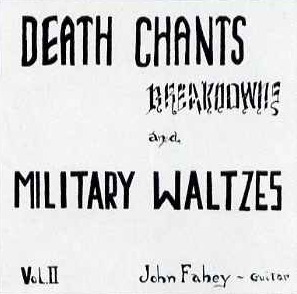
A good choice for an introduction to John Fahey.  He recorded two versions of the album, which features songs on the more straightforward side of his repertoire when he was still expressing things that fall more or less within the realm of the traditional musics from which the underlying stylistic elements originate.  A 1998 CD collection presents the two different versions of Death Chants, Breakdowns and Military Waltzes.  Fahey’s technique on the 1967 re-recording of the original album is far crisper, and the recording quality is imminently superior so you hear everything in greater detail.  The second time around he managed to improve on some songs in the relatively weak middle section of the original 1963 album (“On the Beach at Waikiki”, “Spanish Dance”, “John Henry Variations” and “Take a Look at That Baby”).  Then again, his performances of “Some Summer Day” and “When Springtime Comes Again” are arguably superior on the original version, and the different versions of the album didn’t include all the same songs, so it’s nice to have both complete versions of the album collected on one CD.  If you find yourself drawn to some of the more unusual elements detectable in each song, then proceed to Fahey’s more challenging stuff like Volume 6: Days Have Gone By and The Voice of the Turtle.  If you simply like the impressive guitar technique and the nice songwriting, then try other Fahey releases like The Transfiguration of Blind Joe Death and Vol 3 Dance of Death & Other Plantation Favorites or something from Fahey acolytes like Leo Kottke.
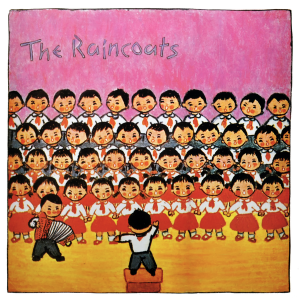
The Raincoats – The Raincoats

The Raincoats

The RaincoatsThe Raincoats Rough Trade ROUGH 3 (1979)


The Raincoats’ debut album is about being at a certain place in life. It captures a certain feeling. It isn’t a feeling that everyone can relate to, but the Raincoats delicately paint it with crafty precision. The Raincoats is ominous without the pretense that normally accompanies such works.  This is an album of distraction. Yet, it is effective because the ‘Coats readily admit this. The essence of the feeling is like opting to play hopscotch instead of being depressed. There is a careful avoidance at work. Darkness may be all around but there isn’t any time for it with such amusing diversions.

The focus here is on triumph. The Raincoats’ major contribution was combining a deep-seated, gut-level awareness with a generally upbeat attitude. In terms of songwriting, they created modern folk stories. Fairytales. The Raincoats work more from daydreams than reality. You could even call them precocious. “Life on the Line,” particularly Vicky Aspinall’s violin, has that humorous Bo Diddley strut to it. And guest Lora Logic adds her sinuous, throbbing sax to “Black and White.” Every part makes so much intuitive sense. They pull together all the right elements. It’s that spice they add, though, that makes The Raincoats so hard to put aside.

You have to look at The Raincoats in connection with musical collectives like The Slits to understand what important contributions The Raincoats made. Though they were an all-girl group by the time they recorded, they didn’t start that way and that probably wasn’t even their intent. They did end up with a sound far from the punk stereotype. The folk-influence vocal harmonies confirm that. Since this album had little success on release, most people have heard Nirvana‘s version of this sound first (perhaps recognizing the ‘Coats from Kurt Cobain’s liner notes homage). The Raincoats’ debut is the very sound that inspired countless bands through the 1990s.

The Raincoats can fool you into thinking they are just a fun little band playing stripped-down rock songs. Don’t get tricked into thinking so narrow mindedly! Actually, there are no traps. The Raincoats were a pretty inviting band that only slowly revealed their nature. You could talk about how their elemental melodies allowed greater shading with harmonics and rhythms, but this is unnecessary to enjoy the ‘Coats. They were out to make great music, and they are completely unguarded on this recording. Masters of the obvious indeed. With this debut, The Raincoats were off to a great start.

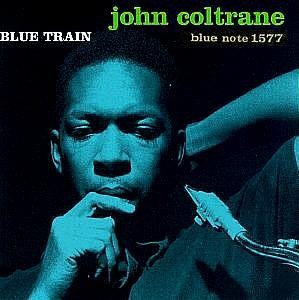
John Coltrane – Blue Train

Blue Train

John ColtraneBlue Train Blue Note BLP 1577 (1958)


Well, I’m willing to argue that Blue Train is not really that special.  Maybe I might reconsider someday (it has been some time since I have listened to it), but for now, it strikes me as kind of boilerplate hard bop overall.  Maybe it’s that boilerplate aspect that draws so many people who wish to dabble in jazz to this album, because it is relatively uncomplicated, it adheres to most expected formulas, it is widely available, and it is a pretty even album.  But as a reviewer on RateYourMusic put it, lots of other tenor players could have made this album.

One argument I recall having about this album started when I commented that it wasn’t really offering anything new when it was released.  In response, what I heard was something like, “But in like 1957-58, this was cutting edge for the day!”  Well, I’m afraid not.  In the same time frame, Sun Ra was years ahead of this, even if a lot of Ra’s contemporaneous recordings wouldn’t be released until a few years later.  Let us not forget that Coltrane was to be heavily influenced by Ra’s tenor John Gilmore in the years to come.  But aside from Ra, there also was Cecil Taylor with albums like Jazz Advance, or Ornette Coleman with albums like Something Else!!!! or even Lennie Tristano with precious few recordings but outsized influence.  The cutting edge stuff might not have been that well documented, and may have continued to evolve, but it was out there being played around the time Blue Train was recorded and released.  Just because the late fifties were a relatively slow time for innovation in jazz recordings doesn’t mean I need to handicap this disc.

Now, I don’t mean to rag on Trane that much.  My point is merely that he hadn’t achieved greatness yet.

John Fahey – City of Refuge

City of Refuge

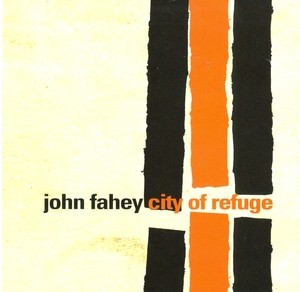
John FaheyCity of Refuge Tim/Kerr 644 830 127-2 (1997)


Spooky.  John Fahey mounted something of a comeback in the late 1990s.  City of Refuge was the first album of that comeback, and it was his most experimental offering in more than twenty-five years.  From this evidence there should be no doubt what the likes of Gastr del Sol saw in Fahey.  Most of this is pretty dark stuff.  “The Mill Pond” is a misfire.  Yet “Fanfare” and “City of Refuge III” are outstanding.  The former finds Fahey plugged in and playing some effective electrified guitar against industrial sounds and Stereolab samples.  The latter is an acoustic epic, but sounds more ominous than what you might expect based on his past recordings.  Not an easy listen by any means, but a welcomed return to more challenging music by a fascinating guitarist.

Johnny Cash – Johnny Cash Is Coming to Town

Johnny Cash Is Coming to Town

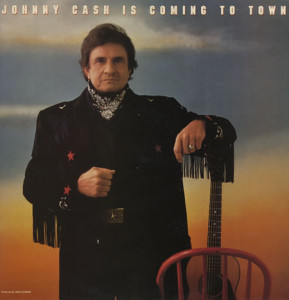
Johnny CashJohnny Cash Is Coming to Town Mercury 832 031 (1987)


As Columbia Records lost interest in Cash’s career and fading sales, he jumped over to Mercury Records.  His first album for Mercury, Johnny Cash Is Coming to Town, teams him again with producer “Cowboy” Jack Clement.  The approach is basically the same as the pair’s most recent work together on The Adventures of Johnny Cash (1982).  The material is patchy, with a few good choices but many more that are far less interesting.  The biggest problem, though, is that Clement makes this sound cartoonish, like a caricature of country music.  It adopts the worst elements of the contemporary Nashville sound.  The results are just more of the same with diminishing results.  There is a scene in the movie The Hunger Games: Mockingjay – Part 1 (2014), in which Woody Harrleson‘s character Haymitch tries to explain what is wrong with a propaganda film (“propo”) starring Katniss Everdeen (Jennifer Lawrence) made by Philip Seymour Hoffman‘s character Plutarch, and Elizabeth Banks‘ character Effie gives some examples of Katniss at her best after which everyone quickly agrees that Katniss is most charismatic when she speaks freely on her own without anyone telling her what to do.  Well, people most often like Johnny Cash because of these same qualities.  He was at his best when he did his own thing, the “rules” be damned.  He did not work to reshape country music from the inside out, like Loretta Lynn.  He had to work from the outside, as an outsider.  Johnny Cash Is Coming to Town has Cash trying to play by all the rules and follow a script closely.  For those reasons it seems to lack most of his strengths.  This one is a tad boring and too lacking in any nuance to make it anything of note.

Johnny Cash – Live From Austin TX

Live From Austin TX

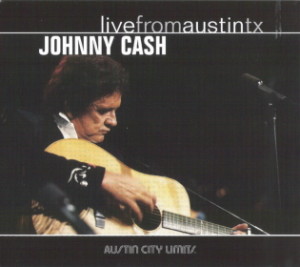
Johnny CashLive From Austin TX New West Records (2007)


Live From Austin TX was recorded on January 3, 1987 for the long-running public television show “Austin City Limits.”  The 1980s were disappointing times for Johnny Cash in terms of recording.  It wasn’t that he was washed up as a performer.  It’s that he often recorded studio albums full of every conceivable gimmick, none of which has aged well at all.  Some see this as a tension between his early outsider image and the clean-cut family man one that arose from his TV show, something he resolved decisively in favor of the former in the early 1990s with great success.  A straightforward live album like this proves a nice counterpoint to his studio recordings of the 80s era.  There are still some unfortunate electronics slapped on the guitar, but they aren’t too overbearing.  Cash sticks mostly to a “greatest hits live” format, so you know you at least get to hear some great tunes.  He even brings along a horn section for “Ring of Fire” and “I Walk the Line (outro)”.  Shortly before this show, he had been dropped by Columbia Records after almost 30 years.  He then signed with Mercury Records, and some of the songs here are from his first Mercury album Johnny Cash Is Coming to Town, released in April following this show.  Later in 1987 he went into the studio to re-record a lot of his old hits on Classic Cash: Hall of Fame Series, which is minimally adequate but doesn’t have quite the energy of this live set.  No, this doesn’t compare to the famous prison albums of the 1960s, and it’s no real revelation.  But it does possibly surpass anything Cash released in the 1980s, at least for consistency.

Johnny Cash – In Ireland

In Ireland

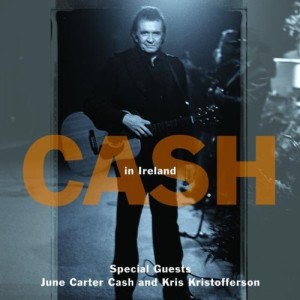
Johnny CashIn Ireland Mercury (2009)


Not everything on In Ireland is terrible, just most of it.  Recorded February 11, 1993 at the Olympia Theatre in Dublin, Ireland, the show was filmed and released first in DVD format, with this download-only album following a few years later.  The show took place just two months before Cash began recording his comeback album American Recordings.  Cash, himself, seems a bit tired here.  His voice isn’t in bad shape, but often his singing is not very enthusiastic and actually rather lazy.  The band — oh boy — is just on autopilot.  They have played these songs about a million times and it seems like they lost interest years ago.  Guitarist Bob Wootton stumbles through almost every song, like he’s only half paying attention.  Drummer W.S. Holland is determined to keep his own beat, regardless of the one everyone else is using.  June Carter seems like her vocal chords are shot from too many years of touring.  Rosey Nix comes across an amateur with a faux-gravelly voice she can’t control well enough.  And John Carter Cash is a pox on the proceedings, with nothing to offer but terrible clichés magnified to try to fill out a stage he doesn’t belong on.  Kris Kristofferson pops in for an okay cameo, but he’s not enough to improve the situation.  Earl Poole Ball is still around on piano, and he’s actually fine, but, like Kristofferson, he’s just not enough of a presence to make much of a difference.  If you want to hear most of the same tunes played with at least a semblance of interest from the band, try Cash’s performance on “Austin City Limits” from six years earlier.  The lethargic reading of “Ghost Riders in the Sky” might be the best thing here.

Johnny Cash – The Last Gunfighter Ballad

The Last Gunfighter Ballad

Johnny CashThe Last Gunfighter Ballad Columbia KC 34314 (1976)


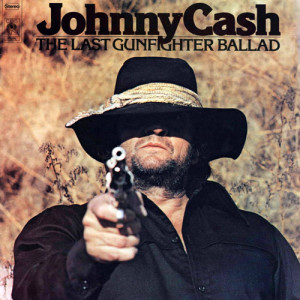
As the 1970s wore on, Johnny Cash had more and more difficulty finding enough suitable songs to fill an album.  The song selection on The Last Gunfighter Ballad ranges from the decent (Guy Clark‘s “The Last Gunfighter Ballad”) to the tedious (Terry Smith’s “Far Side Banks of Jordan”).  Three songs he had previously recorded.  He also was more and more likely to give a half-hearted effort singing.  But unlike most of the lesser stuff of Cash’s lean forgotten years, the bad stuff is not just boring but truly awful.  The opener “I Will Dance With You” is perhaps the very worst Cash performance on record…and some moron decided to put it first on the album!  Same goes for “You’re So Close to Me,” which opens side two.  Lots of other stuff actually feels almost like leftovers from the One Piece at a Time sessions, or at least attempts to do more of the same (“City Jail”).  Yet, it’s a shame and a waste that “Give It Away,” with a nice gospel-style vocal chorus, is a fine performance of a corny song.  And “Cindy, I Love You” has a guitar part derivative of “You’ve Got a New Light Shining In Your Eyes” but still ends up being a terrific song.  There definitely are some gems here.  This is probably the most uneven album Cash made in the 1970s.  He makes it hard to love or hate this in its entirety, and it will take a died-in-the-wool Cash fan to appreciate this motley beast as a whole.  But, yes, it still boasts one hell of an album cover photo.

Zac Brown Band – The Foundation

The Foundation

Zac Brown BandThe Foundation Atlantic 516931-2 (2008)


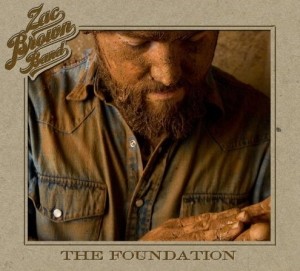
The Foundation draws heavily on easygoing beachside pop-rock by Jimmy Buffett and latter-day followers like Jack Johnson, and even Dave Matthews Band-like easygoing folk jams, but combined with typical mainstream country twang.  Parts of the album have some decent fiddle playing that leans more toward traditional country (the best thing the album has going for it), plus songs like “It’s Not OK” and “Sic ’em on a Chicken” that are more in the outlaw country-rock or Charlie Daniels Band mode.  Zac Brown, who has a rather nice natural voice, sings with contemporary country music’s usual heavily affected half-yodel with overdubbed harmony.  There are some good performances, as on the hit song “Chicken Fried.”  However, music like this should not be trusted.  It is divisive, and that is its purpose.  The opener “Toes” has the lyrics “I got my toes in the water, ass in the sand / Not a worry in the world, a cold beer in my hand / Life is good today, life is good today.”  This song sets the tone for the entire album.  Basically, this is militant ruralism, if it can be called that.  The opening lines signal that this is music that will be considered “crude” by wealthy urban elites.  This is music meant to distinguish its audience from those groups.  In a way it is meant to smugly belittle those other groups, as if they don’t “get” the characteristics of its more rural, working class intended audience (and maybe they don’t).  Elsewhere the album expresses a degree of frustration, not angrily or in an exasperated way, but to adopt implicit bewilderment by the world and a desire to just detach from it and just go off and have some fun.  It is kind of a lazy, cowardly — if not overtly mean-spirited — response to a recognition that the world is a messed up place (“It’s Not OK”), but the songs simply express a desire to get away from that, do nothing about it, and take whatever pleasures are available on hand.  The sentiments driving this album are offensively egotistical in many ways.  Some listeners rejoice that Zac Brown mentions reggae music and looks to other genres outside country, but it is worth taking a closer look to see why and how he does those things, which most often is to bolster a brand of reactionary populism that is dangerously apathetic to external corruption and reliant on discriminatory demagoguery.

Don Cherry – “mu” First Part

"mu" First Part

Don Cherry“mu” First Part BYG 529.301 (1969)


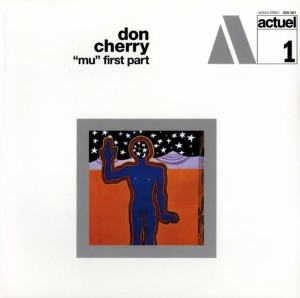
For me, this is Cherry’s single best album.  It finds him and Ed Blackwell doing something with cultural musics from around the globe that no one else had ever really attempted before, and the results are astonishing.  If it had to describe it, I would say it’s about stitching together common threads in seemingly diverse musical traditions from around the world in an earnest attempt to express something through Cherry and Blackwell’s personal connections to those musics.  And what separates this from lesser visions that might fall under the category of cultural piracy is that this album reflects a legitimately deep understanding of and appreciation for the different musical traditions brought together, and a genuine sense of connection to what those traditions express.  Importantly, these guys are NOT appropriating “world” music just to sound “exotic”.  For those unfamiliar with Cherry’s late 1960s/early 1970s work in that vein, you might try Eternal Rhythm first, which is slightly more conventional and easier to absorb.