Richard Shaull Quote

“There is no such thing as a neutral educational process.  Education either functions as an instrument that is used to facilitate the integration of the younger generation into the logic of the present system and bring about conformity to it, or it becomes ‘the practice of freedom,’ the means by which men and women deal critically and creatively with reality and discover how to participate in the transformation of their world.”

Richard Shaull, Foreword to Pedagogy of the Oppressed


Bonus link: Dialectic of Enlightenment (a theory is critical to the extent that it seeks human “emancipation from slavery”, acts as a “liberating . . . influence”, and works “to create a world which satisfies the needs and powers” of human beings)

Directions in Music by Miles Davis – Filles de Kilimanjaro

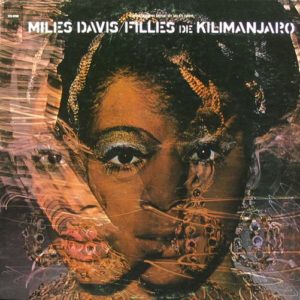
Filles de Kilimanjaro

Directions in Music by Miles DavisFilles de Kilimanjaro Columbia CS 9750 (1969)


A huge leap forward in the evolution of what became known as jazz “fusion”.  Really one of the finer albums of Miles Davis’ long and storied career.  What made Filles de Kilimanjaro such an advance over Miles in the Sky was the way it subdued and extended the song structures while at the same time elevating the throb of the bass and the kick of the drumming, those seemingly contradictory impulses held together by punchier bursts of horn and keyboard playing that drifted somewhat away from the spotlight and integrated themselves into the songs.  The vamps drive the songs but also leave room for modulation and shifts into improvisational flourishes.  The bass, drums and keyboards trade off each other (see “Tout de suite”) to create tension and forward momentum.  The wind instruments aren’t presented as prominent soloists like in the past, but more as the equals of the rhythm section, which gets to rise to the forefront on a shared basis rather than being relegated to a merely supportive role. This may resemble traditional jazz more than the next few albums, like In a Silent Way and the epochal Bitches Brew, etc, etc.  There is still a clear purpose and distinctive sound achieved that refuses to step back from an increasingly militant — yet hopefully positive — mindset.  Most significantly, this album decisively tipped the balance away from traditional jazz and toward fusion.  This one is just (barely) a half step behind the very best of Davis’ records, which is saying a lot when it comes to arguably the single greatest recording artist of the 20th Century.  This also makes a pretty good entry point to the fusion era.

Lou Reed – Street Hassle

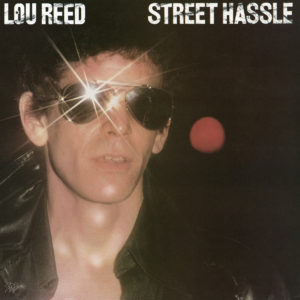
Street Hassle

Lou ReedStreet Hassle Arista AB-4169 (1978)


Perhaps everyone is familiar with the saying, “two wrongs don’t make a right.”  Well, along those same lines, Lou Reed’s Street Hassle might be seen as an attempt to make an album that succeeds by going about everything in the wrong way.  The album is an amalgam of live and studio recordings.  Reed and his band quote old songs, they use a muddy-sounding (and soon obsolete) recording technology, and seem to be against audience expectations.  Reed’s lyrics are also dumb, guttural, defiant, and contrarian. Far from being a liability, this is why the album works!  In fact, it might even be possible to say that songs like “Dirt” helped lay the foundation for the sludge rock of the 1980s — especially Flipper (who used a saxophone similarly on their quasi-hit “Sex Bomb”).  The first side of the album is great, with the title track being one of the very finest moments of Reed’s entire career, and the second side is fairly good too.

Miles Davis – Miles in the Sky

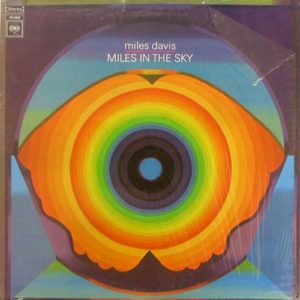
Miles in the Sky

Miles DavisMiles in the Sky Columbia CS 9628 (1968)


Miles in the Sky gives the impression that it is pandering to psychedelic pop/rock audiences, or that it is just a tentative and transitional effort nestled between more effective recordings of markedly different styles.  But such appearances are deceiving.  Miles Davis and his “second great quintet” were clearly expanding their horizons, and certainly were incorporating more elements of rock (and soul jazz).  Yet the results, however mellow the mood tends to be, are effective.  The album is often categorized as the worst of the Miles Davis Quintet’s late-1960s albums.  And it probably is.  But that says very little, because that band was releasing one classic after another.  This is still a very fine album.  And if nothing else, this might be drummer Tony Williams‘ best performance on record (perhaps rivaled only by his efforts on Sorcerer).  The entire album is a showcase for his relentlessly creative drumming, which never seems to stagnate or rest on repetitive structures yet somehow always seems engaging and connected to the flow of each song.  Keyboardist Herbie Hancock is clearly enthusiastic about the push toward rock music, though saxophonist Wayne Shorter, while his playing is good, seems the most hesitant about shifting away from the style he used in prior years.