Bob Dylan – Triplicate

Triplicate

Bob DylanTriplicate Columbia 88985 41349 2 (2017)


How did you feel about Christmas in the Heart?  If you loved it, then you are in luck!  Here is a triple album of secular songs using a similar approach.  If you hated it, well, sorry, but here is a triple album in a similar style.  Although nominally a “triple” album, the content could have fit very comfortably on two discs.  Anyway, this is just as self-indulgent as Patti Smith‘s Twelve and Dylan’s pal Johnny Cash‘s The Gospel Road.  But I like to image that Dylan commissioned an academic study to determine what music best suits his ravages rasp of a voice these days.  He then read the graph upside down and went with the music least suited to his present vocal abilities.  Seriously, there are like good singers who have recorded this kind of music before, and those recordings are still available.  This music would have been better as instrumentals, frankly.

Bob Dylan – Christmas in the Heart

Christmas in the Heart

Bob DylanChristmas in the Heart Columbia 88697 57323 2 (2009)


This is some kind of sick joke, right?  Bob Dylan does ALL of the popular christmas song canon.  Well, to his credit, he puts together some good arrangements, and what was probably a near limitless production budget helps.  Yet hearing the man croak his way through this stuff is easily imagined like watching Dylan participate in a reality TV show (oh what awkward and pointless task will he have to complete next?).  But this just proves a corollary to the law of large numbers:  anyone on a major label for more than ten years (of a christian persuasion) will make a holiday recording.  No, this would actually be perhaps enjoyable if a decent singer was in place instead of Dylan, perhaps a competent female pop star, possibly PJ Harvey or even somebody from the country-pop realm (provided she could pull off vocals with a jazzy twist).  No, instead of that we get this spectacle.

Joseph Ramsey – Does America Have a Gun Problem… or a White Supremacy Capitalist Empire Problem?

Link to an article by Joseph Ramsey:

“Does America Have a Gun Problem… or a White Supremacy Capitalist Empire Problem?” (and later version of the same article)

I find it much harder to look past the problems with Michael Moore’s film Bowling for Columbine, but Ramsey offers some extremely interesting observations that don’t really depend on even seeing the film.


Bonus links: “The Rifle on the Wall” and “When Liberals Go Wrong” and Painting & Guns (“After a shooting spree, they always want to take the guns away from the people who didn’t do it. I sure as hell wouldn’t want to live in a society where the only people allowed guns are the police and the military.”) and “Blood in Our Eyes” (“Just as gun makers are ignored in the gun control logic, so are cops. The anti gun lobby seems ok with the idea that only steroid crazed racist policemen can carry guns. I have to tell you, I’m not so OK with that.”) and Liberalism: A Counter-History and …And the Poor Get Prison and Moral Panics: The Social Construction of Deviance and The Sublime Object of Ideology

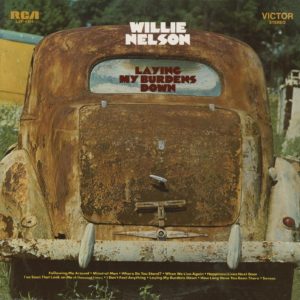
Willie Nelson – Laying My Burdens Down

Laying My Burdens Down

Willie NelsonLaying My Burdens Down RCA Victor LSP-4404 (1970)


In the late 1960s and early 1970s Willie Nelson’s album displayed a clear interest in what was happening in rock/pop music. He had a few years of national touring under his belt, and had been exposed to the wider world somewhat. His records still adhered to the dictates of the Nashville system, but tried to combine Nashville country with pop/rock. The thing was, these were somewhat timid attempts. Willie latched on to only the most conservative pop of the day.  He also still clung to an old-fashioned way of singing for the most part. It was as if he took a correspondence course on how to be a successful singer and he dutifully followed a list of instructions that included “Enunciate clearly.” In a way, he still sang like a louder, southern Bing Crosby or Frank Sinatra.  After his Nashville home burned, and he and his band briefly relocated to Texas under communal conditions, he finally did summon the courage to try bolder things with his music. That eventually led him to Atlantic Records in New York, where he made a string of classic albums and achieved stardom.

Laying My Burdens Down displays clear attempts to look beyond country music.  The results aren’t as awkward as on the following year’s Willie Nelson & Family, but they are cheesier.  The backing vocals retain a little of the classic Nashville feel, though they make overt attempts to combine pentecostal gospel chorus and 5th Dimension-style pop affectations.  The horn arrangements lean heavily on the style of Herb Alpert & The Tijuana Brass.  Willie does play his acoustic guitar Trigger some, but also an overbearing electric guitar much of the time.  In general, his guitar playing is aimless and confused.  The guitar ranges from being overbearing to indistinctly cluttered.  The strings are fine, if a little cheesy.  Willie’s vocals show signs of moving beyond the old crooning style, but only tentatively.  It would be a few more years before his vocals settled into the style that helped make him a superstar.  This album isn’t terrible.  It still is a lesser Nelson effort.  Some of the backing vocals and other orchestration was stripped away on a few songs for Naked Willie, released almost four decades later, which provides a somewhat contrasting perspective.  It is curious to think about how Willie’s interests in rock and the counterculture were problematic because he was a southern outsider, not able (if willing) to step into that milieu directly, but also having no one at his Nashville-based record label able (if willing) to help him connect with the predominantly northern rock music world.  Willie was kind of stuck between two incompatible worlds — a bit like the film Electra Glide in Blue from a few years later.  So this remains a transitional effort that pales in comparison to what hindsight shows was just around the corner.  Yet this does retain some kitsch value.

Judy Collins – A Maid of Constant Sorrow

A Maid of Constant Sorrow

Judy CollinsA Maid of Constant Sorrow Elektra EKL-209 (1961)


A nice debut from the sadly neglected Judy Collins.  At this time, she sang with a slightly husky tone as if honed performing belting her vocals at a near shout, without amplification, at some Greenwich Village coffee house.  Comparisons to folk stars of the previous decade like Pete Seeger are àpropos.  As Collins evolved, she incorporated elements of Broadway theatrics, with a lighter touch and more legato phrasing.  But those techniques lay in the future back in ’61.  Yet even from the beginning she clearly had quite a voice.  Enjoy.

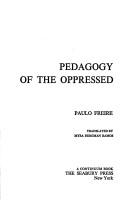
Paulo Freire – Pedagogy of the Oppressed

Pedagogy of the Oppressed

Paulo FreirePedagogia do Oprimido [Pedagogy of the Oppressed] (Myra Bergen Ramos, trans., Seabury Press, 1970)


Pedagogy of the Oppressed by Paulo Freire is a founding document of the the “critical pedagogy” school of educational theory.  In a nutshell, this school of thought takes MarxistLeninist politics and combines it with the classic Socratic method.  Along the way, it adds post-Leninist insights drawn from Fromm, Mao, Guevara, Fanon, and more.  Freire doesn’t really ever mention it, but his approach is founded on the real Socratic method, not the bastardized anti-socratic thing called “The Socratic Method” in schools, especially western law schools.  He also remains consistent with Leninist aims, citing What Is to Be Done? extensively, but really drawing from The State and Revolution principally.  The most basic insights of “critical pedagogy” is this:

“Cultural action either serves domination (consciously or unconsciously) or it serves the liberation of men and women.”

This flows directly from the Leninist view that everything is political.

“Lenin’s famous statement: ‘Without a revolutionary theory there can be no revolutionary movement’ [What Is to Be Done?] means that a revolution is achieved with neither verbalism nor activism, but rather with praxis, that is, with reflection and action directed at the structures to be transformed.  The revolutionary effort to transform these structures radically cannot designate its leaders as its thinkers and the oppressed as mere doers.”

Freire is immanently practical.  And just as Lenin routinely denounces “reformists” and “opportunists”, Freire picks apart the flaws of accommodations to elites and minor reforms.

“It would be naïve to expect oppressor elites to denounce the myth which absolutizes the ignorance of the people; it would be a contradiction in terms if revolutionary leaders were not to do so, and more contradictory still were they to act in accordance with that myth.”

But he also is great at pointing out common tactical errors of the political left:

“the Left is almost always tempted by a ‘quick return to power,’ forgets the necessity of joining with the oppressed to forge an organization, and strays into an impossible ‘dialogue’ with the dominant elites.  It ends by being manipulated by these elites, and not infrequently itself falls into an elitist game, which it calls ‘realism.'”

Sound like Alexis Tsipras and Syriza in Greece, no? (see also Jodi Dean, Crowds and Party).

This is an excellent book, just as relevant today as when it was written.  It is meant to be readable by general audiences.  One flaw, however, is Freire’s repeated argument that humans are different from animals.  This is basically hypocritical, in that he repeatedly argues that all humans are equal, but tries to convince readers of that point by arguing that humans are superior to other animals.  Aside from the flimsiness of Freire’s argument here, which merely attempts to shift an antagonism among humans to one between humans and other animals, it is an argument that ecological crisis has conclusively rendered untenable.  As one latter-day Leninist put it, alluding to R. Buckminster Fuller‘s “Spaceship Earth” metaphor:

“We have to accept that we live on a ‘Spaceship Earth’, responsible and accountable for its conditions. At the very moment when we become powerful enough to affect the most basic conditions of our life, we have to accept that we are just another animal species on a small planet.”

Still, that unfortunate argument can be largely ignored.  (If you must, read instead something like V. Gordon Childe’s more nuanced explanations).  Given the importance of education to Leninist political philosophy (through the October revolution, Lenin was finally able to institute educational programs that his parents had been blocked from doing under the tsarist autocracy, this being one of his most lasting concrete political achievements), Freire’s views are crucial in expanding upon the the overall organization of education, primarily at a more adult level.


Variety Shows Then and Now

It recently occurred to me—while watching a Muppets movie—that there is a noticeable different between television variety shows from the time when The Muppet Show was on TV and today.  Back then, variety shows with song, dance and miscellaneous acts tended to have a stable company performing regularly, and drew in guest performers.  Sometimes the guests were “new” potential stars, being “introduced” through the show, but as much or more often they were established professional entertainers of some sort.  Today, in marked contrast, the traditional “variety” shows (and specials) are mostly gone, but in their place are “reality” shows framed around competitions.  These are sometimes exclusively singing or dance oriented, or might be open to a variety of “talent show” acts beyond just song and dance.  These new shows often have judges, either supposed industry “experts” or entertainment celebrities, who pass judgment on the competing acts.  These differences between similar television shows of these eras actually matches up quite closely with the “market” logic of the present “neoliberal” era.  Now, the shows have “elite” judges and a bunch of rabble competing for some sort of recognition or prize, their being too little reward allocated for all performers.  There is no job security for the contestants, who have to compete against each other–the judges standing apart from that competition.

Thomas Ferguson, Jie Chen & Paul Jorgensen – Fifty Shades of Green

Link to a report by Thomas Ferguson, Jie Chen & Paul Jorgensen of the Roosevelt Institute:

“Fifty Shades of Green: High Finance, Political Money, and the U.S. Congress”


Bonus Links: Golden Rule: The Investment Theory of Party Competition and the Logic of Money-Driven Political Systems and “Money Still Rules US Politics”