clipping. – Splendor & Misery

Splendor & Misery

clipping.Splendor & Misery Deathbomb Arc/Sub Pop DBA 150, SP 1173 (2016)


Sounds a lot like Kool Keith‘s classic Black Elvis/Lost in Space and Antipop Consortium‘s Arrhythmia. The raps use an exaggerated monotone and emphasize a stilted, inflexibly mechanical or robotic cadence, often at an artificially fast tempo.  This is decent, but can’t quite match its precedents.  Mainly the problem is the “concept album” storyline, which is too “theatrical” and hemmed in by linear narrative.

Julia Yepes – The Eternal Search of the Jodorowskys

Link to an interview of Alejandro Jodorowsky, Adan Jodorowsky, and Pascale Montandon-Jodorowsky conducted by Julia Yepes:

“The Eternal Search of the Jodorowskys”


Bonus links: Endless Poetry: Alejandro Jodorowsky on the Freedom of Losing Money, and Making Movies at 88″ and “A Beginner’s Guide to Alejandro Jodorowsky, the Magus of Cinema”

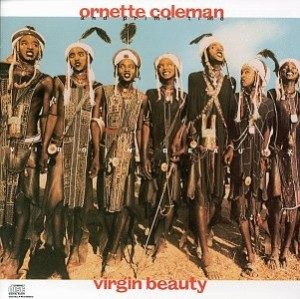
Ornette Coleman and Prime Time – Virgin Beauty

Virgin Beauty

Ornette Coleman and Prime TimeVirgin Beauty Portrait RK 44301 (1988)


On September 18, 1987, Ornette, his son Denardo, and fellow musical pioneer Cecil Taylor attended a Grateful Dead concert at New York’s Madison Square Garden at the invitation of the Dead’s bassist Phil Lesh.  Seeing the audience’s enthusiasm for a jam band’s music inspired Coleman to record Virgin Beauty, which not only presented his band Prime Time in a more commercial-friendly setting but also featured the Dead’s guitarist Jerry Garcia as a guest performer on three tracks.  Coleman would later perform live with the Dead at a 1993 concert too.

The sound of Virgin Beauty was kind of like Prime Time “lite”, with airy, synthetic production values drawn from contemporary pop music.  Ornette was trying to reach out to a wider audience here.  Having Garcia present was, in a way, as much or more about cross-promotion as it was about Garcia’s purely musical contributions. Those ploys worked.  This was Ornette’s best-selling album to date.

And yet this differs from earlier Prime Time recordings in significant ways.  The harder funk and R&B (and disco) elements are long gone, though there is kind of a “world music” vibe.  On the whole, this exhibits less density and more dynamic range than earlier Prime Time recordings.  There also is more truly independent soloing from the band than with earlier incarnations of Prime Time.  Ornette always claimed that the band’s format allowed each performer to do what he wants, though in practice that usually still meant the other (generally much younger) band members still took cues from Ornette and accommodated themselves to the way he played.  All that is much less apparent on Virgin Beauty, where there is a real independence evidence on many tracks.  Multiple performers simultaneously soloing wasn’t new to Coleman’s music of course.  Old jazz did this too — take for example Jelly Roll Morton and His Red Hot Peppers“Jungle Blues” (1927).  But Ornette did free up that approach from adherence to strict harmonic chord changes.  With Prime Time, he also updated it for the “rock” era.  In some respects, the approach on Virgin Beauty represented a re-integration of a pre-Prime Time approach into the repeating riff format of early Prime Time performances.

My problem with the album is that only some tracks are really any good, and quite a few are rather mediocre and immediately forgettable.  I would like this much more if everything lived up to “Desert Players,” “3 Wishes,” and “Healing the Feeling.”  The opener “3 Wishes” features Garcia on guitar, and the drums, processed with gated compression as was the (cliched) style for pop music at the time, use an effective quasi-blast beat riff — a similar drum riff is used on “Desert Players.”  The guitar is pretty good throughout, though the production values are the biggest detraction for me, and it sometimes feels like too much work to filter out the good performances from the cheesy studio production effects.  Though, in its own way, the experiments with pop music production values on this album laid the groundwork for subsequent efforts like Matthew Shipp‘s New Orbit and Colin Stetson‘s New History Warfare, Volume 2: Judges.

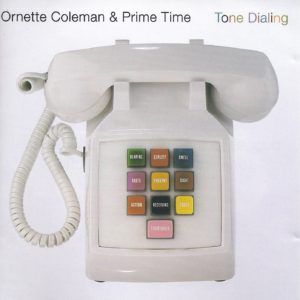
Ornette Coleman & Prime Time – Tone Dialing

Tone Dialing

Ornette Coleman & Prime TimeTone Dialing Harmolodic 314 527 483-2 (1995)


Tone Dialing was the final Ornette Coleman album credited to his band Prime Time.  That was just as well.  This has some things going for it, and it is pleasant enough, but few would name it as their favorite Ornette album and it makes a few missteps. Even though Virgin Beauty had already presented a more conservative and scaled-back version of Prime Time’s music, and it can be argued that the entire ethic of Prime Time was a rhythmic simplification of Ornette’s music, Tone Dialing more than any other of his albums really feels like Ornette is overtly chasing current fads.  Mostly that comes in the form of some attempts at jazz/hip-hop fusion (“Street Blues,” “Search for Life,” “Sound Is Everywhere”).  There were many such attempts in the 1990s (Buckshot Lefonque, etc.), and most are cringe-inducing in hindsight.  Ornette’s attempts may not rank among his finest moments on record, but “Search for Life” has a kind of beat generation vibe that actually works well.  The funk/R&B and sufi trance sound of early Prime Time is mostly absent here.  Instead, some songs mine territory a bit more like Song X.  So there is a new version of “Kathelin Gray” with piano-effect keyboard playing that is okay, and the new song “Family Reunion” is one of the better things here.  The title track fits that category too.  There is a genteel sound to much of this, perhaps because most of the band members were now classically trained.  On the other hand, “Bach Prelude” (a performance of J.S. Bach‘s Prelude from Cello Suite No. 1) might be the single worst track in Ornette’s entire discography.  It is not nearly as clever or significant for Ornette to play a Euro-classical piece in his own way as he apparently thought it was — there is an awful David Fricke Rolling Stone review of the album in which basically everything he says about the album is precisely wrong, including praise for the Bach number and criticism of “Search for Life.”  There are a few songs with various elements of global folk music mixed in (“Guadalupe,” “Miguel’s Fortune,” “Badal”).  Listeners may not know what to do with those.  They aren’t bad, but they aren’t really highlights either.  The album’s production values leave something to be desired too, with synths and trebly guitar sounds, and a thin and hollow sound overall.  This album is so all over the place that it is quite hard to make sense of of it as a whole.  That may be part of Ornette’s intent, though it makes this a strange listen.  Its most annoying aspect is that it sometimes seems to utilize disparate musical contexts as a substitute for interesting musical statements within those contexts.  It is as if Ornette is making the argument that he is no longer an outsider threatening the status quo, but instead someone connected enough to all sorts of currents running through the global music scene that he should be seen as part of the mainstream.  That isn’t as compelling a premise as the freedom-motivated premise of his early work.  I happen to like this more than most people, but — unlike most other Ornette recordings — primarily as background music.

The release of this album was rather curious.  First pressings were sent to reviewers and critics with a puzzle that when assembled spelled out the message, “remove the caste system from sound.”  Coleman’s quest for purely egalitarian music has always been admirable.  But in terms of how he went about that, from at least the mid-1970, there was an element of self-serving bias and self-indulgence.  In a dissertation, Nathan Frink wrote about what seemed to be Ornette’s objectives:

“He, the composer, is the only one who can determine how the instrumentation of his ensemble should function, what pieces they can play, and how those instruments should sound. In other words, artistic choices should be left in the hands of the artist and not the expectations of the audience (or anyone else for that matter). When talking about Tone Dialing in particular, it seemed that Coleman was especially interested in targeting the critics in terms of how and why they controlled information and formed cultural taste.”

In a way, although there are some similarities here to Theodor Adorno‘s critique of the “culture industry,” this seems less like an egalitarian vision of music and more like the worldview of the main character in the far right-wing libertarian novelist Ayn Rand‘s The Fountainhead, who maligns a critic because he deems himself to be great and therefore anyone who disagrees is necessarily wrong — his self-assessment is unreviewable and incontestable, despite the obvious self-serving bias at work.  In other words, it sounds a bit like an endorsement of a regressive “social darwinist” worldview, with Ornette wanting an “equal opportunity” to be seen as better than others, which he has already presupposed.  It is curious, and really somewhat hypocritical, in that Ornette wants to to eliminate one kind of inequality in order to advance another kind of “celebrity culture” inequality, with him unsurprisingly ending up as a celebrity.  He has slid somewhat from the anarchistic underpinnings of his early work to libertarianism.  Anyway, in the real world, artists do what they do in large part because of audiences and critics, who legitimize and consecrate the artist’s activities.  If the artist does not desire such social validations, the artist can create in private.  Though, on the other hand, the idea that all assertions of power should be accepted does have a radical edge to it, assuming it is extended universally to all people and not just to made available to a small group of people selected based on pre-determined criteria bracketed out of the discussion.

Frink also discussed the Bach piece on Tone Dialing, asserting, “Simply by placing the Bach piece in a different sonic context, Coleman had completely changed its character.”  I must question this statement.  The assertion reminds me of an important hypothetical given by the late sociologist Pierre Bourdieu in the book Language & Symbolic Power.  Bourdieu discusses the christening of a new ship, in which a town mayor was to read a speech and break a bottle of champagne on the ship’s hull.  What if, before the planned event, a random person sneaks up and reads script for the mayor’s speech and breaks the champagne bottle on the ship’s hull?  Is the ship christened, or does the other person lack the symbolic authority to do so?  It is easy to detect in Ornette’s worldview a tendency to completely reject symbolic power and authority, like that of the mayor in this hypothetical example.  Certainly, he seems to agree, in the context of dismissing critics, with Bourdieu’s statements that “[t]he strategy of condescension consists in deriving profit from the objective relations of power . . .”  and against the “illusion of linguistic communism” (the myth that that everyone shares the wealth of their language equally, without regard for the economic and social conditions of the acquisition of “legitimate” competence).  But he does so in kind of a naively utopian way (what some call the “anarchist delusion”), by expecting the symbolic power of certain groups to “legitimate” activities to simply disappear.  This is basically the issue discussed in Lenin‘s The State and Revolution in which a very coherent argument is made that (state and class) power can’t just wither away, but must first be smashed on behalf of the oppressed, and only after a long time and much enlightenment of the general population can class and state powers wither away.  Like most anarchists, and also a few libertarians, Ornette attempts an end run around the underlying political deadlocks with a utopian wish for the immediate withering away of power structures.

These are nonetheless complex matters.  I’m reminded here of a comment that Caetano Veloso made in his memoir Tropical Truth.  As his music was growing increasingly experimental in the early-to-mid-1970s, he came to the conclusion that he had a duty to make music with wider popular appeal.  This seems like a worthy notion.  And yet, Veloso’s music from that point on was far less memorable.  I grapple with the same sort of dilemmas when listening to Ornette’s later Prime Time recordings.  Ornette was clearly reaching out to popular audiences, but did he abandon a connection to significance in the process?

Tone Dialing has some interesting qualities, but on the whole it is something of a bottom-tier Ornette album.


Johann Hari – Depressed? Anxious? Blame Neoliberalism.

Link to an article by Johann Hari:

“Depressed? Anxious? Blame Neoliberalism.”


I very much question why this writer singles out neoliberalism, specifically, rather than capitalism, generally.  There is nothing in the article to suggest that only neoliberalism — but no other forms of liberalism or capitalism — is problematic.  While he has established that eliminating neoliberalism is necessary, he has failed to establish that doing so is sufficient.


Bonus link: “Lacan  Between  Cultural  Studies  And  Cognitivism”

Torkil Lauesen & Gabriel Kuhn – Radical Theory and Academia

Link to an article by Torkil Lauesen & Gabriel Kuhn:

“Radical Theory and Academia: A Thorny Relationship”


Bonus links: The Higher Learning in America: A Memorandum on the Conduct of Universities by Business Men and “The Professor’s Literature of Protest” and “The Forms of Capital” and Crowds and Party and “Lacan  Between  Cultural  Studies  And  Cognitivism” and “Cracks in the Wall of Capitalism: The Zapatistas and the Struggle to Decolonize Science”

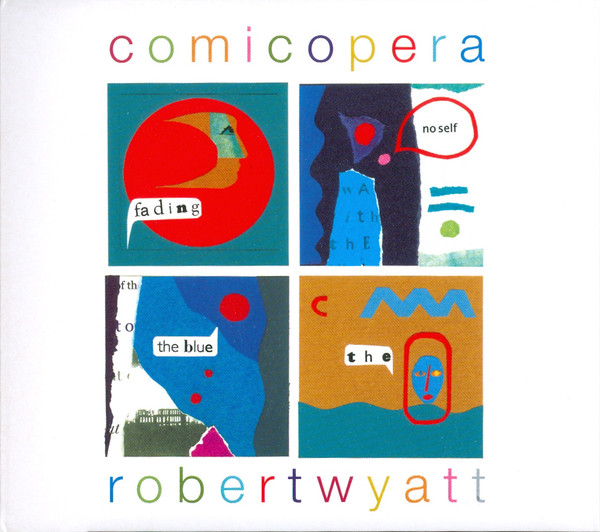
Robert Wyatt – Comicopera

Comicopera

Robert WyattComicopera Domino WIGCD202 (2007)


This is really one of my most-listened-to albums.  Wyatt is really at his best here, from his vocals, to his songwriting and song selection, to the instrumentation and arrangements.  The album opens with a rendition of Anja Garbarek‘s “Stay Tuned,” which makes an appropriately diffuse and abstract introduction.  “Just as You Are” is my absolute favorite Wyatt track.  It is a very succinct statement of Wyatt’s politics, which I happen to entirely agree with.  I guess some might hear it as a love song though.  It works either way.  On the song “A Beautiful Peace” Wyatt recounts a walk around town — though Wyatt is partially paralyzed and confined to a wheelchair.  While the lyrics note such things as garbage passed by on the street, Wyatt has a way of making that endearing!  Later on the song is counterposed with the charmingly ironic “A Beautiful War.”  The selection of material written by others in the last part of the album, “Act Three: Away With the Fairies,” speaks volumes.  “Del Mondo” is a cover of a song by Consorzio Suonatori Indipendenti (translation: Consortium of Independent Players), a spin-off of the band CCCP Fedeli alla linea (translation: CCCP [Union of Soviet Socialist Republics] Faithful to the Line).  “Cancion de Julieta” is an adaptation of poetry by Federico García Lorca, who was murdered by fascists during the Spanish Revolution.  «¡Hasta siempre, Comandante!» (translation: “Until Always, Commander”) is cover of a song about the Cuban Revolution, written by Carlos Puebla as a tribute to Che Guevara.  There is a lot of political content in this album.  Yet in the best possible way it is scarcely noticeable (unlike the more starkly severe Mid-Eighties).  Much of the political left has given up the fight, but certainly not Wyatt.  He even opens the album with a song featuring the lyrics, “stay tuned / there is more to come”!

The sonic fabric of the album is very much in the same vein as Cuckooland but more developed and effective.  Wyatt plays trumpet, cornet, keyboards, and other assorted instruments in a way that is dissonant and “jazzy” yet always within a definite song structure.  Occasionally people talk about jazz musicians playing “inside” and “outside” at the same time, and Wyatt seems to do just that in a pop context.  It was great that when curating the 2009 Meltdown Festival Ornette Coleman selected Wyatt to perform, along with The Plastic Ono Band, Patti Smith and others.  Both men has a knack for making totally unique yet inviting music.

There really is no other musician alive who sounds quite like Robert Wyatt.  It is not just that his voice is distinctive.  Though it is.  It is really his entire approach to music.  There is an old debate among leftists about the role of culture, like music.  Some hold that proletarians should be the heirs of bourgeois culture, which really places things like Euro-classical music above things like folk or popular music but says that the lower classes will seize control of those cultural forms for the benefit of all.  Others hold that proletarian folk/popular art should displace elitist art, and that “high” culture should be abolished.  Wyatt represents a kind of hybrid of these views.  He works with jazz and pop music elements, but with a sophistication that rivals any highbrow Euro-classical music.

I do think I will continue to listen to this a lot.  It hardly seems possible to tire of music this richly varied yet casually welcoming, this deeply heartfelt yet carefully executed.

Rebecca Burns – The Troubled History of the Fund Tapped for Rahm’s Controversial Cop Academy

Link to an article by Rebecca Burns:

“INVESTIGATION: The Troubled History of the Fund Tapped for Rahm’s Controversial Cop Academy”


Bonus links: “The Left Hand and the Right Hand of the State” and “Why Are Police the Priority in Rahm’s Chicago?” and “Corporate Welfare Fails to Deliver the Jobs: The Sad Case of Start-Up NY” and The Great American Jobs Scam: Corporate Tax Dodging and the Myth of Job Creation

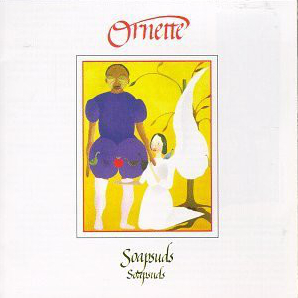
Ornette Coleman – Soapsuds Soapsuds

Soapsuds, Soapsuds

Ornette ColemanSoapsuds Soapsuds Artists House AH 6 (1979)


Although bassist Charlie Haden had left Ornette’s regular group, the two reunited for a series of duo recordings in the late 1970s.  A couple tracks appear on Haden’s own Closeness and The Golden Number and the rest make up Ornette’s Soapsuds Soapsuds (the Cherry/Haden/Higgins quartet also reunited for unreleased sessions in late 1976).  Here, Ornette records on tenor sax for the first time since Ornette on Tenor a decade and a half earlier.  The most striking aspect of this music is that it is completely different from that of his Prime Time band around this era.  Prime Time largely eliminated shifts in tempo, and minimized the use of melody to guide/facilitate harmonic choices.  To this listener, that makes Soapsuds superior, because it avoids the simplistic “new age” cyclical rigidity embedded in Prime Time’s music and instead picks up where Ornette had left off with Science Fiction, his last small group album before the Prime Time years.  Haden was quite simply the best bassist Ornette ever performed with in terms of being able to develop his own independent harmonic and melodic cues that worked alongside Ornette’s own playing without being beholden to what Ornette was doing — though bassist David Izenzon came close in his own way!

The album opens with “Mary Hartman, Mary Hartman,” the theme song to a satirical daytime soap opera TV show.  Ornette plays with clear legato phrasing in a way strikingly similar to David Murray‘s playing on a rendition of “Over the Rainbow” with Sunny Murray & The Untouchable Factor from the same era released on Wildflowers 1.  It is a great performance, with clear melodic statements but also irreverent disregard for the sanctity of the melody or the original harmonics of the composition.  The intimate, romanticized tone paired with the ironic re-appropriation of elements of popular culture also fits well within the context of the “loft jazz” scene that was in full swing at the time, at least partly inspired by Ornette’s Artists House loft endeavor on Prince Street in New York earlier in the decade (which built on earlier efforts in that direction by the likes of Yoko Ono).  Side two of the album is slightly less memorable.  The songwriting is solid but the performances are occasionally aimless and don’t stick in your head as much.

This album was released on the Artists House label, which was started by Ornette’s manager/attorney/producer John Snyder.  The label paid higher-than-normal royalties to artists, gave them complete artistic control, and manufactured albums using heavy card stock and virgin vinyl.  Basically, it was a label committed to artistic integrity rather than investor profits.  It was a relatively short-lived endeavor, and it’s unusual policies have been at least partly responsible for the lack of reissues — as of this writing, the album is out of print.

I consider this album a solid effort, and a mildly unique album in kind of a low key, unassuming way.  Much of Ornette’s music features busy tempos, while there is little or none of that here.  The duo format also lends a sparseness to the sound that presents a more extreme minimalism than other slightly minimalist trio recordings from the mid-1960s and 1990s.  I also welcome the fact that Ornette revives the musical theories that, in my opinion, he abandoned and betrayed with Prime Time, a band that fell prey to the “Tyranny of Structurelessness” much more than Ornette ever publicly admitted.  On the other hand, this album seems to travel familiar ground but doesn’t quite rise to the level of Ornette and Haden’s best work, though the track “Mary Hartman, Mary Hartman” certainly does.