Link to an open letter by Ralph Nader:
Bonus links: Corporate Prosecution Registry, Violation Tracker, and …And the Poor Get Prison
Cultural Detritus, Reviews, and Commentary

Link to an open letter by Ralph Nader:
Bonus links: Corporate Prosecution Registry, Violation Tracker, and …And the Poor Get Prison
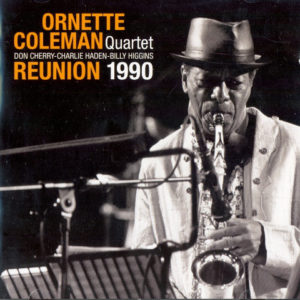
Ornette Coleman Quartet – Reunion 1990 Domino
891203 (2010)
Recorded at an appearance in Italy in 1990 of the “reunited” Ornette Coleman Quartet, this bootleg has a number of things going for it in spite of the expected lo-fidelity sound. For one, there are some original songs present that do not appear on any official albums, and this bootleg comes from period of years without any official recordings. Second, some of the performances are quite good. The first disc is relatively strong, though the second disc doesn’t really maintain the same level of performance.
Charlie Haden plays like a motherfucker here — this is one of his strongest recordings of the era. Billy Higgins also turns in an above-average performance that surpasses any of his studio turns in Ornette’s band. Ornette plays well as usual, though there is nothing particularly remarkable about his performance here. On the other hand, Don Cherry turns in a substandard effort, and he more often detracts from the songs than contributes to them.
This bootleg is naturally only for Ornette fanatics. But there are enough highlights to recommend this to those fanatics.
Link to an article by Ilan Kapoor:
“Žižek, Antagonism and Politics Now: Three Recent Controversies”
I’m not sure I agree with the criticisms of Žižek this offers, partly because they seem conclusory and underdeveloped, even if intriguing. For instance, the notion that Žižek is overexposed seems to call for an explanation of what “overexposed” means, and why it applies. For example, a discussion of that concept in view of Žižek’s well-known critique of liberalism’s inability to cope with the destructive power of envy seems apropos. Or perhaps something out of Bourdieu or another branch of sociology?
“The goal of all enemy propaganda is not to annihilate an existing force (this function is generally left to police forces), but rather to annihilate an unnoticed possibility of the situation.”
Alain Badiou, “Seminar on Plato” at the ENS, Feb. 13, 2008 (unpublished), quoted in “No Way Out? Communism in the New Century,” in The Idea of Communism 3 (2016).
See also “Ernst Lubitsch, Censorship, and Political Correctness” (“Alain Badiou put it in a wonderful and precise way: the main function of today’s ideological censorship is not to crush actual resistance—this is the job of repressive state apparatuses—but to crush hope, to immediately denounce every critical project as opening a path at the end of which is something like a gulag.”)
Bonus link: “Abnormalize The Empire”
Link to an interview of Nancy MacLean, author of Democracy in Chains (2017), conducted by Nick Licata:
“The Deep History of the Radical Right’s Stealth Plan for America”
MacLean’s position should be problematized (i.e., critiqued from the left), which leads to criticisms of some specific things she says in the interview. Domenico Losurdo‘s War and Revolution: Rethinking the Twentieth Century (as well as his Liberalism: A Counter-History) are the touchstones for this criticism. Most of MacLean’s position is about defending the New Deal. But she defends the New Deal from a position “within” it, which is to say she appears to agree with the “radical reactionary” libertarians in assuming an anti-communist position. Isn’t it obvious that the way to oppose, in her words, the Buchanan/Koch agenda of the supremacy of private property rights is to eliminate private property altogether? It is fairly well-established now that the New Deal was only possible as part of an anti-communist agenda, as a conservative compromise to avoid communist government rule. MacLean at one point jokes that she is not really a conservative, but Losurdo’s books suggest that perhaps she really is conservative, because political liberalism has more in common with the political right than the political left. She seems to assume that the New Deal was a self-sustaining coalition, which, historically, it was manifestly not — the New Deal was sustained only as a largely unprincipled anti-communist compromise that required at least the threat of communism to sustain itself. So when she praises, for instance, the recent student anti-gun march, she rejects the pro-gun position universally adopted by the leading figures of the political left (something explained principally by her anti-communist stance). Also, she bemoans the “identity politics” vs “class” debate, though it is actually an important one because no legitimate politics can overcome class divisions by maintaining an “identity politics” framework, which is necessarily dependent upon maintaining class or class-like divisions of some sort as part of a liberal politics of exclusion. MacLean’s history of the political right’s own tactics in the the United States in the second half of the 20th Century is nonetheless useful in many ways, and should be read alongside Isaac William Martin‘s Rich People’s Movements, Losurdo’s books, Fredric Jameson‘s An American Utopia: Dual Power and the Universal Army (which advocates precisely the opposite of the Koch plan to privatize the Veteran’s Administration), and the work of Slavoj Žižek (perhaps starting with Trouble in Paradise: From the End of History to the End of Captialism).
Link to an article by James Plested:
“Recycling Crisis is Capitalist Business as Usual”
Bonus links: “As the Ocean Waters Rise, So Do the Islands of Garbage” and “Against Recycling” and “How Europe’s ‘Trash Market’ Offloads Pollution on Its Poorest Countries” and “A Plastic Bag’s 2,000-Mile Journey Shows the Messy Truth About Recycling” and “Circular Claims Fall Flat Again” and “Plastic Merchants of Myth: Circular Claims Fall Flat” and Portlandia Season 2, Episode 8 “Which Bin Does It Go In?” and The Closing Circle
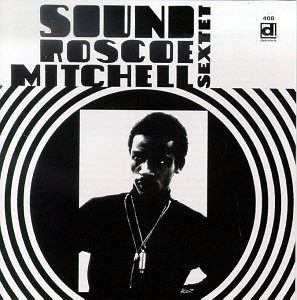
Roscoe Mitchell Sextet – Sound Delmark DL-408 (1966)
Mitchell’s debut album is a landmark of midwestern free jazz. Its allegiances are clear from the opener, “Ornette,” a tribute to Ornette Coleman. But unlike so much music coming out of New York City at the time, this album is collaborative, spare, contemplative. There is something daring and revolutionary about this music in a way that Mitchell’s later music (including that with the Art Ensemble of Chicago) was often not. As detailed in Iain Anderson‘s This Is Our Music, the grants and public subsidies that people like Mitchell came to rely upon definitely blunted some of the radicalism of this early music. Although Anderson’s treatment of the larger topic of “strings attached” philanthropy is brief and limited, others have expanded on the topic, which is sometimes termed “philanthrocapitalism”. These critiques generally revolve around a sort of accommodation (or collaboration) with systems of inequality — musicians and other artists who really threaten capitalism and private property are, for instance, not funded. As the critics say, “the revolution will not be funded.” Anyway, Mitchell was part of the Association for the Advancement of Creative Musicians (AACM), an organization with much promise, though also one that tended to amount to a defensive cocoon, establishing a sheltered space, without much in the way of a necessary “phase two” plan to launch an offensive that burst from the cocoon.
Link to an article by Pete Dolack:
“If You Incentivize Pollution, You Incentivize Death”
Bonus link: …And the Poor Get Prison
Link to an article by Steven Rose: