Link to an article by Eric Blanc:
“The Billionaires Dismantling Oakland Schools”
Bonus links: “They’ve Been Doing This Massive, Anti-Democratic Model of Education Reform” and Richard Shaull Quote
Cultural Detritus, Reviews, and Commentary

Link to an article by Eric Blanc:
“The Billionaires Dismantling Oakland Schools”
Bonus links: “They’ve Been Doing This Massive, Anti-Democratic Model of Education Reform” and Richard Shaull Quote
Link to an article by Justin Fox:
“Why America’s New Apartment Buildings All Look the Same”
The claims about environmental benefits of wood (over concrete) and a few other things might be debatable.
Bonus link: “Minneapolis’ Housing Plan Rewards Developers, Punishes Working People”
Link to an anonymous article:
“McKinsey & Company: Capital’s Willing Executioners”
Bonus links: “The Sociology of C. Wright Mills” (“As modern management becomes the reigning ethos of the age, the shift from explicit authority relationships to more subtle manipulation becomes the preferred form of power. *** The goal of manipulation is to have men internalize managerial directives without knowing that these directives are not their own motives, without recognizing that they are being victimized.”) and Critique of Cynical Reason and Making Money
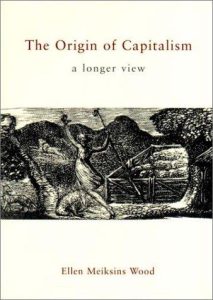
Wood summarizes a debate among a certain subset of historians and economists about the origin of capitalism — favoring the theories of Robert Brenner. This book is really meant as a partisan summary of a long-standing debate that she frames as now being mature and largely settled. She lands some excellent jabs at some of the less plausible theories, like making the excellent point that critics of certain theories rely on aspects and assumptions underlying those very theories to make their criticisms. But much of her book rests on the insistence that the origins of capitalism must be explained by the rise of a specific, historically-observable economic mechanism. She says that capitalism is really defined by dependency on a “market”, and any theory of the historical origin of capitalism must explain the rise of a market that did not previously exist. In her own words:
“Capitalism is a system in which goods and services, down to the most basic necessities of life, are produced for profitable exchange, where even human labour-power is a commodity for sale in the market, and where all economic actors are dependent on the market. *** Capitalism differs from other social forms because producers depend on the market for access to the means of production . . . ; while appropriators cannot rely on ‘extra-economic’ powers of appropriation by means of direct coercion . . . —but must depend on the purely ‘economic’ mechanisms of the market . . . . *** The basic objective of the capitalist system, in other words, is the production and self-expansion of capital.”
Mechanisms like double-entry bookkeeping are not significant enough for her to discuss in more than passing reference, despite the number of historians who have cited its importance. This highlights Wood’s rather parochial framing of the debate about the origins of capitalism, ignoring whole swaths of seemingly important arguments. One might agree with her statement that “The basic objective of the capitalist system, in other words, is the production and self-expansion of capital” yet disagree with her principal assertion that this means “all economic actors are dependent on the market” or that “[c]apitalism differs from other social forms because producers depend on the market for access to the means of production . . . .” If — like me — you are unconvinced by Wood’s definition of capitalism and the limited purview of theories of its origin she deems worthy of discussion, then you will be unmoved by much of her book.
What if a working definition of capitalism is that it is a “social construct” (or a “social relation” if you will) in which society favors the accumulation and concentration of capital in private hands? That is to say, when a favoring of the accumulation and concentration of capital in the hands of a dictatorship of the bourgeoisie (capitalist class) becomes “typical” or a “law of tendency”. Put yet another way, Nancy Fraser said that capitalism “is no mere economy . . . . It is an institutionalized social order.” To quote Marx and Engels making more or less the same point, “In bourgeois society capital is independent and has individuality, while the living person is dependent and has no individuality.” Marx wrote that “[i]t is . . . impossible for capital to be produced by circulation, and it is equally impossible for it to originate apart from circulation. It must have its origin both in circulation and yet not in circulation.” He also argued that “[t]he tendency to create the world market is directly given in the concept of capital itself. Every limit appears as a barrier to be overcome. Initially, to subjugate every moment of production itself to exchange and to suspend the production of direct use values not entering into exchange, i.e. precisely to posit production based on capital in place of earlier modes of production, which appear primitive [naturwüchsig] from its standpoint. Commerce no longer appears here as a function taking place between independent productions for the exchange of their excess, but rather as an essentially all-embracing presupposition and moment of production itself.” He described markets as a tendency flowing from and constructed based upon (ideological) conceptions of capital, not the other way around. Under this definition, specific mechanisms, like a “market”, are not central or solely determinative, and a patchwork of other mechanisms like brute force, adoption of fossil fuels and double-entry bookkeeping can assume important roles too (such as by generating “profit” through the externalization of costs). In other words, this framing places “capitalism” in a different realm of abstraction than where Wood places it, despite many similarities to the wording of her definition. As a social construct or social relation, it is neither a purely objective fact like temperature, wavelength, etc., nor is it a purely subjective individual belief — bearing in mind that even “objective” facts are only meaningful for non-objective reasons. Moreover, by looking at a kind of tipping point at which this social construct becomes hegemonic so that society sufficiently favors private capital accumulation to reproduce that social construct over time, it is possible to look at the issue of its origins with reference to the philosophical concept of an “event”. The philosopher Hegel called this “absolute recoil” that rests on self-positing “in which the cause is a retroactive effect of its effects”. In a philosophical “event”, it is a bit like old Road Runner cartoons, in which Wile E. Coyote would chase Road Runner across a gorge, running over thin air and only plummeting into the gorge when he looks down and realizes there is no longer any ground beneath his feet. The reason for the chase in the first place could be notions about survival or the usual struggles for power (as extensions of personal desires), with gaps or moments when no one was consciously paying attention that later take on significance. Following this analogy, the origin of capitalism is the moment that a society with populations chasing after each other to get ahead looked down and decided that the old system was no longer under their feet. In this sense, the possibility that “markets” were present before a society, collectively, decided that the old system (whatever that was) was no longer supporting its feet and it had fallen down into a market-based system is not as crucial as Wood insists because the significance and very meaning of a “market” had changed. But, most importantly, this presents a question that is more a matter of sociology, philosophy, or political science than history, with origins in a power struggle, and Wood really had no particularly relevant expertise to answer that sort of question about the possible origins of capitalism, because these sorts of social constructs are not directly observable in the historical record. She sticks with a dualistic framework of objective facts and subjective feelings, without recognizing social constructs as a third category and without acknowledging any reflexivity between categories. In this sense Wood commits a scholastic fallacy, being unreflective of her own position as a privileged historian who personally gains from a theoretical framework that centers around historical analysis of “objective facts” rather than, say, socially or mentally constructed “illusions”.
These criticisms might seem curious given that Wood basically makes many astute statements about ideological hegemony in her book. She even goes so far as to acknowledge the reproduction of ideologies. But the problem is really that she makes such comments as passing asides, as if they are effects and symptoms of the economic mechanisms (markets) she elevates to a primary position. In brief, her incessantly repeated tu quoque criticism that other theorists assume what they need to explain can be leveled at her as well! She pursues a typical orthodox Marxist base/superstructure framework in which things like “markets” determine an economic base that guides and determines cultural superstructure — ironically, she might be known for objecting to that simplistic framework but here it is implicit in her analysis (in much the same way she criticizes people who hypocritically offer critiques that assume aspects of the commerce model of the origin of capitalism). But the problem is that she is very consciously trying to denigrate by omission the great bulk of 20th Century politically left theoretical advancements in sociology, psychoanalysis and philosophy. Her complete lack of discussion of the psychological mechanisms that link individuals to the origin and reproduction of class hierarchies in capitalism or to the distributions of power that produced and were reproduced under capitalism (in terms of being presupposed by individual subjects as a virtual point of reference; that is, workers unconsciously accept themselves as mere appendages to capital) suggests that these things are unimportant. It is at precisely this point that it can be said that she assumes what is really in need of explanation. Also, her assumption that “markets” represent a neutral mechanism that explains the origins of capitalism in a way that other theories do not seems to adopt the sort of Karl Popper-like neoliberal perspective that markets are non-ideological. This opens her to yet another tu quoque criticism. It also raises some very real questions about how she conceives of a proletarian revolution — underestimating the ways proletarians have a psychological link to the reproduction of capitalism that cannot be overcome simply by substituting this or that alternative non-market mechanism in a purely economic sense.
Her emphasis on “markets” as the central feature of capitalism is also curious in a few other ways. Isn’t the term “capitalism” a reference to social significance of “capital” and a capitalist class? Wood would almost have us rename “capitalism” as “marketism”! But, more deeply, the problem is that Wood puts rather too much gloss on the concept of “capital”, going so far as to appear to conflate it with wealth generally. The so-called Cambridge Capital Controversies were an arcane dispute between economists that nonetheless refuted some of the things that Wood appears to assume. This problem is most apparent in her analysis of the Dutch vs. English cases regarding historically competitive locales around the time of the origin of capitalism. Her analysis is glossed at such a high level that it is difficult to see where the factual support for her “market” thesis lies, while at the same time even her skeletal description suggests that the Dutch were concentrating (non-capital) wealth rather than capital and the difference seemed to arise from the hegemony of different social constructs in those different locales. Marx argued that in capitalism the (continued) circulation of money as an end unto itself (as opposed to mere consumption) was important. That is, accumulation for accumulation’s sake, production for production’s sake — including the ideological fantasy of the automatischem Subjekt (automatic subject) of his famous money-commodity-money (M-C-M) formula. Engels wrote about this in terms of the origins of capitalism in England. More recently, Ernest Mandel has explained how under capitalism social surplus takes the monetary form of surplus value and how capitalists need to convert a significant part of that surplus value into the accumulation of additional capital rather than to use it for their own unproductive consumption (Mandel also has drawn a distinct between “limited markets” and “unlimited markets” that would have gone a long way in clarifying various points that Wood stumbles through). Using a contrasting example, “In the finale of Mozart’s opera, Don Giovanni triumphantly sings: ‘Giacché spendo i miei danari, io mi voglio divertir. / Since I spend my money freely, I want to be amused.’ It is difficult to imagine a more anti-capitalist motto. A capitalist doesn’t spend his money to be amused but to get more money.” Frédéric Lordon has also given a useful example of how the same bread oven can be “capital” when used an industrial bakery but not capital in other usage. In the Dutch case, Wood portrays the Dutch as a society concerned with accumulating wealth to support consumption, that is, breaking the cycle of circulation/reproduction and thus not being capitalist under a Marxist framework.
Does all this mean “markets” don’t matter to capitalism? Hardly. They are clearly important to the functioning of capitalism and part of its tendencies. But so are “commodity fetishism” and the creation of demand through advertising premised on an ideology of individualized spending. We can partly look at Wood’s thesis as (implicitly, in its framing) overly focused on the specific neoliberal form of late capitalism, with its financialization, state integration, and mature market mechanisms. Ole Bjerg‘s Making Money: The Philosophy of Crisis Capitalism is a somewhat more convincing, if more theoretical, view of the role of the fantasy of “being in the market” under contemporary neoliberal capitalism. And for that matter, Wood’s book does not address the insight of Thorstein Veblen‘s The Theory of Business Enterprise, which astutely noted how business people impose markets on everyone else but want neo-feudal monopolies for themselves. They are happy with everyone else being subject to the arbitrary ravages of the market but want special privileges and status that spare themselves from its ravages in important ways. This is a bit like wanting both economic and political power for themselves and wanting everyone else to (preferably) have neither — which suggests that there is more to what Perry Anderson has argued (and less to what Brenner argued) than Wood admits. In a way, capitalists tend to want the end of capitalism as much as any communist, they just want to see it end by reverting to some form of feudalism (with themselves as the new aristocrats, of course). Current historical evidence even seems to support this. Veblen’s framework also perfectly explains the Dutch vs. English cases.
Taking this critique a bit further, sociologists like Pierre Bourdieu have posited that there are multiple forms of “capital”, including things like “cultural capital” (he elaborated additional types of capital over the years), that contribute to symbolic domination — a way of describing hierarchical concentration of power very analogous to market relations. If we accept this, despite a lack of complete alignment with Marxist frameworks, then even in a communist (non-capitalist) society might there still be a “market” for certain types of capital, much like the well-known saying about a “marketplace of ideas”? This is an intriguing question, with some examples available from the former Soviet bloc, but it is one that Wood’s framework structurally precludes, which casts some doubt on Wood’s theoretical framework. Bourdieu also extended the analysis of Marx and Engels’ The German Ideology to explain how intellectuals and professionals are the thinkers, guardians and gatekeepers of the capitalists class, showing how the bourgeoisie are subdivided into class fractions. Wood flatly rejects this, arguing that attorneys and such are qualitatively different from the bourgeoisie. Her comments to this effect are absurd, not to mention conclusory (once again she assumes what is in need of explanation, because “what is in need of explanation” is itself a function of ideology).
Now, the alternative working definition of capitalism mentioned here might not be correct. But it does seem like Wood’s definition is probably wrong. At times the book feels like it criss-crosses important concepts, mentioning them in passing but always focusing attention on other, adjacent topics that seem unimportant by comparison. For instance, she does state that “The basic objective of the capitalist system, in other words, is the production and self-expansion of capital.” But she strangely insists that this point must be proven by the appearance of a market, exclusively, rather than through a broader analysis of social power in a sociological or political science framework. What falls flat is very precisely her insistence that there are “purely” economic mechanisms — entirely free from the sorts of indirect power of threatened coercion that people from Leo Tolstoy (see the last chapter of The Kingdom of God Is Within You) to C. Wright Mills (see this summary of his work) to Prabhat Patnaik (see this article) have explained — that provide the only way to analyze “the basic objective of the capitalist system”. This tacitly adopts neoclassical and neoliberal conceptions of economics and politics. And her analysis is quite reductionist in its focus on “markets” as the sole explanation for hegemony of the interests of a capitalist class. Despite such handicaps, her book does still serve a useful purpose in highlighting the simplistic and even more thoroughly wrongheaded views of the origin of capitalism advanced by the boosters and cheerleaders of capitalism. While these merits might make the book worthwhile to academics (though it is written in a tone suited more for introductory audiences), this can’t be unequivocally recommended because of questions that remain about the underlying theoretical premises. Her normative judgments as to which theories are major and which are unworthy of discussion are unconvincing. If she had instead presented her summary about certain debates over the origins of capitalism as partisan, rudimentary, and partial rather than objective, settled, and mature (in need of only follow-on confirmation and refinement of small details) her credibility would have been greatly enhanced. Readers should, if nothing else, walk away from this book with a conviction that Wood and Brenner were wrong, and should take up an investigation of the work of Frankfurt School and post-structuralist/Althusser-inspired Marxist theorists whom she mostly tries to denigrate by refusing to recognize them.
Link to an interview with Michael Hudson:
“Saker Interview with Michael Hudson on Venezuela”
Bonus links: “Trump’s Coup in Venezuela: The Full Story” and “The Siege of Venezuela and The Travails of Empire” and “Venezuela-Baiting: How Media Keep Anti-Imperialist Dissent in Check” and “Zero Percent of Elite Commentators Oppose Regime Change in Venezuela” and “Leaked: USA’s Feb 2018 Plan for Coup in Venezuela”
Link to an article by Daniel Lopez:
A guide to the music of the Japanese band Boris by Syd Fablo and Bruno Bickleby.
Formed: 1992, Tokyo, Japan
AKA: FangsAnalSatan or Fangs Anal Satan or fangsanalsatan (FAS)
Members: Takeshi [大谷剛 (Ohtani Takeshi)], Wata [水野陽子 Mizuno Yoko], Atsuo [水野敦夫 (Mizuno Atsuo)], Nagata (1992–1996)
Boris was formed in 1992 as a quartet by students at Tokyo University in order to have a band with original member Nagata, who left in 1996. Although most if not all of their music falls under the category of “rock”, they have performed and recorded music in an unusual number of distinct genres and have devised their own unique sounds that cross genre boundaries. The tune down three full steps. In an interview, attempting to encapsulate the band’s approach and talents, Atsuo said, “What we have is based on ‘concept’, ‘texture’, and ‘world view’, and what we are good at is conveying that through musical expression.” Over time, band members have taken up different roles, with Takeshi picking up bass and Wata becoming a vocalist.
As to their recordings, many have been limited edition releases and they can be quite difficult to obtain in many parts of the world. The band has a proclivity toward alternate versions of releases, as well as re-using the same titles (and even the same or similar cover artwork), that makes their catalog rather esoteric and skewed toward obsessive collectors. On recordings, they usually capitalize the band’s name for material with more widespread appeal that comes from the “heart of rock” and use lowercase lettering for “experimental rock music that comes from inside and emanates outward” with more limited appeal — the capitalization is meant as a kind of guide for listeners. “FangsAnalSatan” is an alternate name for the band, to avoid having the name “Boris” appear too frequently, somewhat like the way some Rolling Stones recordings use a “Nanker Phelge” credit. Although early artworks were more collaborative, eventually Atsuo came to design most of the band’s artwork, which frequently pays homage to releases by other bands through spoofs of notable album artwork.
Releases are presented below in chronological order by recording date (like a sessionography), though precise recording date information was not always available. Ratings and release information (dates, producer, etc.) on split and various artists compilations is provided only for the Boris recording(s). Genres are listed, though these are naturally a judgment call and not meant to be definitive. Boris operates across many genres, and on any given recording they may also blur the lines between genres.
♥♥♥ = top-tier; an essential
♥♥ = second tier; enjoyable but more for the confirmed fan; worthwhile after you’ve explored the essentials and still want more or if you have a particular interest in the featured genre(s)
♥ = third tier; a less significant album, more for completists, with perhaps only one or so notable songs
Studio/Live:
Recorded:
Producer(s):
Genre(s):
Tier:
Key Track(s):
Review:

Studio/Live:
Recorded:
Producer(s):
Genre(s):
Tier:
Key Track(s): “Water Porch”
Review:
Studio/Live:
Recorded:
Producer(s):
Genre(s):
Tier:
Key Track(s):
Review:
Studio/Live: Live
Recorded:
Producer(s):
Genre(s):
Tier:
Key Track(s):
Review:
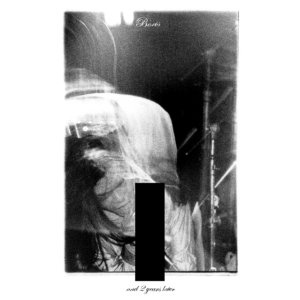
Studio/Live: Live
Recorded: June 19, 1994, Yaneura 2 Koenji, Tokyo, Japan
Producer(s): Boris
Genre(s):
Tier:
Key Track(s):
Review:

Studio/Live: Studio
Recorded:
Producer(s):
Genre(s):
Tier:
Key Track(s): “Mosquito”
Review:
Studio/Live:
Recorded:
Producer(s):
Genre(s):
Tier:
Key Track(s): “Vacuum”
Review:
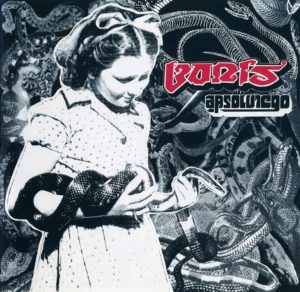
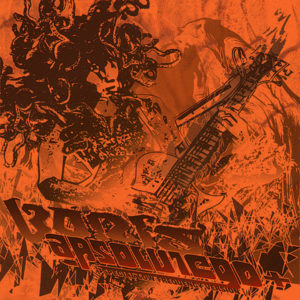
Studio/Live: Studio
Recorded: July 1996; reissue bonus track: 1997, Sound Square, Kitakyūshū, Fukuoka, Japan
Producer(s): Boris
Genre(s): Drone doom
Tier: ♥♥
Key Track(s):
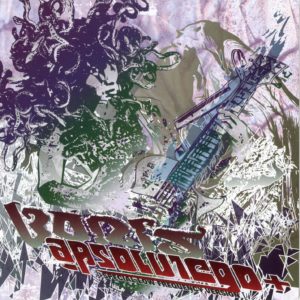
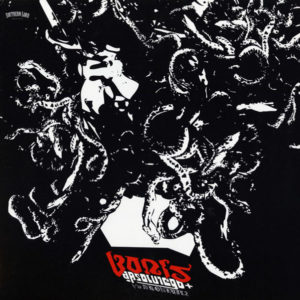
Review: Absolutego has to rank as one of the most audacious debut long-players in the annals of rock. (It has been claimed that the group considers it a “single,” which is how it is described on the sticker affixed to the front cover of the 2020 Third Man Records vinyl reissue. But given its subsequent 2LP length, “album” is the more appropriate descriptor.) Drawing equally from American predecessors the Melvins (whose song “Boris” served as inspiration for the group’s name) and Earth, Boris here manages to carve out their own distinctive niche within the “heavy rock” arts. The bulk of the 60-minute, album-length track consists of a slow, dungeonous, six-note riff, delivered with brute force by bassist [Ohtani] Takeshi. There is something of a bridge around the 25 minute mark that lasts for five minutes only to return to the six-note motif. 40 minutes in, this riff gives way to eardrum-shattering feedback, which takes the up the remaining 20 minutes of the recording. As an opening salvo, Absolutego is nothing short of a dare, the kind of brilliant, confrontational instrumental music guaranteed to separate the dabblers from the aficionados. Note: the last twenty minutes of the track can test even the most enthusiastic noise lover’s patience!!!
Studio/Live:
Recorded:
Producer(s):
Genre(s):
Tier:
Key Track(s):
Review:
See Archive II

Studio/Live:
Recorded: April to May, 1997
Producer(s):
Genre(s):
Tier:
Key Track(s): “Mass Mercury”
Review:
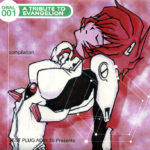
Studio/Live:
Recorded:
Producer(s):
Genre(s):
Tier:
Key Track(s): “調弦”
Review:
see Scott Slimm Presents: Archive (Vols. 1 and 2)
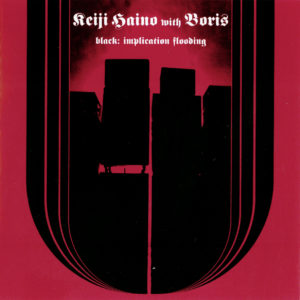
Studio/Live: Live
Recorded: August 31, 1997, Koenji 20000V, Tokyo, Japan
Producer(s):
Genre(s):
Tier:
Key Track(s):
Review:
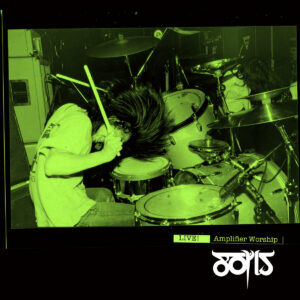
Studio/Live: Live
Recorded: May 24, 1997 and May 16, 1998, Koenji 20000V, Tokyo, Japan; July 26, 1998, Hakata VivleHall, Fukuoka, Japan
Producer(s):
Genre(s): Sludge metal
Tier: ♥
Key Track(s): “Hama”
Review: If you want Boris at their sludge metal-y-est, then congrats, you have come to the right place!
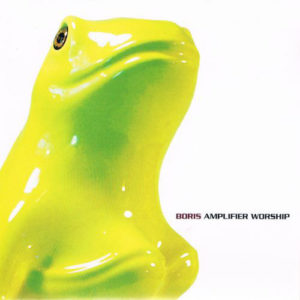

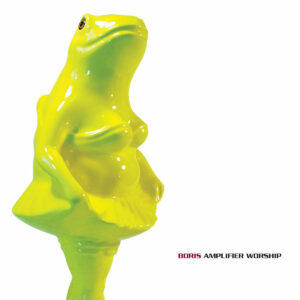
Studio/Live: Studio
Recorded: August–September 1998, Sound Crew
Producer(s): Boris
Genre(s): Sludge metal, Drone doom
Tier: ♥
Key Track(s): “Huge”
Review:

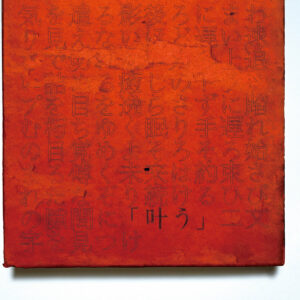
Studio/Live: Studio (and Live [Re-master + Live reissue only])
Recorded: “Kanau”: Part 2 recorded May 2 and 3, 1999, Sound Crew; Part 1 recorded May 16 and 23, 1999, Sound Square, Kitakyūshū, Fukuoka, Japan; [Boris studio recordings only]; December 27, 1998, Koenji 20000V, Tokyo, Japan [reissue Boris live bonus tracks]
Producer(s): Boris
Genre(s): Minimalism, Drone doom
Tier: ♥
Key Track(s): “Kanau, Part 1 (Live)” [reissue bonus track]
Review: A transitional effort. “Part 2” is an extension of the band’s early recordings, featuring a repetitive and oh-so-slightly motorik style of sludgey drone doom metal. “Part 1” is an almost ambient minimalist drone piece. It is that opener that suggests other interests the band would pursue in the coming years. But it is just an early effort and is somewhat rudimentary in comparison to what came later. The live “Part 1” bonus track on the reissue is arguably more interesting than the studio counterpart, adding synthesizer in a way that hints toward later Merzbow collaborations. While the Boris tracks here are decent, when looking back in hindsight, listeners may want to pass over this in favor of later recordings and only return to this if interested in the roots of the more fully developed later recordings.

Studio/Live: Studio
Recorded: September 2000, Bazooka Studio, Tokyo, Japan
Producer(s): Boris
Genre(s): Post rock, Minimalism
Tier: ♥♥
Key Track(s): “flood, Part 2”
Review:
Studio/Live:
Recorded:
Producer(s):
Genre(s):
Tier:
Key Track(s): “Me and the Devil Blues”
Review:




Studio/Live: Live
Recorded: June 21, December 21, 1996, August 8, 1997, August 2, 1998, and May 3, 2001, Koenji 20000V, Tokyo, Japan; August 9, 1997, Nagoya Music Farm, Nagoya, Japan; October 4, 1997, Shinjyuku Loft, Tokyo, Japan
Producer(s): Scott Slimm
Genre(s):
Tier:
Key Track(s):
Review:

Studio/Live: Studio
Recorded: July to September, 2001, Bazooka Studio, Tokyo, Japan
Producer(s): Boris
Genre(s): Sludge metal
Tier: ♥♥
Key Track(s): “1970,” “Death Valley,” “Korosu”
Review:
Studio/Live: Studio
Recorded: July to September, 2001, Bazooka Studio, Tokyo, Japan
Producer(s):
Genre(s): Sludge metal
Tier:
Key Track(s):
Review:
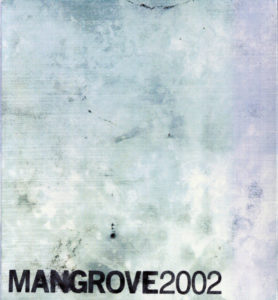
Studio/Live: Studio
Recorded: June to September, 2001, Bazooka Studio, Tokyo, Japan
Producer(s):
Genre(s):
Tier:
Key Track(s): “Dronevil”
Review:
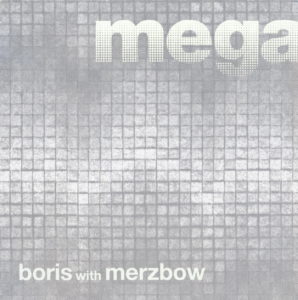
Studio/Live: Studio
Recorded: 2000 to 2001, Bedroom, Itabashi; 2001, Sound Square, Kitakyūshū, Fukuoka, Japan
Producer(s): Boris with Merzbow
Genre(s):
Tier:
Key Track(s):
Review:
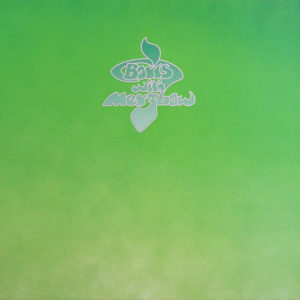
Studio/Live: Studio [?]
Recorded: 2001
Producer(s): Boris with Merzbow
Genre(s):
Tier:
Key Track(s):
Review:

Studio/Live: Live
Recorded: September 4, 2001, Milk, Tokyo, Japan
Producer(s): Boris with Merzbow
Genre(s):
Tier:
Key Track(s):
Review:
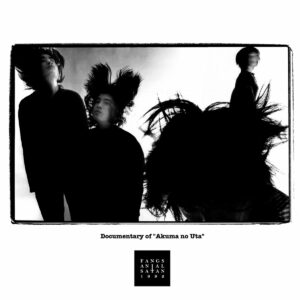
Studio/Live: Studio
Recorded: January to March, 2003, Peace Music, Tokyo, Japan
Producer(s): Boris
Genre(s): Sludge metal
Tier:
Key Track(s):
Review:

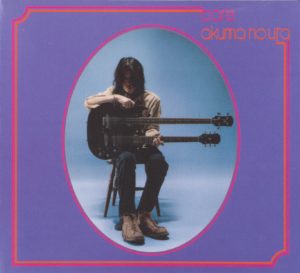
Studio/Live: Studio
Recorded: January to March, 2003, Peace Music, Tokyo, Japan
Producer(s): Boris
Genre(s): Sludge metal
Tier: ♥♥♥
Key Track(s): “Ibitsu,” “フリー [Furi],” “無き曲 [Naki Kyoku],” “あくまのうた [Akuma No Uta]”
Review:
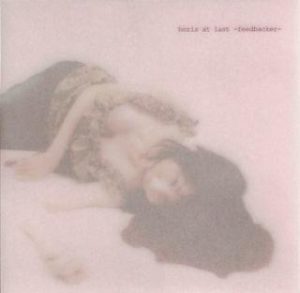

Studio/Live: Studio
Recorded: July to October, 2003, Peace Music, Tokyo, Japan
Producer(s): Boris
Genre(s): Drone, Noise, Drone doom, Post rock
Tier: ♥♥♥
Key Track(s): [entire album is essentially a single song/piece]
Review:
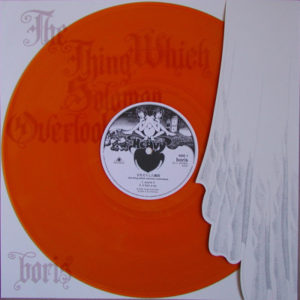
Studio/Live: Studio
Recorded: 2004, Sound Square, Kitakyūshū, Fukuoka, Japan
Producer(s): Boris
Genre(s):
Tier:
Key Track(s):
Review:


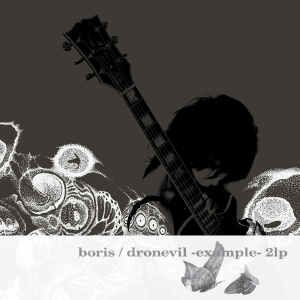
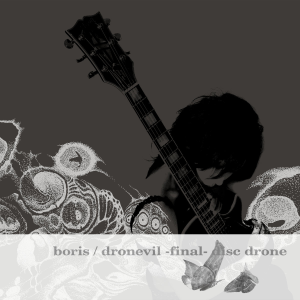
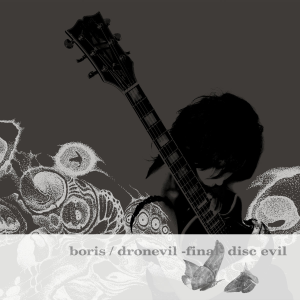
Studio/Live: Studio
Recorded: 2004, Sound Square, Kitakyūshū, Fukuoka, Japan
Producer(s): Boris
Genre(s): Drone, Post rock
Tier: ♥♥♥
Key Track(s): “泣きたがるスピード the evilone which sobs” [dronevil -final- only], “ふりおろす evil wave form”
Review:

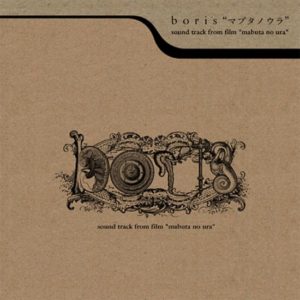

Studio/Live: Studio
Recorded: Winter 2003 to Summer 2004
Producer(s): Boris
Genre(s): Post rock, Minimalism, Noise
Tier: ♥
Key Track(s): “a bao a qu,” “yesterday morning”
Review:
sound track from film “mabuta no ura”; completely different from the song on 目をそらした瞬間 -the thing which solomon overlooked-
Studio/Live: Studio
Recorded: 2003 and/or 2004
Producer(s):
Genre(s):
Tier:
Key Track(s):
Review:
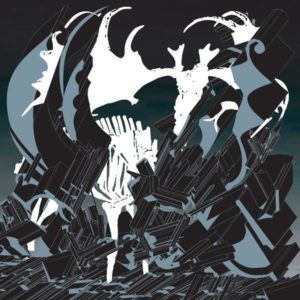
Studio/Live: Studio
Recorded: 2001–2004
Producer(s): Boris with Merzbow
Genre(s):
Tier: ♥
Key Track(s):
Review:
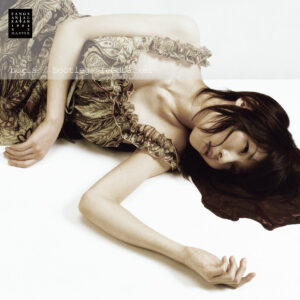
Studio/Live: Live
Recorded: Oct. 16, 2004, VICE Magazine 10th Anniversary Party, Skylight, New York, NY, USA
Producer(s): Boris
Genre(s):
Tier:
Key Track(s):
Review:
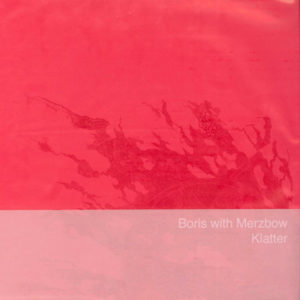
Studio/Live: Studio
Recorded: December, 2004, Sound Square, Kitakyūshū, Fukuoka, Japan
Producer(s):
Genre(s):
Tier:
Key Track(s):
Review:
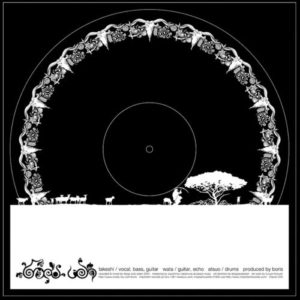

Studio/Live: Studio
Recorded: 2004; 2004-2013 (2CD reissue)
Producer(s): Boris
Genre(s):
Tier:
Key Track(s):
Review:

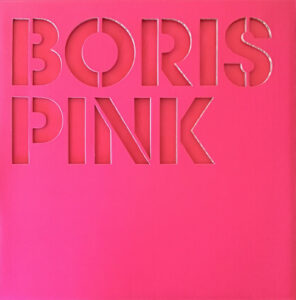

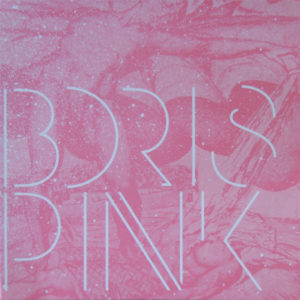
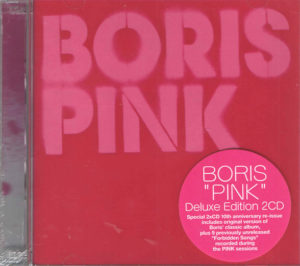
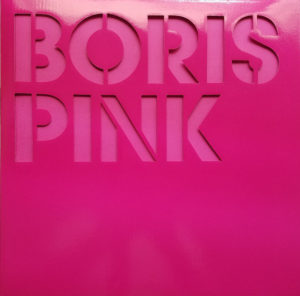

Studio/Live: Studio
Recorded: 2005, Sound Square, Kitakyūshū, Fukuoka, Japan
Producer(s): Boris
Genre(s): Sludge metal
Tier: ♥♥♥
Key Track(s): “ぬるい炎 [Afterburner],” “スクリーンの女 [Woman on the Screen],” “PINK”
Review:

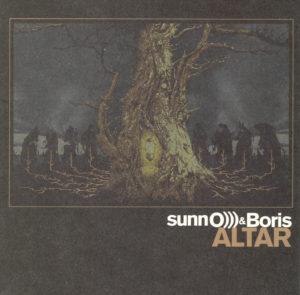


Studio/Live: Studio
Recorded: October 2005, [Studio] Litho; December 2005, Aleph [Studio]
Producer(s): Sunn O)))
Genre(s): Drone doom, Post rock
Tier: ♥
Key Track(s): “Her Lips Were Wet With Venom (satanoscillatemymetallicsonatas)” [Southern Lord 2CD version only]
Review:
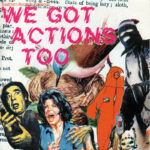
Studio/Live: Studio
Recorded:
Producer(s):
Genre(s):
Tier:
Key Track(s): Sunn O))) & Boris – “The Sinking Belle (Blue Sheep)”
Review:

Studio/Live: Studio
Recorded: 2006
Producer(s): Boris
Genre(s):
Tier:
Key Track(s):
Review:
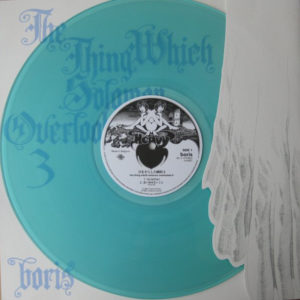
Studio/Live: Studio
Recorded: 2006
Producer(s): Boris
Genre(s):
Tier:
Key Track(s):
Review:
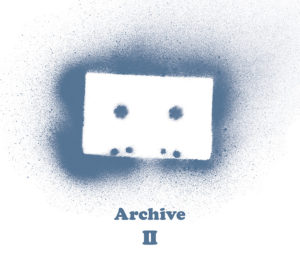
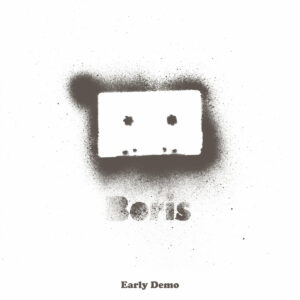
Studio/Live: Live (and Studio for demos?)
Recorded: 1993-1994; March 1 and 2, 1996, Capitol Theater, Olympia, WA, USA; May 15, 2003, radio station, Tokyo, Japan; May 31, 2006, The Annex, New York, NY, USA
Producer(s):
Genre(s):
Tier:
Key Track(s):
Review:
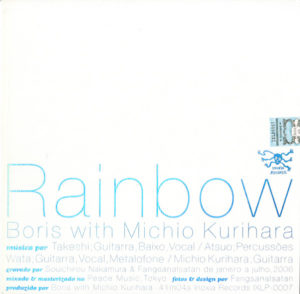
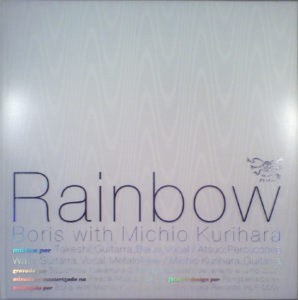
Studio/Live: Studio
Recorded: January to July 2006, Peace Music, Tokyo, Japan
Producer(s): fangsanalsatan & Souichirou Nakamura
Genre(s):
Tier: ♥
Key Track(s): “Rainbow [Arco-Íris],” “You Laughed Like a Water Mark [Você Sorriu Como Uma Marca D’Água]”
Review:

Studio/Live: Studio
Recorded: 2006, Peace Music, Tokyo, Japan
Producer(s): Souichirou Nakamura and fangsanalsatan
Genre(s):
Tier:
Key Track(s):
Review:
Studio/Live: Live
Recorded: October 19 or 31, 2006, Slim’s, San Francisco, CA, USA
Producer(s):
Genre(s):
Tier:
Key Track(s):
Review:
Studio/Live: Studio (vinyl), live (DVD)
Recorded: September 11, 2006, Northsix, New York, NY, USA; 2007
Producer(s):
Genre(s): Hardcore punk
Tier: ♥
Key Track(s): “Damaged 3”
Review:
Studio/Live: Live
Recorded: November, 2006, Earthdom Festival, Tokyo, Japan
Producer(s): Boris, Merzbow
Genre(s): Sludge metal, Noise
Tier: ♥♥♥
Key Track(s): “Rainbow,” “Ibitsu”
Review:
Studio/Live: Live
Recorded: February 4, 2007, Shimokitazawa, Setagaya, Tokyo, Japan
Producer(s):
Genre(s):
Tier:
Key Track(s):
Review:
Studio/Live: Live
Recorded: October 16, 2007, Echoplex, Los Angeles, CA, USA
Producer(s):
Genre(s):
Tier:
Key Track(s):
Review:
Invocation of Sacred Resonance I
Studio/Live: Live (previously unreleased material)
Recorded: October 16, 2007, Echoplex, Los Angeles, CA, USA (previously unreleased material)
Producer(s):
Genre(s):
Tier:
Key Track(s):
Review:
Studio/Live:
Recorded:
Producer(s):
Genre(s):
Tier:
Key Track(s): “Floor Shaker”
Review:



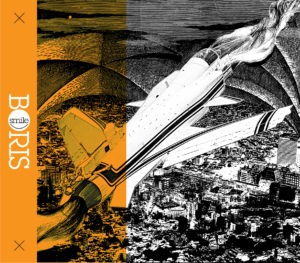
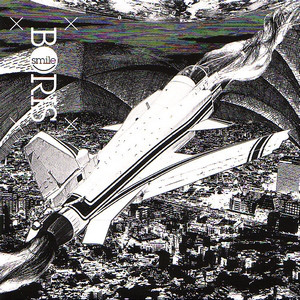
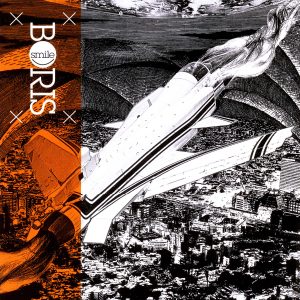
Studio/Live: Studio
Recorded: 2007
Producer(s): Boris, You Ishihara
Genre(s): Sludge metal, Psychedelic rock
Tier: ♥♥
Key Track(s): “メッセージ [Messeeji]” (Japanese version of “Statement”), “BUZZ-IN” (U.S. version)
Review:
Studio/Live: Live
Recorded: May 9, 2008, Palác Akropolis, Prague, Czech Republic
Producer(s):
Genre(s): Hard rock
Tier: ♥♥♥
Key Track(s): “メッセージ -Statement-,” “となりのサターン -My Neighbor Satan-”
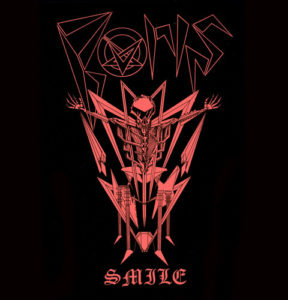
Review: Maybe surprisingly one of the band’s finest live albums. The Smile world tour was a turning point in the band’s career. It ended up being something they chose to never repeat. In some ways they shunned that particular avenue for international recognition. Still, this set recorded in Europe very early in the Smile tour finds the band comfortable performing these songs but at the same time not yet worn down by the grind of touring. If anything, there is an added bit of energy here that pushes this recording into the top tier. While not quite a match for the epic Rock Dream, partly due to the absence of Merzbow, this live album is probably superior to either the U.S. or Japanese studio version of Smile on the whole.

Studio/Live: Live
Recorded: May, 2008, Wolf Creek, CA, USA
Producer(s):
Genre(s):
Tier: ♥♥
Key Track(s):
Review:
Studio/Live:
Recorded:
Producer(s):
Genre(s):
Tier:
Key Track(s): “Slither”
Review:

Studio/Live: Studio
Recorded: 2009, Peace Music, Tokyo, Japan
Producer(s): Boris
Genre(s): Alternative rock, Noise, Pop
Tier: ♥
Key Track(s):
Review: According to a press release by the band, “In 2009 following our album ‘Smile’ with a full schedule of touring and appearances at numerous festivals, we began working on ‘New Album 2009’, which was not intended to be released. This was a period of deep pursuit of an unexplored world of sound, with an engine made from what was processed on the road. Out of this period came numerous split releases, singles, and transitioned to our 3 albums released in 2011.” In other words, this is really an archival collection of working demos that saw release only as the band cleared its archives when the COVID-19 pandemic put a halt to regular concerts and tours. These early working drafts of songs that appeared elsewhere in the coming years—sometimes in multiple alternative versions—are generally less compelling that what they would become. What is significant about these songs, though, is that they show how pivotal the Smile tour was for everything that the band did later. The band showed no interest in repeating the Smile tour and even seemed hostile to making the sort of albums that support big international tours. Instead of delivering on settled expectations, the way music industry promoters encourage, the band sought to defy expectations and branch out into new genres.
Studio/Live: Studio
Recorded: Sound Square, Kitakyūshū, Fukuoka, Japan
Producer(s): Boris
Genre(s):
Tier: ♥♥♥
Key Track(s): “8,” “Hey Everyone”
Review:
Studio/Live: Studio
Recorded: Sound Square, Kitakyūshū, Fukuoka, Japan
Producer(s): Boris
Genre(s):
Tier: ♥♥
Key Track(s): “H.M.A. -Heavy Metal Addict-“
Review:
Studio/Live: Studio
Recorded: Sound Square, Kitakyūshū, Fukuoka, Japan
Producer(s): Boris
Genre(s): Pop, Post rock
Tier: ♥
Key Track(s): “16:47:52…”
Review:
Studio/Live: Studio
Recorded: September, 2008, Bazooka Studio, Tokyo, Japan
Producer(s): Boris
Genre(s): Pop
Tier: ♥♥
Key Track(s): “Seasons”
Review:
Studio/Live: Studio
Recorded: Sound Square, Kitakyūshū, Fukuoka, Japan
Producer(s): Boris
Genre(s):
Tier:
Key Track(s): “Luna”
Review:
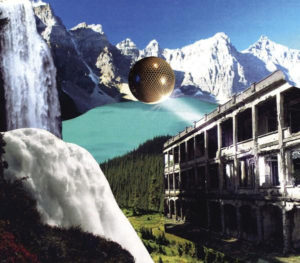
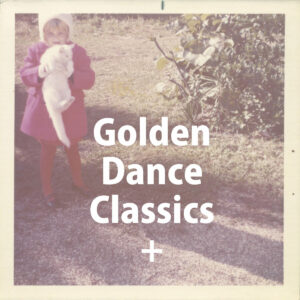
Studio/Live: Studio (and Live for “あきらめの花 -Akirame Flower-” reissue bonus track)
Recorded: 2009, Peace Music, Tokyo, Japan [Boris material only]; Golden Dance Classics + Bonus Tracks: September 19, 2009, Tokyo, Japan (with Michio Kurihara), December 28, 2015, Daikanyama Unit, Tokyo, Japan (with GOTH-TRAD)
Producer(s): Fangsanalsatan [Boris material only]
Genre(s): Alternative rock
Tier: ♥♥
Key Track(s): “Tokyo Wonder Land”
Review:
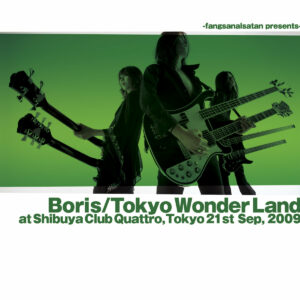
Studio/Live: Live
Recorded: September 21, 2009, Shibuya Club Quattro, Tokyo, Japan
Producer(s): Boris
Genre(s): Sludge metal, Drone doom, Alternative rock
Tier: ♥♥
Key Track(s): “トーキョーワンダーランド -Tokyo Wonder Land-,” “feedbacker”
Review: An archival release of a live set from 2009. This includes a selection of “greatest hits” of sorts from the last few years combined with songs the band was working out as part of the New Album 2009 demos that, in final form, would wind up on releases spanning 2009-2011. The sound fidelity here is adequate but not great. The main attraction is to hear the band performing live in a somewhat smaller venue setting mixing up fan favorites with some better new songs that go off in new directions. So rather than hearing a band tired of performing the same set of old warhorse tunes one more time, there is room here for the musicians to try new things. On the whole this is a solid live set showcasing the band’s versatility and range that is held back just slightly by the limited fidelity of the recording.
Studio/Live: Studio
Recorded: 2010, Sound Square, Kitakyūshū, Fukuoka, Japan, Bazooka Studio, Tokyo, Japan
Producer(s): BXI
Genre(s):
Tier: ♥
Key Track(s): “Rain”
Review:


Studio/Live: Studio, live (DVD)
Recorded:
Producer(s):
Genre(s):
Tier:
Key Track(s):
Review:

Studio/Live: Studio
Recorded: Sound Square, Kitakyūshū, Fukuoka, Japan
Producer(s): Shinobu Narita
Genre(s): Alternative rock
Tier: ♥♥
Key Track(s): “Flare,” “Spoon”
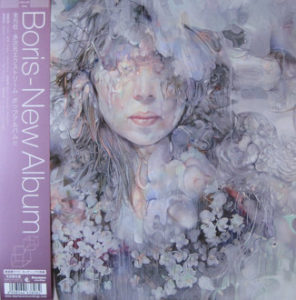
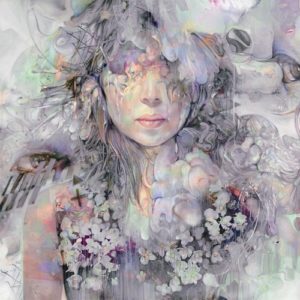
Review: An album of alternative rock with a shoegaze/dream-pop sheen that at times hints at pop-punk and electronica. This is a vaguely mainstream-friendly effort with a sound that portrays a cynical electronic age urban glamor of sorts. This album might appeal to listeners with no interest whatsoever in Boris’ early work. The band proves capable of writing and producing music in yet another genre, even if the songwriting is not consistently as catchy as it might be and the vocals just barely hang in there. Yet the band had added another stylistic tool to their toolbox and would call upon this new style in the coming years.
Studio/Live: Studio
Recorded: circa 2011
Producer(s): Boris
Genre(s): Pop, Alternative rock, Hardcore
Tier: ♥
Key Track(s): “Week End Part.01,” “u fu fu”
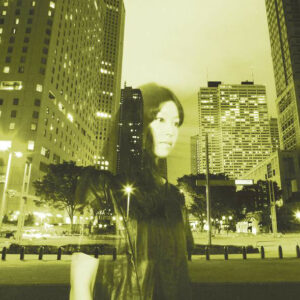
Review: Originally a Japanese-only release that later saw a worldwide digital release. This seems very much like material leftover from efforts for Attention Please and the rest of the 2011 albums. Many of these songs gravitate toward electronic and funkier rhythms, but with a poppy approachability. The problem, really, is that some of the songs kind of drag on repetitively, which is perhaps why they ended up here rather than on prior worldwide releases. That said, the opener “Week End Part.01” is quite decent and “u fu fu” is a fun, poppy hardcore outing.

Studio/Live: Studio
Recorded: Sound Square, Edamitsu, Kitakyūshū, Fukuoka, Japan
Producer(s): Boris, SADESPER RECORD
Genre(s): Pop, Hardcore
Tier: ♥♥
Key Track(s): “u fu fu,” “Peaches”
Review: Poppy material that most likely is archival stuff from the 1985 album era. “u fu fu” is the clear highlight (it previously appeared on 1985). Though “Peaches” is fun and features a kitschy repetitive incantation in the tradition of stuff like Beans Hambone & El Morrow‘s “Beans,” Alva Rogers‘ “Pizza Party”, and, of course, the The Presidents of the United States of America‘s mid-1990s novelty hit “Peaches.”

Studio/Live: Studio
Recorded: Sound Square, Kitakyūshū, Fukuoka, Japan
Producer(s): Boris
Genre(s): Alternative rock, Pop
Tier: ♥♥
Key Track(s): “アテンションプリーズ [Attention Please],” “トーキョーワンダーランド [Tokyo Wonder Land]”
Review:


Studio/Live: Studio
Recorded: 2009-2011, Sound Square, Kitakyūshū, Fukuoka, Japan
Producer(s): Boris
Genre(s): Sludge metal, Alternative rock
Tier: ♥♥
Key Track(s): “Missing Pieces,” “GALAXIANS”
Review:
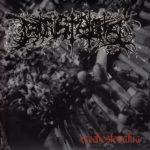
Studio/Live:
Recorded:
Producer(s):
Genre(s):
Tier:
Key Track(s): “Czechoslovakia”
Review:
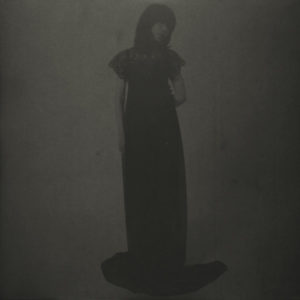
Studio/Live: Live
Recorded: Possibly August 5, 2011
Producer(s):
Genre(s):
Tier:
Key Track(s):
Review:
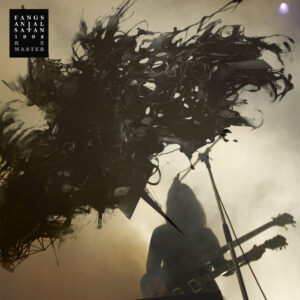
Studio/Live: Live
Recorded: December 16, 2011, Club Upset, Nagoya, Japan
Producer(s): Boris
Genre(s): Alternative rock, Sludge metal
Tier: ♥♥
Key Track(s): “Window Shopping”
Review: A live album from a date on the tour supporting the batch of alternative rock/pop albums released in 2011. There are a few sludge metal songs from pre-2009 albums. But mostly this set is focused on newer songs with more mainstream appeal. While many of these songs benefited from studio effects and production values in their album versions, these live versions are all pretty decent. This album reveals how genuinely committed the band was to their new direction. Arguments might be made as to whether performances on the vaguely similar archival live set Tokyo Wonder Land are better, but these “Hope” Japan Tour 2011 recordings are captured with better sound fidelity.

Studio/Live:
Recorded:
Producer(s):
Genre(s):
Tier:
Key Track(s): “Neu Years”
Review:
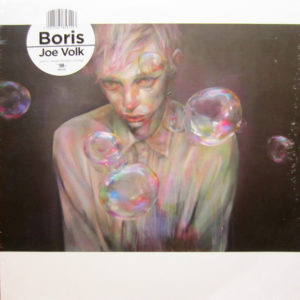



Studio/Live: Studio (and Live for
Recorded: unknown [Boris tracks only]; bonus track: May 9, 2013, Grog Shop, Cleveland OH, USA
Producer(s): Boris [Boris tracks only]
Genre(s): Minimalism, Post rock, Alternative rock
Tier: ♥
Key Track(s): “Cosmos, Part 2”
Review:
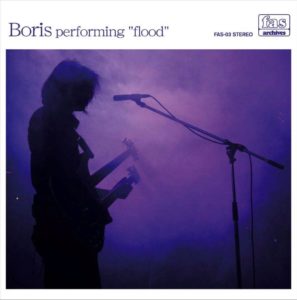
Studio/Live: Live
Recorded: November 3, 2012, “leave them all behind 2012” show, Daikanyama Unit, Tokyo, Japan
Producer(s): Boris
Genre(s):
Tier:
Key Track(s): [the entire album is a single track]
Review:

Studio/Live: Studio
Recorded: 2012, Sound Square, Kitakyūshū, Fukuoka, Japan
Producer(s): Boris, Shinobu Narita
Genre(s): Shoegaze, Drone, Doom Metal
Tier: ♥♥
Key Track(s): “method of error,” “哀歌 -elegy-,” “december”
Review: A surprisingly good album that, in hindsight, was something of a trial-run for Noise. Although short, and perhaps with a bit of filler, there are some strong tracks here and this is an album that is well worth exploring. It signals the beginning of the latter phase of the band’s re-invention period, when, to some extent, the dust had settled on the batch of 2011 albums and new and different songs were emerging. Pure pop elements are scaled back, pushed instead into indie shoegaze/dream pop territory. Yet there is also a noisy, drone-y aesthetic at play and some heavier elements. Though the album is free of any pure sludge rock/stoner metal cuts. The group’s initial efforts here to intermingle different styles proves a success, and they continued in that direction for their follow-up full-length album.
Studio/Live:
Recorded:
Producer(s):
Genre(s):
Tier:
Key Track(s): “Sometimes”
Review:
Studio/Live:
Recorded:
Producer(s):
Genre(s):
Tier:
Key Track(s): “冥合”
Review:
Studio/Live: Studio, Live (Deluxe Edition bonus tracks only)
Recorded: 2013, Sound Square, Kitakyūshū, Fukuoka, Japan; Deluxe Edition live bonus tracks: June 24, 2011, Madrid, Spain; July 1, 2011, Karlsruhe, Germany; July 7, 2011, Vienna, Austria; October 24, 2011, Montreal, Canada
Producer(s): Boris
Genre(s): Indie pop, Alternative Rock, Metal, Drone, Hardcore
Tier: ♥♥♥
Key Track(s): “Taiyo no Baka”
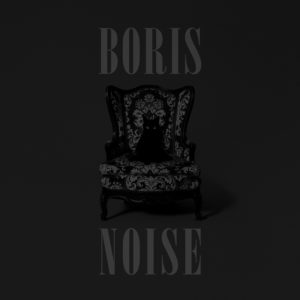
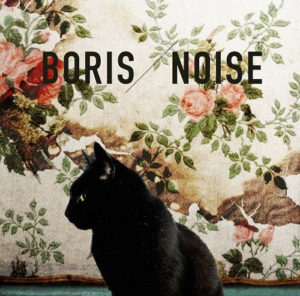
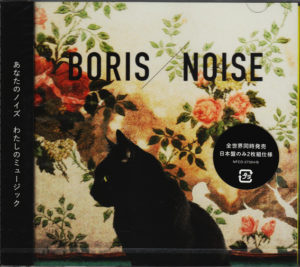
Review: Following the release of SMILE and the supporting tour, Boris explored more varied recording interests, resulting in albums of pop and alternative rock that bore little if any resemblance to the sorts of genres they previously embraced. Many of those new genre explorations — along with older, familiar ones — come together on NOISE. The band had long switched between different genres across different albums, and even to a small degree within certain albums, but this one was unusual in that it there were all sorts of different genres spanning from more mainstream sounds to more obscure ones pulled together in a cohesive way within the space of a single album. Maybe surprisingly, NOISE is rather successful in that the various genres are all represented through good songwriting, performances, and production. In a sense, the band found a way to come to terms with their recognized (interpellated) strengths along with their clear desire to demonstrate versatility and avoid being pigeonholed, while at the same time refining and expanding on some of their most recent genre exercises. So, this album can be seen as the culmination and realization of efforts of the prior five years and also possibly their finest album of the later part of the band’s existence. It is also free of any sentimentality when it calls upon the band’s proven strengths in noise and metal. Subsequently the band would make a number of nostalgic, career-summary type albums, which, while often quite good, were somewhat safer bets that did not leave the comfort zone of the drone-y, sludgy, noisy hard rock and metal in which they (by then) had a well-established fan base. This one took more chances at being something different and new, as a whole, even if that may not be immediately apparent.
Studio/Live: Studio
Recorded: 2013
Producer(s): boris
Genre(s):
Tier:
Key Track(s):
Review:
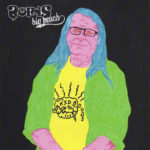
Studio/Live:
Recorded:
Producer(s): Boris
Genre(s):
Tier:
Key Track(s): “Big Peach”
Review:
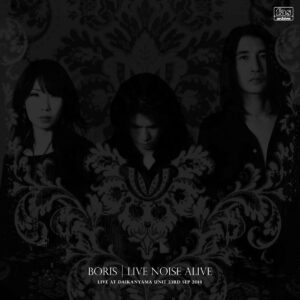
Studio/Live: Live
Recorded: September 23, 2014, Daikanyama Unit, Tokyo, Japan
Producer(s): Boris
Genre(s):
Tier:
Key Track(s):
Review:

Studio/Live:
Recorded:
Producer(s):
Genre(s):
Tier:
Key Track(s): “Lithium”
Review:

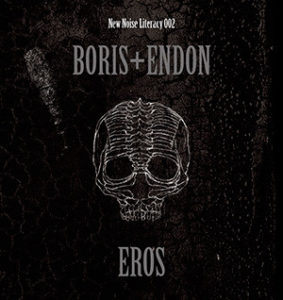
Studio/Live:
Recorded: 2015 or earlier, Sound Square, Kitakyūshū, Fukuoka, Japan
Producer(s): Boris, Endon
Genre(s):
Tier:
Key Track(s):
Review:
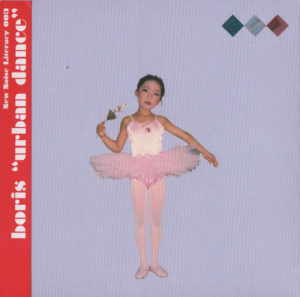
Studio/Live: Studio
Recorded: 2015
Producer(s): Boris
Genre(s):
Tier: ♥
Key Track(s): “Surrender”
Review: An album of mostly noise rock with one slightly ambient pop-rock song in “Surrender.” This one, along with its companion albums Warpath and Asia and the Thing Which Solomon Overlooked series, is going to appeal mostly (and perhaps only) to listeners with an interest in noise rock.
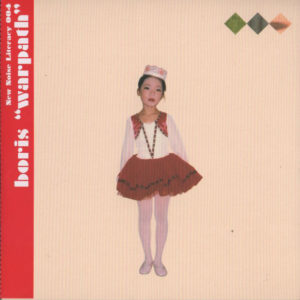
Studio/Live:
Recorded: 2015
Producer(s): Boris
Genre(s):
Tier:
Key Track(s):
Review:
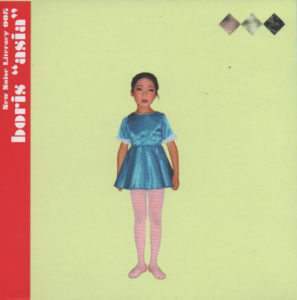
Studio/Live:
Recorded: 2015
Producer(s): Boris
Genre(s):
Tier:
Key Track(s):
Review:
![ニンジャスレイヤー フロムコンピレイション「忍」 [Ninja Slayer Nin]](https://rocksalted.com/wp-content/uploads/2018/10/2015_ninjaslayer_nin_CD-150x150.jpg)
Studio/Live:
Recorded:
Producer(s):
Genre(s):
Tier:
Key Track(s): “キルミスター -Killmister-,” “Aurashi no Ken”
Review:
![ニンジャスレイヤー フロムコンピレイション「殺」 [ Ninja Slayer Satsu]](https://rocksalted.com/wp-content/uploads/2018/10/2016_ninjaslayer_satsu_CD-150x150.jpg)
Studio/Live:
Recorded:
Producer(s):
Genre(s):
Tier:
Key Track(s): “Memento Mori”
Review:

Alternate Version Notes:
Studio/Live:
Recorded:
Producer(s):
Genre(s):
Tier:
Key Track(s): “Hey Everyone”
Review:

Studio/Live:
Recorded:
Producer(s):
Genre(s):
Tier:
Key Track(s):
Review:
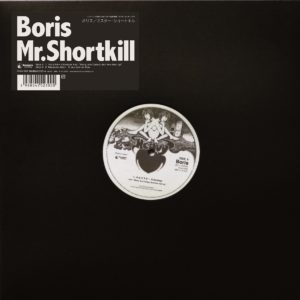
Studio/Live: Studio
Recorded: 2015, Sound Square, Kitakyūshū, Fukuoka, Japan
Producer(s): Boris
Genre(s): Sludge metal, Drone doom
Tier: ♥♥
Key Track(s): “キルミスター -Killmister- incl. ‘Many Are Called, but Few Get Up'”
Review: More of a lengthy single than an EP. The opener is a great hard rocking medley partly made up of a cover of a song by British band Man. The other tracks are mostly filler.
Studio/Live:
Recorded: 2015
Producer(s):
Genre(s):
Tier:
Key Track(s):
Review:
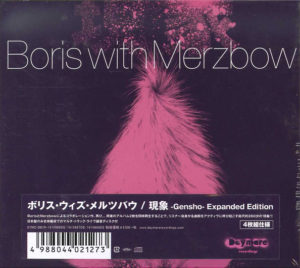

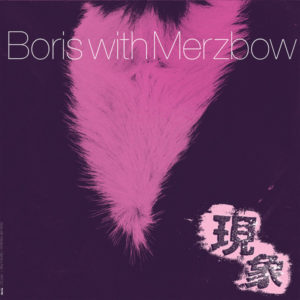
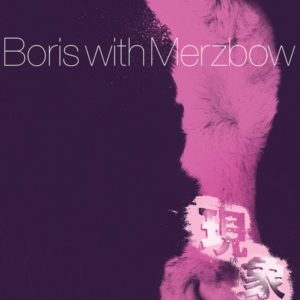
Studio/Live: Studio, live (expanded edition only)
Recorded: 2016, Sound Square, Kitakyūshū, Fukuoka, Japan; Live tracks on Expanded Edition: November 27, 2015, Fever, Tokyo, Japan
Producer(s): Shinobu Narita
Genre(s):
Tier: ♥♥
Key Track(s):
Review: According to the record label, “The BORIS songs are completely new, percussion-less reinventions of classic tracks from the band’s storied catalog, while MERZBOW’s songs are entirely new compositions. The two sets are intended to be played at the same time at varying volumes so that the listener can experience their own ‘gensho/phenomenon’ every time.” Gensho inaugurates a nostalgic phase in Boris’ recordings. Though actually these new recordings of old songs end up being quite effective. The Boris songs also sound fine played on their own without the Merzbow disc playing simultaneously.

Studio/Live:
Recorded:
Producer(s):
Genre(s):
Tier:
Key Track(s): “Day After Day (Urban Dance)”
Review:
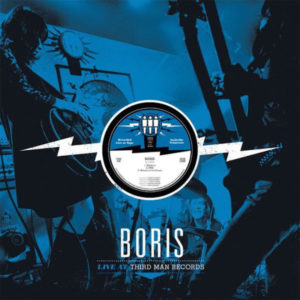
Studio/Live: Live
Recorded: August 1, 2016, Blue Room, Third Man Records, Nashville, TN, USA
Producer(s):
Genre(s): Sludge metal
Tier: ♥♥
Key Track(s):
Review: A live set featuring songs from PINK. There is nothing particularly essential in these (perfectly good) performances but the song selection is strong and the album provides a no-frills window into some of the material that garnered the band their widest international recognition.
Studio/Live: Live
Recorded: September 24, 2016, Shindaita Live House Fever, Tokyo, Japan
Producer(s):
Genre(s):
Tier:
Key Track(s):
Review:

Studio/Live: Studio
Recorded: 2017, Sound Square, Kitakyūshū, Fukuoka, Japan
Producer(s): Boris & Shinobu Narita
Genre(s):
Tier: ♥
Key Track(s): “絶対自我 [Absolutego],” “何処へ [Dystopia -Vanishing Point-]”
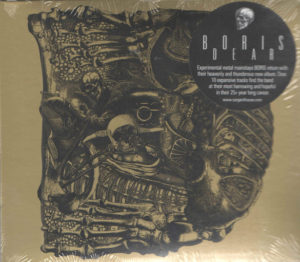
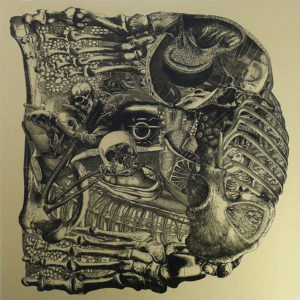
Review: Dear is yet another backwards-looking collection of material but with a dark and ominous feeling. This lengthy album proves mostly forgettable, with only a couple songs of much value. Boris seemed out of ideas. The band planned to retire after releasing Dear but those plans changed and they kept on recording and performing live.
Studio/Live: Live
Recorded:
Producer(s):
Genre(s):
Tier:
Key Track(s): “雨 -Heavy Rain- (Live Version)”
Review:
Studio/Live: Live
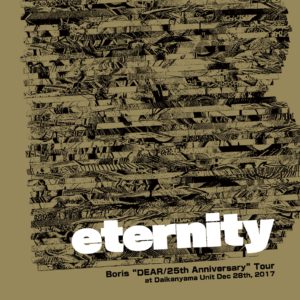
Recorded: December 28, 2017, Daikanyama Unit, Tokyo, Japan
Producer(s):
Genre(s):
Tier:
Key Track(s):
Review:
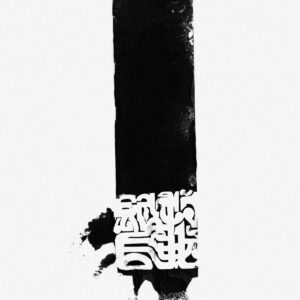
Studio/Live: Studio
Recorded: April 5, 2018, Sound Square, Kitakyūshū, Fukuoka, Japan
Producer(s): Boris
Genre(s): Minimalism, Drone doom, Noise
Tier: ♥
Key Track(s): [the entire album is a single track]
Review: A new recording of the band’s debut album. Less guitar-heavy and with more studio-driven noise and effects than the original version. This version is actually so different from the original as to seem like its own new work.

Studio/Live: Studio
Recorded: Sound Square, Kitakyūshū, Fukuoka, Japan, 2017
Producer(s): Boris
Genre(s): Drone doom, Post rock
Tier: ♥
Key Track(s): “Phenomenons Drive”
Review:

Studio/Live: Studio
Recorded: Sound Square, Edamitsu, Kitakyūshū, Fukuoka, Japan
Producer(s):
Genre(s):
Tier:
Key Track(s):
Review:

Studio/Live:
Recorded: 1992-2018
Producer(s):
Genre(s): [all of them]
Tier: ♥
Key Track(s):
Review: A curiosity for only the most dedicated superfans. Originally distributed to attendees at the band’s final show of its 25th Anniversary World Tour at Shindaita Fever in Tokyo, then subsequently given away as a bonus with purchases from the band’s official Japanese retailer, then much later released worldwide digitally. This is a “fan club” remix album of sorts. According to a press release, “This was as a new album from a standpoint of taking excerpts from a huge collection of unreleased compositions that had been brewing over a long period of time through our accumulated activity, newly constructing them via technique and interpretation of ‘now’, thus inviting the listener to the next phase. Fragments of unreleased compositions were excessively weaved together . . . .” The press release perhaps overstates things. The album is individual snippets of recordings strung together serially, but not really interwoven much—more like a compilation. While the fragments have merits on their own, the album as a whole is unessential. That said, Secrets does provide evidence of Boris’ wide and varied musical landscape and dedicated fans may well be intrigued by the “treasure hunt” aspect of the listening experience.
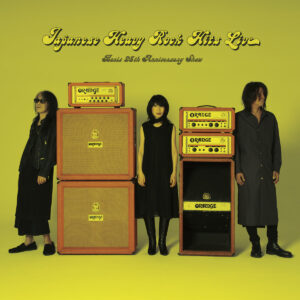
Studio/Live: Live
Recorded: August 2018, “Boris 25th Anniversary Tour 2018”, USA
Producer(s): Boris
Genre(s): Sludge metal, Drone, Post rock, Minimalism
Tier: ♥♥
Key Track(s):
Review: Features a “greatest hits live” lineup of some of the band’s most beloved songs, culled from performances in the USA on a 25th Anniversary tour. It bears some resemblance to the epochal Rock Dream but with the addition of songs debuted after that earlier live album. All said, this is a very solid live album that would make a decent introduction to the band’s work. Listeners already familiar with Boris will also probably enjoy hearing these live versions, which are pretty consistently good from beginning to end with no filler.
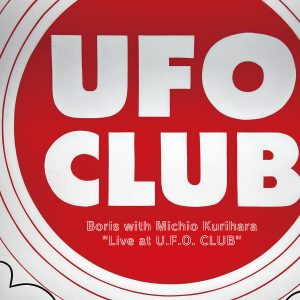
Studio/Live: Live
Recorded: February 8, 2019, U.F.O. Club, Tokyo, Japan
Producer(s): Boris with Michio Kurihara
Genre(s):
Tier:
Key Track(s):
Review:

Studio/Live:
Recorded:
Producer(s):
Genre(s):
Tier:
Key Track(s): “Farewell”
Review:
Studio/Live: Studio
Recorded: 2019
Producer(s):
Genre(s):
Tier: ♥♥
Key Track(s): “Away from You,” “EVOL”
Review:

Studio/Live: Live
Recorded: September 3, 2019, Exit-In, Nashville, TN, USA; September 12, 2019, Port City Music Hall, Portland, ME, USA
Producer(s): Boris
Genre(s):
Tier:
Key Track(s):
Review:
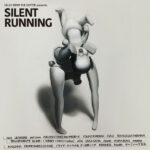
Studio/Live:
Recorded:
Producer(s):
Genre(s):
Tier:
Key Track(s): “終曲 -Shadow of Skull-“
Review:
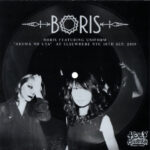
Studio/Live: Live
Recorded: September 10, 2019, Elsewhere, New York city, NY, USA
Producer(s):
Genre(s):
Tier:
Key Track(s): “Akuma No Uta”
Review:
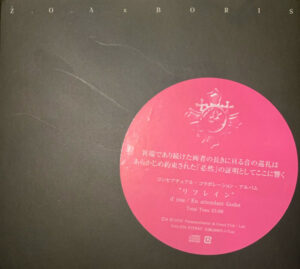
Studio/Live: Studio
Recorded:
Producer(s):
Genre(s):
Tier: ♥♥
Key Track(s):
Review:
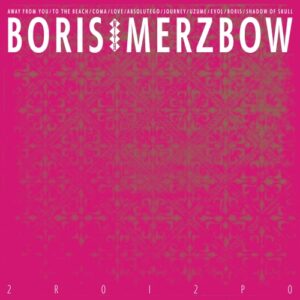
Studio/Live: Studio
Recorded: 2019-2020
Producer(s):
Genre(s): Drone, Noise, Alternative rock
Tier: ♥♥
Key Track(s): “To the Beach,” “Absolutego”
Review:

Studio/Live: Studio
Recorded: March 2020, Sound Square, Kitakyūshū, Fukuoka, Japan
Producer(s): Boris
Genre(s): Hardcore
Tier: ♥
Key Track(s): “Anti-Gone”
Review:
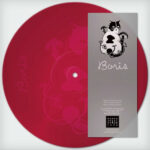

Studio/Live: Studio
Recorded: 2020, Peace Music, Tokyo, Japan
Producer(s): Boris
Genre(s): Sludge metal
Tier:
Key Track(s): “Boris”
Review:
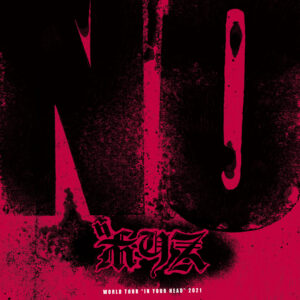
Studio/Live: Live in Studio
Recorded: November 17, 2020, Shindaita Live House Fever, Tokyo, Japan
Producer(s): Boris
Genre(s): Hardcore
Tier:
Key Track(s):
Review:

Studio/Live: Studio
Recorded: 2020, Sound Square, Kitakyūshū, Fukuoka, Japan
Producer(s):
Genre(s):
Tier:
Key Track(s):
Review:
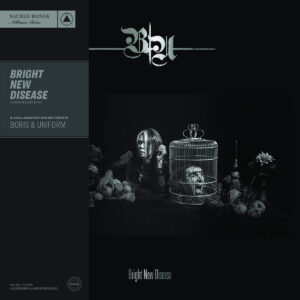
Studio/Live:
Recorded:
Producer(s):
Tier:
Key Track(s):
Review:
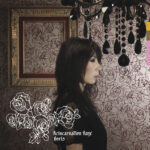

Studio/Live: Studio
Recorded: January 2021, Sound Square, Kitakyūshū, Fukuoka, Japan
Producer(s):
Genre(s): Sludge metal
Tier: ♥♥
Key Track(s): “Reincarnation Rose”
Review: “Reincarnation Rose” is something of a hybrid of stoner/sludge metal of the Heavy Rocks era with a sheen of laid-back catchiness that draws from mellower recordings from Japanese Heavy Rock Hits, Noise, etc. The collective vocals are diffuse and pushed somewhat into the background. The production is polished. In some form or fashion Boris has been over this territory before though the results have their own character. In that way “Reincarnation Rose” is typical of Boris’ backward-looking later period. But this is one of the catchier tunes of that period. The B-side is exclusive to the CD and 12″ vinyl releases, is reminiscent of “俺を捨てたところ [Just Abandoned Myself]” from PINK.

Studio/Live: Studio
Recorded:
Producer(s):
Genre(s): Alternative rock, Shoegaze
Tier: ♥
Key Track(s):
Review: The inevitable: a Boris x-mas single. “Pardon?” is a song from New Album reworked by Lauren Auder & Dviance, with newly-recorded vocals. It came about partly in honor of the 10th anniversary of New Album and the admiration that Boris and Auder have for it despite various criticisms it received. The second track, “Last Christmas,” is a cover of a hit song by Wham!, done in somewhat of a shoegaze style.

Studio/Live: Studio
Recorded: June 11, 2020 and later
Producer(s): suGar Yoshinaga
Genre(s): Post rock, Sludge rock, Alternative rock
Tier: ♥
Key Track(s): “Drowning By Numbers”
Review: Intended as a companion album to NO, with the two album titles combined forming the word NOW. Though W has a completely different sound than its predecessor. Here, the emphasis is on diffuse, more minimalist and subdued expression. The sonic textures are perhaps closest to マブタノウラ sound track from film “mabuta no ura”, with some of the 2011-era albums’ poppiness and fascination with electronics too. Though in terms of overall feel, W might be closest to Dear, which is to say this is rather indistinct in its intentions and rather more backwards than forwards-looking.

Studio/Live: Studio
Recorded:
Producer(s):
Genre(s):
Tier:
Key Track(s): “Down the Road”
Review:
Studio/Live:
Recorded:
Producer(s):
Genre(s):
Tier:
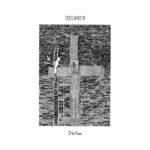
Key Track(s): “Funnel of Love (SQÜRL)”
Review:

Studio/Live: Studio
Recorded:
Producer(s):
Genre(s): Sludge metal, Stoner metal, Alternative rock
Tier: ♥
Key Track(s): “Nosferatou”
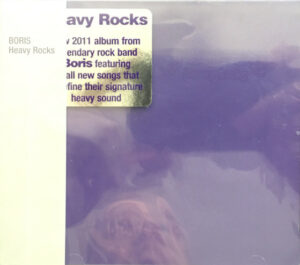
Review: The band’s third full-length album titled Heavy Rocks delves into the use of horns and piano, going so far as to include free-jazz style saxophone. At times the horns are pushed down into a muddy background. These production efforts are a change of pace. But, unfortunately, they come across like superficial gimmicks and are not enough to overcome a lack of good songwriting and rather listless performances—problems similar to Dear.
Studio/Live:
Recorded:
Producer(s):
Genre(s):
Tier:
Key Track(s):
Review:

Studio/Live: Studio
Recorded: 2023, Sound Square, Kitakyūshū, Fukuoka, Japan
Producer(s):
Genre(s): Sludge metal
Tier: ♥♥
Key Track(s): “‘Ibitsu’ Re-Recording 2023”
Review: A commemorative re-recording of one of the group’s most iconic “heavy” rock songs, offered as a free download. A solid performance but naturally not a match for the classic original recording.
Studio/Live: Studio
Recorded: 2023, Sound Square, Kitakyūshū, Fukuoka, Japan
Producer(s): suGar Yoshinaga
Genre(s):
Tier:
Key Track(s):
Review:

Studio/Live: Live
Recorded: April 2, 2023, Koenji High, Tokyo, Japan
Producer(s):
Genre(s):
Tier:
Key Track(s):
Review:
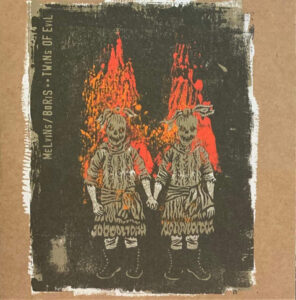
Studio/Live: Studio
Recorded: 2022-23, Sounds of Sirens, Los Angeles, CA, USA [Melvins track]
Producer(s):
Genre(s):
Tier:
Key Track(s):
Review:
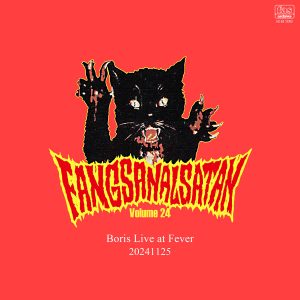
Studio/Live: Live
Recorded: November 25, 2024, Fever, Tokyo, Japan
Producer(s):
Genre(s):
Tier:
Key Track(s):
Review:
朝生愛 [Ai Aso] / Wata – She’s So Heavy
朝生愛 [Ai Aso] – The Faintest Hint
SMASH YOUR FACE – SAYONARA SMASH YOUR FACE
Secrets [see above]
“Everybody Loves You” on Big Mess Deluxe Box Set Bonus Disc
(promo only)
Wizard’s Convention: Japanese Heavy Rock Showcase
Live in Japan: “Smile” World Tour Final
Boris Boiler Room Tokyo Live Set
Music Videos and Concert Footage on Official Site
Social Media Site @Borisheavyrocks
Authorized Digital Downloads Site
Boris: Heavy Rocks: The Essential Boris
A Beginner’s Guide to Japanese Heavy Rock Greats Boris
Amplifier Worship: A Spotify Introduction to Boris (and alternate link)
The StonerRock.com Guide to Boris…
Earth – Earth 2: Special Low-Frequency Version
Les Rallizes Dénudés – ’77 Live
不失者 [Fushitsusha] – 悲愴 [Pathétique]
Godspeed You Black Emperor! – F♯ A♯ ∞
My Bloody Valentine – Loveless
Various Artists – Inside the Dream Syndicate Series
The Theatre of Eternal Music, John Cale, Tony Conrad, Rhys Chatham
Jim O’Rourke – Live at Japan 2002.9.16 [bootleg]
Link to an excerpt from the book Miseducating for the Global Economy: How Corporate Power Damages Education and Subverts Students’ Futures (2018) by Gerald Coles:
“Education, Jobs and Capitalism”
In Lars Lih‘s excellent biographical study of V.I. Lenin, he noted how Lenin’s parents were involved in education and were frustrated that the tsarist autocracy in Russia prevented education (and widespread literacy) in order to constrain the expectations of citizens, in order to maintain the extreme inequality that prevailed under tsarism. When Lenin and the Bolsheviks came to power, reforms were swiftly instituted that resulted in historically unprecedented advances in literacy and education more generally. It was not a matter of pedagogical impediments to expanding literacy, or a lack of a notion to improve education and literacy, it was that the education system was subordinated to the maintenance of a particular socioeconomic hierarchy. What was needed was a shift in who held power, and the ideologies of those people, and Coles’ book excerpt makes that point abundantly clear. Capitalists simply disavow their real motivations.
Bonus links: “The Tech Education Con” and Pedagogy of the Oppressed and “Red Diaper Babies” and Democracy and Education and The Higher Learning in America and …And the Poor Get Prison and The Scapegoat