John Fahey – City of Refuge

City of Refuge

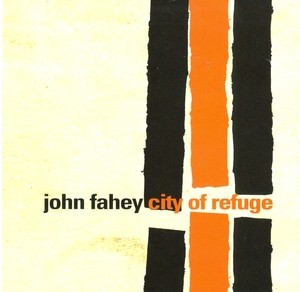
John FaheyCity of Refuge Tim/Kerr 644 830 127-2 (1997)


Spooky.  John Fahey mounted something of a comeback in the late 1990s.  City of Refuge was the first album of that comeback, and it was his most experimental offering in more than twenty-five years.  From this evidence there should be no doubt what the likes of Gastr del Sol saw in Fahey.  Most of this is pretty dark stuff.  “The Mill Pond” is a misfire.  Yet “Fanfare” and “City of Refuge III” are outstanding.  The former finds Fahey plugged in and playing some effective electrified guitar against industrial sounds and Stereolab samples.  The latter is an acoustic epic, but sounds more ominous than what you might expect based on his past recordings.  Not an easy listen by any means, but a welcomed return to more challenging music by a fascinating guitarist.

Johnny Cash – Johnny Cash Is Coming to Town

Johnny Cash Is Coming to Town

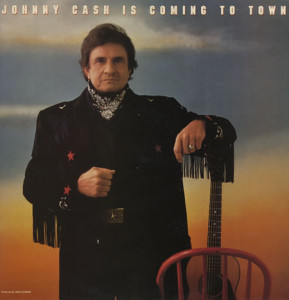
Johnny CashJohnny Cash Is Coming to Town Mercury 832 031 (1987)


As Columbia Records lost interest in Cash’s career and fading sales, he jumped over to Mercury Records.  His first album for Mercury, Johnny Cash Is Coming to Town, teams him again with producer “Cowboy” Jack Clement.  The approach is basically the same as the pair’s most recent work together on The Adventures of Johnny Cash (1982).  The material is patchy, with a few good choices but many more that are far less interesting.  The biggest problem, though, is that Clement makes this sound cartoonish, like a caricature of country music.  It adopts the worst elements of the contemporary Nashville sound.  The results are just more of the same with diminishing results.  There is a scene in the movie The Hunger Games: Mockingjay – Part 1 (2014), in which Woody Harrleson‘s character Haymitch tries to explain what is wrong with a propaganda film (“propo”) starring Katniss Everdeen (Jennifer Lawrence) made by Philip Seymour Hoffman‘s character Plutarch, and Elizabeth Banks‘ character Effie gives some examples of Katniss at her best after which everyone quickly agrees that Katniss is most charismatic when she speaks freely on her own without anyone telling her what to do.  Well, people most often like Johnny Cash because of these same qualities.  He was at his best when he did his own thing, the “rules” be damned.  He did not work to reshape country music from the inside out, like Loretta Lynn.  He had to work from the outside, as an outsider.  Johnny Cash Is Coming to Town has Cash trying to play by all the rules and follow a script closely.  For those reasons it seems to lack most of his strengths.  This one is a tad boring and too lacking in any nuance to make it anything of note.

Johnny Cash – Live From Austin TX

Live From Austin TX

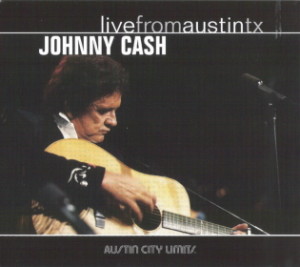
Johnny CashLive From Austin TX New West Records (2007)


Live From Austin TX was recorded on January 3, 1987 for the long-running public television show “Austin City Limits.”  The 1980s were disappointing times for Johnny Cash in terms of recording.  It wasn’t that he was washed up as a performer.  It’s that he often recorded studio albums full of every conceivable gimmick, none of which has aged well at all.  Some see this as a tension between his early outsider image and the clean-cut family man one that arose from his TV show, something he resolved decisively in favor of the former in the early 1990s with great success.  A straightforward live album like this proves a nice counterpoint to his studio recordings of the 80s era.  There are still some unfortunate electronics slapped on the guitar, but they aren’t too overbearing.  Cash sticks mostly to a “greatest hits live” format, so you know you at least get to hear some great tunes.  He even brings along a horn section for “Ring of Fire” and “I Walk the Line (outro)”.  Shortly before this show, he had been dropped by Columbia Records after almost 30 years.  He then signed with Mercury Records, and some of the songs here are from his first Mercury album Johnny Cash Is Coming to Town, released in April following this show.  Later in 1987 he went into the studio to re-record a lot of his old hits on Classic Cash: Hall of Fame Series, which is minimally adequate but doesn’t have quite the energy of this live set.  No, this doesn’t compare to the famous prison albums of the 1960s, and it’s no real revelation.  But it does possibly surpass anything Cash released in the 1980s, at least for consistency.

Johnny Cash – In Ireland

In Ireland

Johnny CashIn Ireland Mercury (2009)


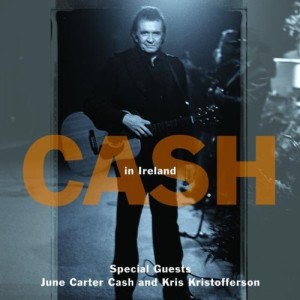
Not everything on In Ireland is terrible, just most of it.  Recorded February 11, 1993 at the Olympia Theatre in Dublin, Ireland, the show was filmed and released first in DVD format, with this download-only album following a few years later.  The show took place just two months before Cash began recording his comeback album American Recordings.  Cash, himself, seems a bit tired here.  His voice isn’t in bad shape, but often his singing is not very enthusiastic and actually rather lazy.  The band — oh boy — is just on autopilot.  They have played these songs about a million times and it seems like they lost interest years ago.  Guitarist Bob Wootton stumbles through almost every song, like he’s only half paying attention.  Drummer W.S. Holland is determined to keep his own beat, regardless of the one everyone else is using.  June Carter seems like her vocal chords are shot from too many years of touring.  Rosey Nix comes across an amateur with a faux-gravelly voice she can’t control well enough.  And John Carter Cash is a pox on the proceedings, with nothing to offer but terrible clichés magnified to try to fill out a stage he doesn’t belong on.  Kris Kristofferson pops in for an okay cameo, but he’s not enough to improve the situation.  Earl Poole Ball is still around on piano, and he’s actually fine, but, like Kristofferson, he’s just not enough of a presence to make much of a difference.  If you want to hear most of the same tunes played with at least a semblance of interest from the band, try Cash’s performance on “Austin City Limits” from six years earlier.  The lethargic reading of “Ghost Riders in the Sky” might be the best thing here.

Johnny Cash – The Last Gunfighter Ballad

The Last Gunfighter Ballad

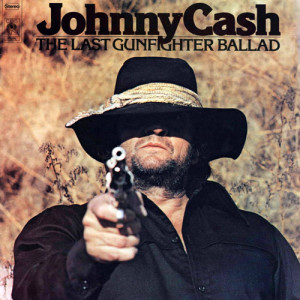
Johnny CashThe Last Gunfighter Ballad Columbia KC 34314 (1976)


As the 1970s wore on, Johnny Cash had more and more difficulty finding enough suitable songs to fill an album.  The song selection on The Last Gunfighter Ballad ranges from the decent (Guy Clark‘s “The Last Gunfighter Ballad”) to the tedious (Terry Smith’s “Far Side Banks of Jordan”).  Three songs he had previously recorded.  He also was more and more likely to give a half-hearted effort singing.  But unlike most of the lesser stuff of Cash’s lean forgotten years, the bad stuff is not just boring but truly awful.  The opener “I Will Dance With You” is perhaps the very worst Cash performance on record…and some moron decided to put it first on the album!  Same goes for “You’re So Close to Me,” which opens side two.  Lots of other stuff actually feels almost like leftovers from the One Piece at a Time sessions, or at least attempts to do more of the same (“City Jail”).  Yet, it’s a shame and a waste that “Give It Away,” with a nice gospel-style vocal chorus, is a fine performance of a corny song.  And “Cindy, I Love You” has a guitar part derivative of “You’ve Got a New Light Shining In Your Eyes” but still ends up being a terrific song.  There definitely are some gems here.  This is probably the most uneven album Cash made in the 1970s.  He makes it hard to love or hate this in its entirety, and it will take a died-in-the-wool Cash fan to appreciate this motley beast as a whole.  But, yes, it still boasts one hell of an album cover photo.