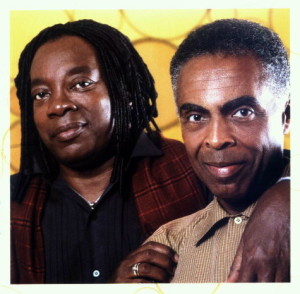
Gilberto Gil & Milton Nascimento – Gil & Milton

Gil & Milton

Gilberto Gil & Milton Nascimento – Gil & Milton WEA 857382810-2 (2000)


Brazilian tropicalia legend Gilberto Gil teams up with longtime Brazilian pop star Milton Nascimento for Gil & Milton. The results are unspectacular. At times the record is downright boring but not without the occasional gem. As nothing more than a slick commercial album, dredging through the entire album is a chore. This is a far cry from the vibrant music these fellows made in their youth.  The main problem here is the heap of gloomy songs lacking an edge. There just is not enough camp to salvage this one from easy listening hell. There is much better tropicalia/bossa nova type stuff out there than this trite, sentimental crapola.

“Trovoada” is brilliant (by far the best song). It features split songwriting by the duo. On the next cut, the watery reggae on a cover of George Harrison’s “Something” spoils the moment. Then drum machines pop up in annoying fashion on “Maria.” You may get your hopes up occasionally but those good vibes fade quickly. Generally, the new compositions are the better tracks. Even those better ones hardly deserve a yawn.

Superb individual vocals are wasted. All the arrangements are predictable, save some nice instrumental moments — like Gilberto Gil’s accordion on “Duas Sanfonas” and acoustic guitar on quite a few others. The duo almost never sings harmony. They trade verses but in an eerie way never seem to sing together. Vocal recordings happened separately and only came together later on a mixing board, much to the chagrin of listeners.

Without any offense to some fine artists, this is a poor album. At best, Gil & Milton sounds like self-parody. Some of the lyrical impact may be lost on those of us who only speak English, but no lyrics could rescue Gil & Milton. This album is quite a disappointment.
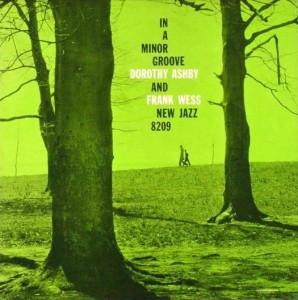
Dorothy Ashby and Frank Wess – In a Minor Groove

In a Minor Groove

Dorothy Ashby and Frank Wess – In a Minor Groove New Jazz NJLP 8209 (1959)


Jazz music tends to be played on a fairly well-defined set of instruments.  The bagpipes, accordion, cimbalom, any sort of double-reed instrument… there are plenty of things that just don’t pop up that often, and when they do they are used sometimes only for a novelty effect.  Harpist Dorothy Ashby and flautist Frank Wess bring together two such rarely played instruments for what turns out to be an impressive hard bop album, In a Minor Groove.  The mood is that of a hip, bohemian club (sort of a whole album along the lines of Sun Ra‘s “Lullaby for Realville” or maybe some early Eric Dolphy recordings).  The delicate timbres of the harp and flute contrast with the punchy qualities of the drums and acoustic bass, giving the music an inherent interest even when rooted in familiar hard bop structures.  Yet the players don’t content themselves with merely offering some unusual instrumentation.  The playing is superb.  Ashby was widely regarded as the best harpist in jazz.  Her and Wess play with assurance.  Drummer Roy Haynes is particularly effective.  He lays back and uses brushes a lot, with embellishments limited to just a slightly harder attack now and then.  But his happy-sounding and very understated performances is perfect for the music.  This is forward-looking bop, and about as good as “inside” music of the era got.

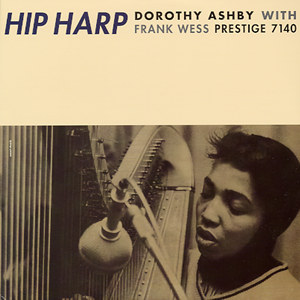
Dorothy Ashby With Frank Wess – Hip Harp

Hip Harp

Dorothy Ashby With Frank Wess – Hip Harp Prestige PRLP 7140 (1958)


Dorothy Ashby’s second album expands upon her debut.  It’s jazz firmly in the hard bop mode, yet striving to do something different with the sub-genre.  She deploys some of the same techniques as she used on The Jazz Harpist before to imitate a guitar and sweep the strings on her harp to play glissandos.  But now it sounds a bit more purposeful, like she has more to express than just getting across those little tricks.  Flautist Frank Wess is with her again.  He plays more fluidly than on the debut, though his tone is a little harsh.

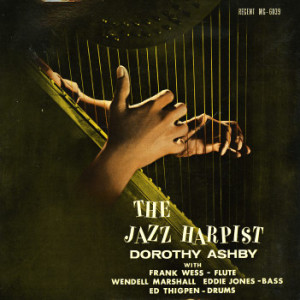
Dorothy Ashby – The Jazz Harpist

The Jazz Harpist

Dorothy Ashby – The Jazz Harpist Regent MG-6039 (1957)


Dorothy Ashby’s debut album as a leader The Jazz Harpist gives a taste of what was to come from the woman who seems to be unanimously regarded as the greatest jazz harpist.  But at the same time this recording relies a bit too much on the novelty of having a harp in a jazz setting.  It wallows in a few gimmicks.  She uses two in particular on many of the songs: the stereotypical harp glissando (sweep) and imitation of guitar.  For the latter, she strums and plays a few melodic notes, which gives the impression of two guitarists.  It is kind of a neat trick, but she doesn’t do that much with it.  Her frequent collaborator Frank Wess is here, though his playing on flute is a little stiff compared to on the pair’s later recordings.  Ashby would just get better over her next few albums, exploring hard bop and cool jazz idioms, before she would take a turn toward soul jazz and eastern-flavored spiritual jazz.

Lawrence S. Wittner – Corporate Welfare Fails to Deliver the Jobs

Link to an article by Lawrence S. Wittner:

“Corporate Welfare Fails to Deliver the Jobs: The Sad Case of Start-Up NY”

Bonus links: “How Business ‘Partnerships’ Flopped at America’s Largest University” and “Wisconsin’s $4.1 Billion Foxconn Boondoggle” and “The HQ2 Scam: How Amazon Used a Bidding War to Scrape Cities’ Data” and “‘Winners’ in Amazon Sweepstakes Sure to Be the Losers” and “Give Money to Workers, Not Billionaires”

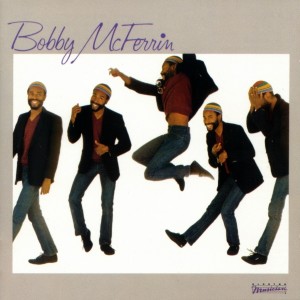
Bobby McFerrin – Bobby McFerrin

Bobby McFerrin

Bobby McFerrin – Bobby McFerrin Elektra Musician E1-60023 (1982)


On his debut Bobby McFerrin bore some resemblance to jazz singers like Al Jarreau and Betty Carter, but lots of this material is relatively straight 80s pop that wouldn’t sound out of place on a Hall & Oates album.  Some of the pop stuff is actually decent, as on “Feline”.  Unfortunately, there are only a few a cappella (or mostly a cappella) tracks that demonstrate the unique vocal abilities McFerrin possessed.  His next album The Voice, recorded live, completely a cappella, was a major step forward, stripping away the overt commercialism of this debut.

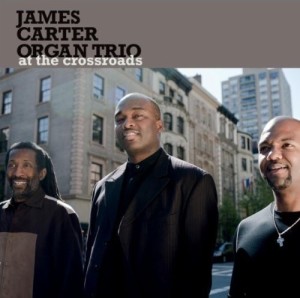
James Carter Organ Trio – At the Crossroads

At the Crossroads

James Carter Organ Trio – At the Crossroads EmArcy B0016081-02 (2011)


At the Crossroads has some of the benefits and all the drawbacks of any typical James Carter album. He plays to the audience, recontextualizing bits of the past with a lot of charisma.  Maybe he doesn’t reach to do this as much as he has elsewhere, but he still does it.  But he also plays in front of a band that seems a little too conservative for his solos.  When I’m feeling unkind, I would even say he pulls a Sidney Bechet and purposefully has the band sandbag by playing dull tropes to make him sound more impressive by comparison.  Anyway, there is a bit too much lazy blues and lounge-y stuff here, and the occasional vocals seem to lack any sort of edge, but occasionally it hits, like on “The Hard Blues” and “Aged Pain.”  If all this sounds like a pretty tepid endorsement, then it suits this lukewarm effort.